Clinical Trial Seeks to Advance Intuitive Assistive Robotics for People with Paralysis
When a person loses a limb, a prosthesis often can help restore a significant degree of mobility. But when movement or communication is impaired by a neurological condition such as ALS, spinal cord injury or stroke, there currently are few options for the affected individual.
To address this challenge, Baylor College of Medicine, in collaboration with Rice University, will join BrainGate, a consortium of universities and academic medical centers working on creating brain-computer interface (BCI) technologies. BCIs, as their name implies, are systems that link the brain with an external system such as a robotic arm or a speaker. They allow the individual to move the arm or speak just by thinking about the action, thereby restoring communication, mobility and independence. BCM and Rice will be just the sixth team in the consortium and the only team in Texas.
Over the past two decades researchers with BrainGate have been at the forefront of developing these neuroprostheses, having shown that neural signals associated with the intent to move a limb or speak can be “decoded” by a computer in real-time and used to operate these external devices.
Baylor and Rice collaborators are continuing these efforts with a focus on decoding cortical neural signals to control robotic arms to help paralyzed individuals eat and drink independently.

Dr. Sameer Sheth, Baylor College of Medicine
“It is a momentous step for Baylor and Rice to join BrainGate and lend our expertise to this consortium’s work. The development of an implant capable of allowing people to control a robotic arm holds the power to transform the lives of people living with paralysis, restoring not only movement but also independence and hope,” said Dr. Sameer Sheth, professor of neurosurgery and a McNair Scholar at Baylor.
Sheth is leading the clinical team that is recruiting participants, performing the surgeries to place the specialized electrode arrays into the brain surface, and providing clinical and patient oversight and care.
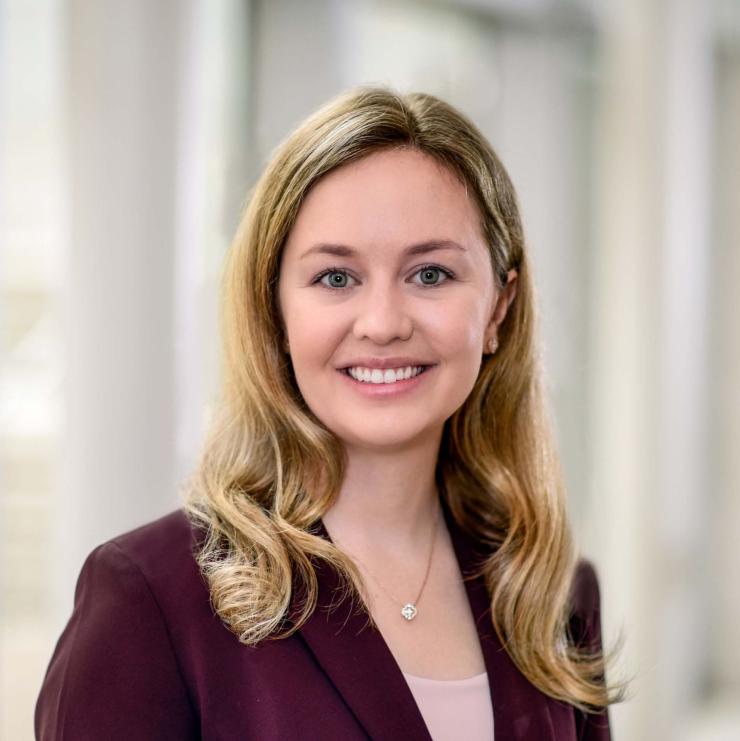
Dr. Nicole Provenza, Baylor College of Medicine
The Baylor-Rice team aims to explore the use of motivational and other ‘non-motor’ neural signals to enhance motor BCI performance. Dr. Nicole Provenza, assistant professor of neurosurgery and McNair Scholar at Baylor, and her lab will support that effort.
“Our team’s rich experience decoding mood, motivation and emotion from human intracranial neural recordings will hopefully enable improved control of motor and speech effectors,” Provenza said. “We are excited to explore how fluctuations in cognitive signals may impact the ability to control neuroprotheses long-term.”
“A critical component of progress in this field is the development of better and faster computer algorithms to translate the immensely complex brain activity into useful information to drive a robotic arm or control a speech prosthesis in the way the individual intends. I am very excited to work with Dr. Nishal Shah, an expert in neuroengineering and robotics,” said Sheth, who also is the Cullen Foundation Endowed chair of neurosurgery at Baylor and director of the Gordon and Mary Cain Pediatric Neurology Research Laboratories at Texas Children’s Hospital. “This collaboration brings together Rice’s computational and engineering strengths with Baylor’s clinical and neuroscience expertise.”

Dr. Nishal Shah, Rice University
Dr. Nishal Shah, assistant professor of engineering and a McNair Scholar at Rice University, is leading a team that will be responsible for creating the computational infrastructure that decodes intended movements from neural activity and drives the robotic system.
“My main research focus is building intracortical brain–computer interfaces, a rapidly expanding field, with the goal of helping people who are paralyzed and rely on care partners to restore independence in communication and activities of daily living,” Shah said. “Being able to feed oneself is second nature to people who are able-bodied, but it requires a number of simultaneous, complex, coordinated motor actions to achieve fluid and natural performance.”
Sheth added that this current clinical trial is just the beginning. “For people with mental health disorders, what changes in the brain and limits the ability to live independently, both physically and emotionally? A long-term goal is to understand how we can use the knowledge we gain from movement-related BCIs to connect that same technology with cognitive, motivational and emotional processes for those who suffer from depression and other neuropsychiatric disorders,” Sheth said.
This bigger picture underscores how this first group of clinical trial participants are paving the way for these future discoveries to be made.
“Perfecting a robotic arm for independence is the first step. Those who will take part in this trial are like test pilots of a brand new airplane. Their efforts will help advance technology, science and engineering. They are opening doors and playing an important role in this new field of neuroprostheses,” Shah said.
Over the years, BrainGate has made immense strides in BCI development. Recent research findings from the consortium include enabling communication for people with paralysis by transforming cortical activity associated with attempted speech into text on a computer screen and even into spoken speech.
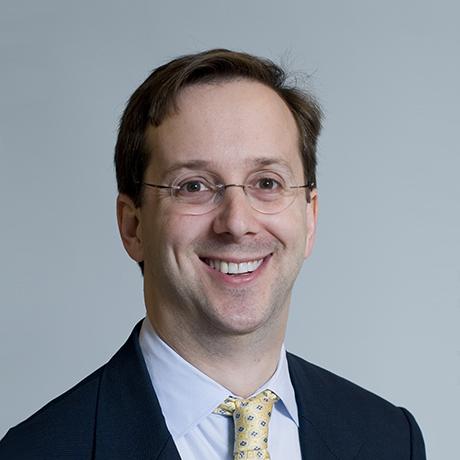
Dr. Leigh Hochberg, Harvard Medical School
“I’m thrilled to welcome the incredible and expert team at Baylor and Rice to the BrainGate consortium,” said Dr. Leigh Hochberg, BrainGate’s principal investigator and researcher with Massachusetts General Hospital, Brown University, Harvard Medical School and VA Providence Healthcare.
Other BrainGate consortium sites include Massachusetts General Hospital, VA Providence Healthcare System, the University of California at Davis, Stanford University, and Emory University and Georgia Tech. Learn more about collaborators at these sites.
To be eligible, participants should:
- Be over 18 years old.
- Have paralysis in the arms and the legs or have difficulty speaking.
- Have a medical diagnosis such as spinal cord injury, brainstem stroke, ALS or other degenerative motor neuron disorder.
To learn more about participating in the BrainGate2 clinical trial at Baylor College of Medicine, contact BrainGateStudyBCM@bcm.edu