

About the Program
The Medical Scientist Training Program at Baylor College of Medicine is an intensive dual degree program for highly motivated students wishing to pursue a career as a physician scientist. The successful applicant should have both an excellent scholastic record and sustained experience in biomedical research. Prior exposure to both laboratory bench science and clinical care is highly recommended. The combined degree program emphasizes integration between clinical and basic sciences curricula, providing training that can lead to significant scientific contributions in academic or industrial research or policy and regulatory affairs.
As the co-directors of the Baylor College of Medicine Medical Scientist Training Program, we are very excited about your interest in our program. Baylor College of Medicine sits at the heart of Houston’s Texas Medical Center, the largest medical center in the world, which provides a rich and highly collaborative environment for students in the M.D./Ph.D. program to conduct outstanding state-of-the-art research.
As part of our program, you will see a large and diverse patient population (as soon as your second week in medical school) in hospitals in both the private and public sectors including the largest Veterans Administration and largest pediatric hospital in the United States. Each segment provides unique cases and training opportunities. A highly collegial and collaborative environment awaits you when considering our seven graduate programs at Baylor College of Medicine or the Rice University bioengineering department to fulfill your scientific curiosity. Our MSTP leadership team is strongly committed to supporting and mentoring each of our students in the pursuit of their goal to become a productive physician scientist.
Our program has been the recipient of a NIH Medical Scientist Training Program T32 since 1977 and has trained over 350 physician scientists. We also enjoy the strong philanthropic support of our community to support a wide array of program activities.
Our own experiences as graduates of NIH M.D./Ph.D. programs have been instrumental in developing careers that combine research endeavors with clinical practice. The joys and rewards of discovery and patient care provide a lifetime of excitement and challenge. We applaud you for pursuing a training program that will maximize your success and contributions in academic medicine. We look forward to meeting you and participating in your career development.
Dr. Katherine King, professor of pediatrics and Dr. James Orengo, associate professor of neurology
Research Opportunities
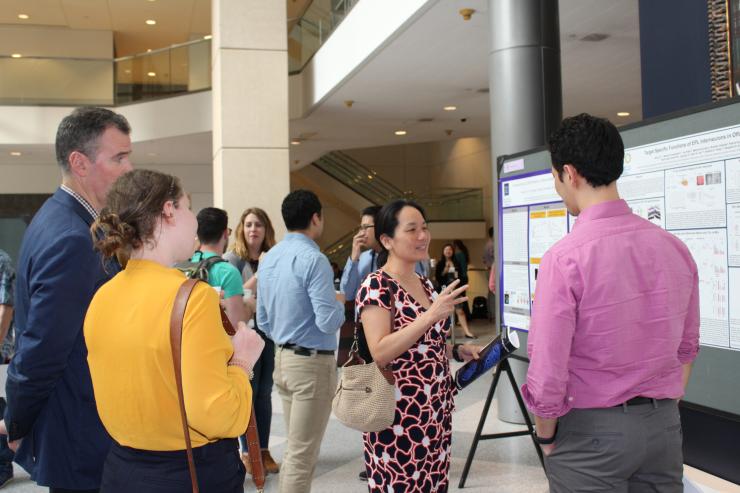
Students in the Medical Science Training Program may pursue their research under the auspices of any of the Baylor College of Medicine Graduate School of Biomedical Sciences programs as well as Rice University Bioengineering Graduate Program.
Program Events
Students are encouraged to explore exciting ideas and develop unique insights in how to approach problems in medical research. The Baylor College of Medicine Medical Scientist Training Program provides a number of programs to facilitate student-faculty interaction that will aid in departmental selection, exploration of career opportunities and exposure to highly acclaimed speakers.
For the first year, medical students in the program talk with faculty representatives from each graduate school department. Topics correspond to the curriculum and are designed to integrate research being conducted with courses being taught in medical school. Held at noon on Monday except during exams and breaks.
All second-year students in the program hear faculty representatives from each graduate program speak on specific research opportunities and course requirements in their graduate departments or labs. This is designed to facilitate the students' selection of their graduate program in January. Held on Tuesday at noon from August through November.
The program is designed to foster interactions between students at different stages in the program, interactions that can be mutually beneficial to provide peer mentoring and support.
Held in September of each year as a two-day retreat off campus as an opportunity to focus on MSTP students as well as a opportunity to quickly integrate the incoming students into the program. The retreat is filled with training activities that consist of student oral presentation to their peers, alumni and participating faculty, breakout group discussions and workshops to address issues of importance to students transitioning from one stage of their training to another such as insight and guidance regarding lab or department choices, adapting to medical or graduate school, project selections, clerkship planning and residency selections and applications. Most importantly, it is a time for students, alums and faculty to have fun and strengthen the M.D./Ph.D. community at Baylor.
This is an opportunity for applicants with offers of acceptance to learn more about the program, Baylor College of Medicine, Texas Medical Center and Houston. Applicants have the opportunity to explore the Texas Medical Center, participate in one-on-one meetings with faculty of interest, learn from our current students at a program-wide poster session, and to tour several local apartment complexes. There are also plenty of opportunities to socialize with the current students and faculty through a variety of fun activities.
Held in early August, this casual social event introduces the new class to their peers, Medical and Graduate School faculty, and administrators.
A Baylor tradition held in August, upper classmen present and don white coats on the first-year medical students. Parents and family attend this exciting event.
Held the afternoon of Graduation Day, this semi-formal celebratory send-off recognizes the achievements of each graduate in the company of family and friends. The Outstanding Physician Scientist Award honoring the life and accomplishments of Richard R. Dickason, Jr., M.D., Ph.D. is given at this event.
At least once a year, an informal social gathering is planned for conversation and interaction between the directors and students. This fosters open communication and builds rapport.
Match Day is the big day in March when graduating students find out where they will "match" for their residency program. At exactly the same time nationwide, anxious students open envelopes to find out where they go for the next stage of their training.