

Research + Validated Solutions
The Center for Space Medicine has established itself as a leading force in space biomedical research, consistently advancing scientific understanding of how spaceflight affects human health. The Center’s work involves collaborations with NASA, industry partners, and multiple academic departments, enabling a wide range of studies from intracranial pressure changes in astronauts to innovative biomedical experiments conducted in microgravity, to the development of food and medicines in space.
CSM’s strong track record includes developing comprehensive spaceflight research programs, training scientists and physicians, and translating discoveries made in space into medical insights that benefit people on Earth. CSM builds on Baylor’s longstanding relationship with the NASA Human Research Program, including its stewardship of both the Translational Research Institute for Space Health (TRISH) and the National Space Biomedical Research Institute (NSBRI), and its sustained #1 national ranking in NASA-funded life science R&D for two decades. This record reflects CSM’s reputation for excellence in exploration medicine and biomedical innovation, its success in attracting top scientific talent, and its dedication to translating space-driven advances into improved health outcomes on Earth.
Tools for Space and Earth
The Smart Therapeutic Ultrasound Device project, a previously NSBRI-supported project, stands as a landmark accomplishment in the evolution and advancement of space health research, demonstrating how years later, investment into biomedical innovation can still yield transformative results for both astronauts and patients on Earth. Originally conceived to address mission‑critical risks posed by kidney stones - a potentially dangerous medical condition in space - this work advanced the development of non‑invasive ultrasound technologies capable of detecting, repositioning, and ultimately fragmenting stones in microgravity environments. These innovations provided a radiation‑free diagnostic alternative and a portable therapeutic solution suited to constrained spacecraft medical systems. NSBRI’s foundational support ensured continuity in high‑risk, high‑reward research that bridged laboratory discoveries with operational medical needs identified by NASA. This long‑term collaboration contributed not just to new scientific methods, but to an entirely new paradigm for delivering care in remote and medically austere environments.
This research pipeline ultimately helped propel the breakthrough achievement of FDA 510(k) clearance for SonoMotion’s Break Wave™ lithotripsy device, a technology directly descended from the ultrasound propulsion and burst‑wave lithotripsy methods matured under NSBRI and NASA funding. NSBRI initiated and nurtured the research path that made this milestone possible, with NASA picking up support after NSBRI’s closeout to carry the technology into clinical trials and eventual commercial readiness. The FDA clearance not only validates the scientific rigor behind the research but also showcases the real‑world impact of the Center’s investments in medical technologies designed for space. This achievement is widely regarded as a major success story for the space health community, proving that astronaut‑focused medical research can catalyze pioneering commercial medical technologies with global reach.
As deep‑space missions push farther from Earth, reliable medical decision‑making must continue even during communication blackouts. The Center for Space Medicine successfully demonstrated a novel, Earth‑independent clinical decision support system that brings trustworthy medical expertise directly aboard the spacecraft. In this proof‑of‑concept study, a lightweight, offline artificial intelligence system was deployed on standard laptop hardware and anchored to verified NASA medical documentation using retrieval‑augmented generation. When tested against a high‑risk spaceflight scenario, venous thromboembolism (VTE), the system accurately identified onboard diagnostic capabilities and appropriate treatment options, outperforming conventional artificial intelligence (AI) models that lacked space‑specific grounding. By pairing generative AI with authoritative space medicine resources and eliminating reliance on cloud connectivity, this successful work shows how locally deployed AI can strengthen crew autonomy, reduce clinical risk, and enable safer long‑duration exploration, highlighting the Center’s leadership in translating cutting‑edge research into mission‑ready healthcare solutions.
Sustained Lunar Presence Continuity of Healthcare Anywhere
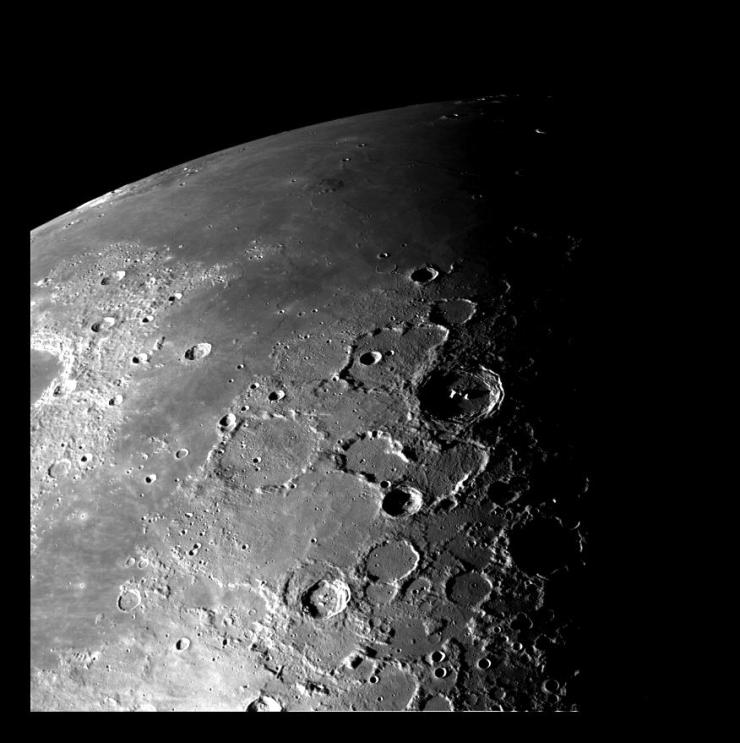
CSM is advancing an end‑to‑end approach to human health research and support, ensuring that astronaut medical data, clinical insights, and research tools flow seamlessly across every phase of spaceflight. This approach is powered by innovations such as TRISH’s Hermes platform, which enables biomedical, environmental, and mission‑related data to be continuously ingested, stored, analyzed, and accessed by crew, clinicians, researchers, and AI systems, regardless of vehicle, destination, or communication environment. By allowing health data to “travel with” each spaceflight participant across missions and automatically sync with Earth‑based repositories like EXPAND, these systems provide uninterrupted continuity of care and research integrity, even during deep‑space operations where autonomy is essential. This fully integrated framework strengthens medical decision‑making, enhances safety, and supports the scientific discoveries needed to help humans thrive in space and on Earth.
Fostering the Texas Space Economy
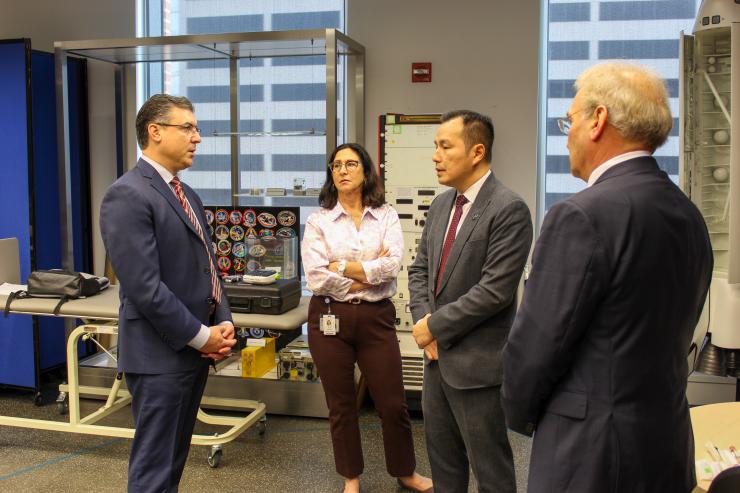
CSM is growing the Texas space landscape by driving cutting‑edge biomedical research, education, and innovation that support human spaceflight, here, in Texas. Working closely with partners such as NASA, the TRISH, industry collaborators, and academic institutions, the Center strengthens Texas’s role as a national leader in aerospace and biomedical science. Its efforts align with and complement the mission of the Texas Space Commission, which promotes statewide leadership in civil, commercial, and military aerospace activity. Together, these partnerships help expand Texas’s space ecosystem, accelerate scientific discovery, and train the next generation of experts dedicated to improving human health in space and on Earth.
Ground‑Based Analogs
The risks to human spaceflight can be studied in orbit, and here on Earth. Such ground‑based analogs recreate key aspects of spaceflight on Earth and examine how the human body and mind respond in controlled settings and over longer periods of time.
The Center for Space Medicine has played a central role in advancing spaceflight analogs by investing private funds, supporting international collaborations, and taking on studies that directly address NASA’s most pressing human health questions. In several cases, CSM‑supported work has gone on to shape how spaceflight risks are studied globally.
CSM and its Translational Research Institute for Space Health (TRISH) established an analog partnership with the Australian Antarctic Division (AAD), the first-of-its-kind to use isolated polar workers to study behavioral health and performance. The Center again used philanthropic support to enable the international collaboration.
Antarctica offers one of the most relevant environments on Earth for studying isolation, confinement, and operational stress due to its extreme isolation and small teams of 12-14 people residing there. CSM’s support enabled international collaboration and data collection that contributed to a better understanding of behavioral health risks during long‑duration space missions, including team dynamics, psychological resilience, and performance under extreme conditions, a high-fidelity project for future missions to Mars.
CSM supported United States participation in the international Mars 500 study through private funding, representing the National Space Biomedical Research Institute (NSBRI) in one of the longest and most comprehensive long-duration mission simulations ever conducted.
Mars 500 examined the physiological, behavioral, and operational challenges associated with long‑duration exploration missions under conditions of isolation and confinement. By enabling U.S. involvement in this international effort, CSM ensured that American scientific priorities and expertise were included in a landmark study that continues to inform research on exploration‑class missions.
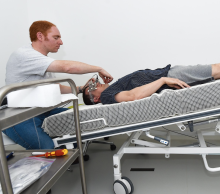
CSM enabled U.S. participation in the SPACECOT study conducted at the German Aerospace Center’s (DLR) envihab facility through private funding. This work proved to be a major advancement in the study of spaceflight‑associated neuro‑ocular syndrome (SANS). SPACECOT established a ground‑based analog capable of reproducing key features of the syndrome on Earth. The study resulted in more than seven peer‑reviewed publications and significantly improved understanding of fluid shifts and neuro‑ocular changes associated with spaceflight.
The pioneering SPACECOT study paved the way for NASA’s Human Research Program (HRP) to study SANS mechanisms and evaluate potential countermeasures, making it one of the clearest examples of CSM‑funded analog research translating into sustained agency use.
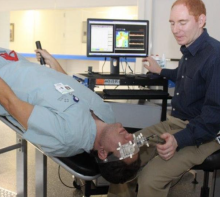
At the request of NASA, CSM supported an international novel SANS study evaluating a Lithuanian‑developed novel, non-invasive intracranial pressure (ICP) device produced by Vittamed. The study, conducted with CSM faculty member, Dr. Eric Bershad, provided an independent scientific assessment of the technology and its potential relevance to spaceflight‑related physiological challenges.
This effort allowed NASA to evaluate a novel device outside flight conditions and informed decisions about its potential as a countermeasure. The study reflects CSM’s role in facilitating objective, science‑driven evaluation of emerging technologies proposed for human spaceflight.