Home
  • Healthcare
    • Specialties
      • Cardiovascular Care
      • Oncology
      • Neurosurgery
      • Primary Care
      • View All Specialties >
    • For Health Professionals
      • Refer a Patient
      • Clinical Trials
      • Professional Development
      • View All >
    • For Patients & Visitors
      • MyChart Login
      • Accepted Insurance
      • Pay My Bill
      • Patient Information
      • View All >
    • Clinical Trials
      • Autism
      • Cancer
      • Obesity
      • Substance Abuse
      • View All Clinical Trials >
    • Find a Doctor
    • Make an Appointment

    General Inquiries

    Call today to schedule an appointment or fill out an online request form. If requested before 2 p.m. you will receive a response today.

    CALL

    713-798-1000

    Monday – Friday 8 a.m. – 5 p.m.


    ONLINE

    Request Now

    Request non-urgent appointments

    Request an appointment, learn about your rights as a patient, read about what to expect from your appointment, and more.

    As Houston's premier academic medical practice, Baylor Medicine delivers compassionate, innovative, evidence-based care.
    Find a Doctor

  • Education
    • Degree Programs & Admissions
      • M.D. Program
      • Ph.D. Programs
      • DNP Program (Nurse Anesthesia)
      • Genetic Counseling Program
      • P.A. Program
      • Orthotics & Prosthetics Program
      • Baccalaureate/M.D. Programs
      • Dual Degree Programs
      • View All Programs >
    • Financing Your Education
      • Tuition & Fees
      • Financial Aid
      • CARES ACT
    • Schools
      • School of Medicine
      • Graduate School of Biomedical Sciences
      • National School of Tropical Medicine
      • School of Health Professions
    • Advanced Training Programs
      • Residency Programs
      • Clinical Fellowships
      • Postdoctoral Research Positions
      • Continuing Professional Development
      • Diploma in Tropical Medicine
      • View All >
    • Resources
      • Departments
      • Academic Centers
      • Academic Calendars
      • Education Cores
      • View All >
    • Information For...
      • Students
      • Postdoctoral Researchers
      • Faculty
      • Alumni
    get-to-know-houston

    America's fourth-largest city is a great place to live, work, and play. Find out why.
    Get to Know Houston

  • Research
    • Research Offices
      • Advanced Technology Cores
      • Clinical Research
      • Institute for Clinical & Translational Research
      • Office of Research Leadership
      • Research IT
      • Sponsored Programs
    • Research at Baylor
      • Academic Centers
      • Departments
      • Faculty Labs
      • From the Labs
      • News
      • Our Research
      • Research Centers
      • Strategic Research Center
    • Additional Research Services
      • BCM Innovation Institute
      • Service Labs
      • VIICTR
    get-to-know-houston

    America's fourth-largest city is a great place to live, work, and play. Find out why.
    Get to Know Houston

  • Community
    • Healthcare Outreach
      • Community Programs
      • More >
    • Global Outreach
      • Global Health
      • Global Programs >
    • Educational Outreach
      • SMART Program
      • BioEd Online
      • More >
    • General Resources
      • Community Events
      • News
      • Blogs
      • Baylor in the Community
    get-to-know-houston

    America's fourth-largest city is a great place to live, work, and play. Find out why.
    Get to Know Houston

  • About
    • About Us
      • Academic Centers
      • Alumni
      • Careers
      • Departments
      • Giving
      • Leadership
      • Mission, Vision, Values
      • News
      • Our Affiliates
      • Fast Facts
      • Accreditation
    • Offices
      • President's Office
      • Office of Research
      • Ombuds Office
      • BCM Innovation Institute
      • View All >
    • Our Campus
      • Compliance
      • Safety and Security
      • Resource Stewardship & Sustainability
      • Team Shop
      • Find a Person
    get-to-know-houston

    America's fourth-largest city is a great place to live, work, and play. Find out why.
    Get to Know Houston

  • GIVE
  • CAREERS
  • INTRANET
  • Careers
  • Contact Us
  • News
Department of Molecular Virology and Microbiology
  • Meet Our Team
  • Education
  • Research
  • Emerging Infections and Biodefense
  • Commercial Development
  • Services Payment Form
  • News
  • Seminar Series
  • Meet Our Team
  • Education
  • Research
  • Emerging Infections and Biodefense
  • Commercial Development
  • Services Payment Form
  • News
  • Seminar Series
  1. Baylor College of Medicine
  2. Departments
  3. Molecular Virology and Microbiology
  4. Emerging Infections and Biodefense
  5. Potential Bioterrorism Agents
  • Current Status of the Field
  • Introduction to Infectious Diseases
  • Emerging Infectious Diseases
  • Specific Agents
    • Anthrax
    • Chikungunya Virus
    • Dengue
    • Ebola Virus
    • HIV (AIDS)
    • Human T-lymphotropic Virus
    • Influenza Virus (Flu)
    • MRSA
    • Norovirus
    • SARS-CoV-2 and COVID-19
    • SARS & MERS
    • Smallpox Virus
    • Tuberculosis
    • Tularemia
    • Zika
  • Mosquitoes
  • Antibiotic Resistance
  • Potential Bioterrorism Agents
  • Microbiome
  • Glossary

Potential Bioterrorism Agents

NIAID
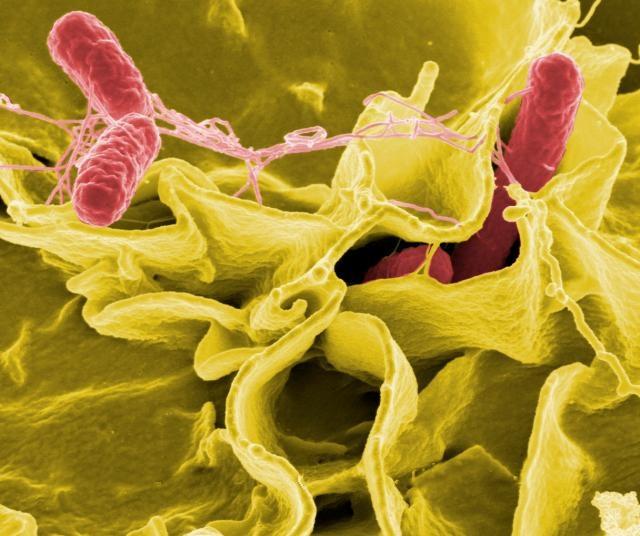
Salmonella bacteria, a common cause of foodborne disease, invade an immune cell.

Bioterrorism agents are pathogenic organisms or biological toxins that are used to produce death and disease in humans, animals, or plants for terrorist purposes. These agents are typically microorganisms found in nature, but it is possible that they could be modified to increase their virulence, make them resistant to current antibiotics or vaccines, or to enhance the ability of these agents to be disseminated into the environment.

Terrorists may find biological agents to be an attractive alternative to conventional weapons because of their relatively low costs, their relative accessibility, and the relative ease in which they could be produced, delivered, and avoid detection. Their use, or even threatened use, is potentially capable of producing widespread social disruption.

The concept of using biological agents in warfare is not new. There are many examples throughout recorded history - even as early as the 6th century BC when the Assyrians reportedly poisoned wells of their enemies with the fungus rye ergot. In the 1700s during the French-Indian War, it is suspected that the British gave blankets that had been used by smallpox victims to the Native Americans, resulting in decimation of the native population. More recently, in 1984, followers of the Bhagwan Shree Rajneesh contaminated salad bars in Oregon with Salmonella in an attempt to influence a local election (although hundreds were sickened, this attack did not impact the election).

As a result of the terrorist attacks in New York City and Washington, D.C on Sept. 11, 2001 and the dissemination of anthrax through the United States Postal Service shortly thereafter, there has been renewed and urgent attention focused on the possibility of additional terrorist acts involving biological agents. The U.S. government has responded by expanding resources and effort into biodefense research. Much of this work is directed by the National Institute of Allergy and Infectious Diseases component of the National Institutes of Health and the Centers for Disease Control and Prevention, along with other agencies including the U.S. Department of Homeland Security.

As technologies for genetically modifying organisms have advanced and become more accessible, it has become easier and less expensive to alter the genetic makeup of viruses and bacteria. The potential for misuse of synthetic biology capabilities increases and expands the threat of bioweapons. The tools could be used for the creation of pathogenic microorganisms or the modification of existing microorganisms to make them more dangerous.

Among the areas of greatest concern are the potential for the reconstruction of known pathogenic viruses using information on their genetic sequences (e.g., the 1918 pandemic flu virus) or the alteration of existing bacteria to make them more dangerous (e.g., by making them resistant to existing antibiotics). Another concern is the potential to engineer a microorganism that releases harmful biochemicals within the human body. Other possible risks include alterations to the human host, such as modifications to the human microbiome or the human immune system.

Classification of Bioterrorism Agents

The CDC and NIAID, in conjunction with the U.S. Department of Homeland Security, evaluate the potential threat from various microorganisms and toxins and classify them into three categories.

Category A consists of the agents that are considered the highest risk, and much of the biodefense research effort is directed towards these agents. Included among Category B agents are ones that could conceivably threaten water and food safety. Category C includes pathogens that are considered emerging infectious disease threats and which could be engineered for mass dissemination.

To determine the risks from various agents, the CDC considers their effect on human health, the degree of contagiousness or method of transfer to humans, and the availability and effectiveness of vaccines and therapies to prevent and treat illness.

The level of threat from specific agents is reviewed and revised periodically. New high-risk pathogens may be added to the list as they are discovered. It is also possible that the relative level of threat could change. For example, if an effective vaccine is developed against a particular agent, its level of threat would decrease, whereas if an agent becomes resistant to current therapies, its level of threat could increase.

The classification into Categories A, B, and C is based on:

  • The ability of the agent to be disseminated
  • The mortality rate of the agent
  • The actions required for public health preparedness
  • The capability of causing public panic
Definition of Potential Bioterrorism Agent Categories
Category ACategory BCategory C
Pose the highest risk to national securityPose the second highest risk to national securityEmerging pathogens that could be engineered for mass dissemination
Can be easily disseminated or transmitted from person to personAre moderately easy to disseminateAre easily produced and disseminated
  Have potential for high morbidity and mortality rates and major health impact
Require special public health preparedness actionsRequire enhanced diagnostic capacity and disease surveillanceAre available
Have potential to cause public panic and social disruption  
Examples of Potential Agents/Diseases by Category
Category ACategory BCategory C
   
Botulism Hendra
 Cholera 
 E. coli O157:H7 
HantavirusHepatitis ANipah
LassaRicin toxinPrions
MarburgSalmonellaRabies
PlagueTyphus fever 
 Yellow feverTickborne encephalitis
   

Biodefense Research

Research efforts in biodefense are directed at:

  • Understanding the basic biology of potential bioterrorism agents
  • Understanding the interaction between the human immune system and these microorganisms
  • Developing and improving drugs and vaccines that are effective against bioterrorism agents
  • Developing tools to quickly and accurately diagnose diseases caused by these agents
  • Establishing resources and biosafety laboratories to facilitate biodefense research

Research at Baylor College of Medicine
CDC / Janice Carr
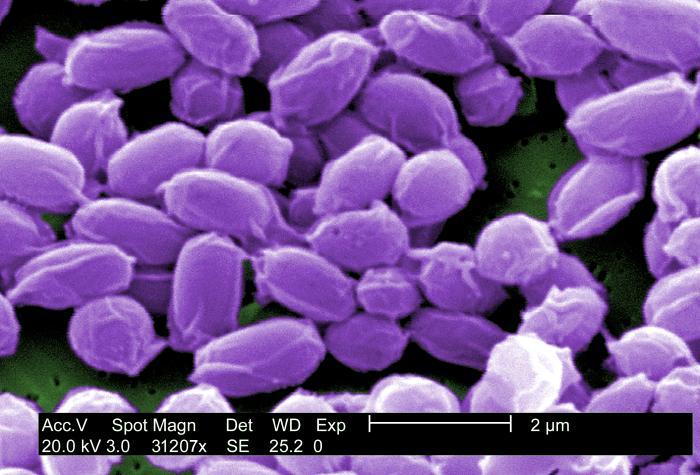
Electron microscope image of Bacillus anthracis spores.

Researchers in the Department of Molecular Virology and Microbiology have studied and continue to investigate a number of pathogens that present a potential risk for use in bioterrorism. Included among them are the Category A agents - anthrax, dengue, Ebola, smallpox, and tularemia - as well as Category B and C agents such as chikungunya, influenza, and Zika. The research encompasses investigations into the basic biology of these agents, their interactions with the immune system, as well as the development of vaccines and tools to study and combat these agents.

Notably, MVM is home to a Vaccine and Treatment Evaluation Unit (VTEU), one of only nine such sites nationwide. The VTEU is funded by the NIAID component of the NIH and provides the infrastructure to conduct phase I and II clinical trials of candidate vaccines and other biologics for protection against biological weapons and emerging infectious diseases.

For More Information

  • Bioterrorism overview and information about specific bioterrorism agents from the CDC
  • Biodefense information from the NIAID including lists of priority pathogens

Glossary

Learn more about some of the technical terms found on our glossary of terms page.

Department of Molecular Virology and Microbiology
  • Current Status of the Field
  • Introduction to Infectious Diseases
  • Emerging Infectious Diseases
  • Specific Agents
    • Anthrax
    • Chikungunya Virus
    • Dengue
    • Ebola Virus
    • HIV (AIDS)
    • Human T-lymphotropic Virus
    • Influenza Virus (Flu)
    • MRSA
    • Norovirus
    • SARS-CoV-2 and COVID-19
    • SARS & MERS
    • Smallpox Virus
    • Tuberculosis
    • Tularemia
    • Zika
  • Mosquitoes
  • Antibiotic Resistance
  • Potential Bioterrorism Agents
  • Microbiome
  • Glossary

Contact Us

Phone 713–798–4447
Fax 713–798–5019

Department of Molecular Virology and Microbiology

One Baylor Plaza MS: BCM-385 Houston, TX 77030

Related Links

Department of Molecular Virology and Microbiology

Follow Us facebook twitter youtube linkedin instagram rss 

Footer Menu Healthcare

  • Healthcare
    • Specialties
    • MyChart Login
    • For Patients & Visitors
    • For Health Professionals
    • Clinical Trials
    • Find a Physician

Footer Menu Education

  • Education
    • Programs & Admissions
    • Student & Trainee Resources
    • Faculty Resources
    • School of Medicine
    • Graduate School of Biomedical Sciences
    • National School of Tropical Medicine
    • School of Health Professions
    • Tuition & Fees
    • Financial Aid

Footer Menu Research

  • Research
    • Our Research
    • Core Labs
    • Faculty Labs
    • Research Centers
    • Research Offices

Footer Menu Community

  • Community
    • Healthcare Outreach
    • Education Outreach
    • Global Programs
    • Community Events

Footer Menu About

  • About
    • Our Campus
    • Departments
    • Academic Centers
    • Administrative Offices
    • Affiliates
    • Leadership
    • Giving
    • Alumni

Footer Menu Resource Links

  • Resource Links
    • Contact Us
    • Find a Person
    • Careers
    • BCM Team Shop
    • News
    • Title IX Office
    • Compliance
    • Covid Response Site

©1998-2026 Baylor College of Medicine® | 1 Baylor Plaza, Houston, Texas 77030 | 713-798-4951
Have an edit or suggestion for this page?

  • Compliance
  • Privacy
  • Intranet