Home
  • Healthcare
    • Specialties
      • Cardiovascular Care
      • Oncology
      • Neurosurgery
      • Primary Care
      • View All Specialties >
    • For Health Professionals
      • Refer a Patient
      • Clinical Trials
      • Professional Development
      • View All >
    • For Patients & Visitors
      • MyChart Login
      • Accepted Insurance
      • Pay My Bill
      • Patient Information
      • View All >
    • Clinical Trials
      • Autism
      • Cancer
      • Obesity
      • Substance Abuse
      • View All Clinical Trials >
    • Find a Doctor
    • Make an Appointment

    General Inquiries

    Call today to schedule an appointment or fill out an online request form. If requested before 2 p.m. you will receive a response today.

    CALL

    713-798-1000

    Monday – Friday 8 a.m. – 5 p.m.


    ONLINE

    Request Now

    Request non-urgent appointments

    Request an appointment, learn about your rights as a patient, read about what to expect from your appointment, and more.

    As Houston's premier academic medical practice, Baylor Medicine delivers compassionate, innovative, evidence-based care.
    Find a Doctor

  • Education
    • Degree Programs & Admissions
      • M.D. Program
      • Ph.D. Programs
      • DNP Program (Nurse Anesthesia)
      • Genetic Counseling Program
      • P.A. Program
      • Orthotics & Prosthetics Program
      • Baccalaureate/M.D. Programs
      • Dual Degree Programs
      • View All Programs >
    • Financing Your Education
      • Tuition & Fees
      • Financial Aid
      • CARES ACT
    • Schools
      • School of Medicine
      • Graduate School of Biomedical Sciences
      • National School of Tropical Medicine
      • School of Health Professions
    • Advanced Training Programs
      • Residency Programs
      • Clinical Fellowships
      • Postdoctoral Research Positions
      • Continuing Professional Development
      • Diploma in Tropical Medicine
      • View All >
    • Resources
      • Departments
      • Academic Centers
      • Academic Calendars
      • Education Cores
      • View All >
    • Information For...
      • Students
      • Postdoctoral Researchers
      • Faculty
      • Alumni
    get-to-know-houston

    America's fourth-largest city is a great place to live, work, and play. Find out why.
    Get to Know Houston

  • Research
    • Research Offices
      • Advanced Technology Cores
      • Clinical Research
      • Institute for Clinical & Translational Research
      • Office of Research Leadership
      • Research IT
      • Sponsored Programs
    • Research at Baylor
      • Academic Centers
      • Departments
      • Faculty Labs
      • From the Labs
      • News
      • Our Research
      • Research Centers
      • Strategic Research Center
    • Additional Research Services
      • BCM Innovation Institute
      • Service Labs
      • VIICTR
    get-to-know-houston

    America's fourth-largest city is a great place to live, work, and play. Find out why.
    Get to Know Houston

  • Community
    • Healthcare Outreach
      • Community Programs
      • More >
    • Global Outreach
      • Global Health
      • Global Programs >
    • Educational Outreach
      • SMART Program
      • BioEd Online
      • More >
    • General Resources
      • Community Events
      • News
      • Blogs
      • Baylor in the Community
    get-to-know-houston

    America's fourth-largest city is a great place to live, work, and play. Find out why.
    Get to Know Houston

  • About
    • About Us
      • Academic Centers
      • Alumni
      • Careers
      • Departments
      • Giving
      • Leadership
      • Mission, Vision, Values
      • News
      • Our Affiliates
      • Fast Facts
      • Accreditation
    • Offices
      • President's Office
      • Office of Research
      • Ombuds Office
      • BCM Innovation Institute
      • View All >
    • Our Campus
      • Compliance
      • Safety and Security
      • Resource Stewardship & Sustainability
      • Team Shop
      • Find a Person
    get-to-know-houston

    America's fourth-largest city is a great place to live, work, and play. Find out why.
    Get to Know Houston

  • GIVE
  • CAREERS
  • INTRANET
  • Careers
  • Contact Us
  • News
Department of Molecular Virology and Microbiology
  • Meet Our Team
  • Education
  • Research
  • Emerging Infections and Biodefense
  • Commercial Development
  • Services Payment Form
  • News
  • Seminar Series
  • Meet Our Team
  • Education
  • Research
  • Emerging Infections and Biodefense
  • Commercial Development
  • Services Payment Form
  • News
  • Seminar Series
  1. Baylor College of Medicine
  2. Departments
  3. Molecular Virology and Microbiology
  4. Emerging Infections and Biodefense
  5. Specific Agents
  6. Human T-lymphotropic Virus
  • Anthrax
  • Chikungunya Virus
  • Dengue
  • Ebola Virus
  • HIV (AIDS)
  • Human T-lymphotropic Virus
  • Influenza Virus (Flu)
  • MRSA
  • Norovirus
  • SARS-CoV-2 and COVID-19
  • SARS & MERS
  • Smallpox Virus
  • Tuberculosis
  • Tularemia
  • Zika

Human T-lymphotropic Virus

The Agent

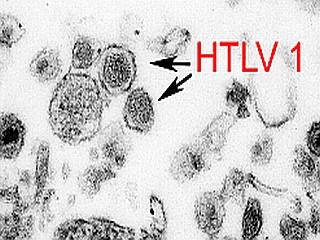
CDC PHIL
HTLV Virus

Human T-lymphotropic viruses, HTLV, comprise a family of four related retroviruses that affect T-cells, a type of white blood cell. The viruses are thought to have passed from monkeys into humans, and simian counterparts of three of the four viruses have been identified. While HTLV-1 has been known since ancient times, HTLV-3 and HTLV-4 have emerged only recently.

HTLV-1 is the most prevalent member of the family. More than fifteen million people worldwide are thought to be infected. HTLV-1 is acquired through blood transfusions, sexual contact, or needle sharing. While most people who are infected with HTLV-1 do not exhibit any symptoms, up to 5% of infected people will develop a type of leukemia called adult T-cell leukemia/lymphoma or a chronic neurological disease named HTLV-1 associated myelopathy/tropical spastic paraparesis. HTLV-2 infection has not been associated with any human disease.

In 2005, two new HTLV members were discovered in humans who had hunted monkeys in Cameroon. As in the emergence of HIV, experts believe that this is another example of an emerging disease caused by viruses jumping from monkeys into humans.

The new viruses are called HTLV-3 and HTLV-4. HTLV-3 is closely related to a previously discovered monkey virus named STLV-3 (S stands for simian) that infects many species of monkeys. HTLV-4 is a distinct virus for which no counterpart in another species is yet known to exist.

Whether HTLV-3 or HTLV-4 infection can give rise to human disease is presently not known, but the incubation period for HTLV-1, like HIV, to cause disease can take many years.

The Problem

Very little is currently known about HTLV-3 and HTLV-4. It is unclear how many people may be infected with these viruses, whether they can spread from person to person and become established within a community, or even if they cause illness.

However, given the fact that a related virus, HTLV-1 is known to cause serious diseases, it is important to monitor the possible spread of these viruses and to determine their disease potential. There is also still much to be learned about HTLV-1 and at this time there is no cure or treatment.

The appearance of these new viruses serves as a reminder that increased contact between humans and primates enhances the likelihood that a virus will cross species, as occurred when HIV was transmitted from chimpanzees into humans. Our experience with HIV has taught us that we need to be vigilant when new viruses arise in humans.

The Research

A key protein of HTLV-1 that is necessary for the virus to cause disease goes by the name of Tax-1. This protein regulates the expression of other viral genes and has the ability to transform normal cells into cancerous ones and produce tumors in experimental animals.

Dr. Susan Marriott’s laboratory studied the molecular interactions of the Tax-1 protein for many years to understand how it functions in causing cancer. Her laboratory also investigated the Tax protein of HTLV-3, termed Tax-3. Tax-3 is quite similar to Tax-1 in its genetic sequence, and it may share its molecular properties. They found that Tax-3 has a similar distribution within cells and has a similar ability to interact with important regulatory proteins in cells as does Tax-1. Furthermore, Tax-3 contains a region called a PDZ domain that is critical for the ability of Tax-1 to cause cells to become cancerous, suggesting that Tax-3 may also be capable of transforming cells.

In addition, Dr. Marriott worked with collaborators at the CDC to develop reagents that can be used to determine the prevalence of HTLV-3 infection in humans and to investigate the possibility that this virus infection is associated with a human disease.

HTLV Publications by MVM Faculty

Glossary

Learn more about some of the technical terms found on this page by visiting our glossary of terms.

Department of Molecular Virology and Microbiology
  • Anthrax
  • Chikungunya Virus
  • Dengue
  • Ebola Virus
  • HIV (AIDS)
  • Human T-lymphotropic Virus
  • Influenza Virus (Flu)
  • MRSA
  • Norovirus
  • SARS-CoV-2 and COVID-19
  • SARS & MERS
  • Smallpox Virus
  • Tuberculosis
  • Tularemia
  • Zika

Contact Us

Phone 713–798–4447
Fax 713–798–5019

Department of Molecular Virology and Microbiology

One Baylor Plaza MS: BCM-385 Houston, TX 77030

Related Links

Department of Molecular Virology and Microbiology
Immunology and Microbiology Graduate Program Research

Follow Us facebook twitter youtube linkedin instagram rss 

Footer Menu Healthcare

  • Healthcare
    • Specialties
    • MyChart Login
    • For Patients & Visitors
    • For Health Professionals
    • Clinical Trials
    • Find a Physician

Footer Menu Education

  • Education
    • Programs & Admissions
    • Student & Trainee Resources
    • Faculty Resources
    • School of Medicine
    • Graduate School of Biomedical Sciences
    • National School of Tropical Medicine
    • School of Health Professions
    • Tuition & Fees
    • Financial Aid

Footer Menu Research

  • Research
    • Our Research
    • Core Labs
    • Faculty Labs
    • Research Centers
    • Research Offices

Footer Menu Community

  • Community
    • Healthcare Outreach
    • Education Outreach
    • Global Programs
    • Community Events

Footer Menu About

  • About
    • Our Campus
    • Departments
    • Academic Centers
    • Administrative Offices
    • Affiliates
    • Leadership
    • Giving
    • Alumni

Footer Menu Resource Links

  • Resource Links
    • Contact Us
    • Find a Person
    • Careers
    • BCM Team Shop
    • News
    • Title IX Office
    • Compliance
    • Covid Response Site

©1998-2026 Baylor College of Medicine® | 1 Baylor Plaza, Houston, Texas 77030 | 713-798-4951
Have an edit or suggestion for this page?

  • Compliance
  • Privacy
  • Intranet