About the Lab

The overarching goal of the Camp | Bhattacharya Laboratory for Translational Surgical Oncology is to identify and develop effective therapeutic options to improve outcomes in patients with pancreatic and colorectal cancers.
Drs. Camp and Bhattacharya co-direct this active research laboratory with a focus on:
- Understanding mechanisms of chemotherapy and radiation resistance in pancreatic and colorectal cancer.
- Development of novel combinatorial therapeutic strategies for pancreatic and colorectal cancer.
- Development and characterization of preclinical models of pancreatic cancer to interrogate efficacy of approved and investigational therapeutics.
- Investigating ways to enhance anti-tumoral immunity for pancreatic and colorectal cancer by manipulating the tumor microenvironment.
The laboratory is funded by an R01 (Dr. Camp) and a DoD Impact Award (Dr. Bhattacharya). In addition, the research program is supported by an industry award from Merck to investigate a novel chemo-immunotherapy strategy for pancreatic cancer (Dr. Camp) and a sponsored research agreement with BioMedValley Discoveries to develop combination strategies for a clinically studied ERK inhibitor in colorectal cancer (Dr. Bhattacharya).
Lab Projects
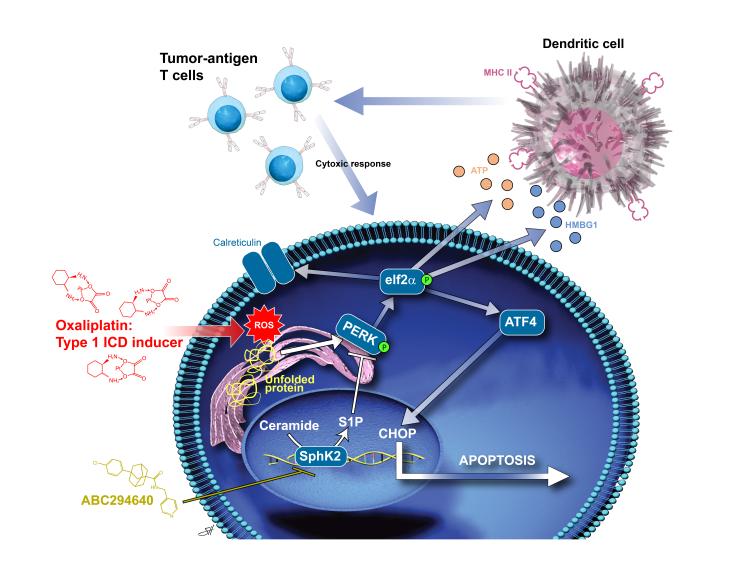
Our studies investigate the mechanisms of resistance to chemotherapy and how chemotherapy alters the immune-microenvironment that can potentially affect success of immunotherapies. Using in vitro and in vivo experiments, analyses of patient data and multi-omics analyses, this study aims to develop strategies to improve survival of patients with pancreatic and colorectal cancer.
We aim to develop in vitro patient derived co-culture systems with the goal to investigate immune-checkpoint inhibitors and other drugs. This approach of using patient derived tumor samples and performing in vitro drug sensitivity studies have the potential to predict how patients will respond when treated with such therapies and thus improve outcomes in patients with pancreatic cancer.
Utilizing a multi-disciplinary approach our group is working towards identifying and validating novel drug combinations that are effective in KRAS/BRAF mutated colorectal cancer. With very few drugs available to treat patients with advanced stage colorectal cancer, this study has the potential to identify drug combinations that can improve outcomes in a large group of patients with KRAS or BRAF mutated colorectal cancer.
Tumor cells often develop chromosomal aberrations and genetic defects. Our studies focus on 9p21 deletion and CDKN2A loss in pancreatic cancer with the goal to leverage these genetic alterations to identify novel therapeutic options for patients with pancreatic cancer. Analyses of patient data sets and utilizing various in vitro and in vivo models replicating the genetic defects, attempts are ongoing to identify therapeutic vulnerabilities that will ultimately improve outcomes in patients with pancreatic cancer.
- Development of patient and PDX derived organoids and co-culture systems.
- Development of orthotopic pancreatic and colorectal tumors in pancreas or cecum of mice.
- Splenic injection, tail vein injection and direct implantation of tumor cells in liver to generate metastasis models of pancreatic and colorectal cancers.
Lab Members