BCM researcher awarded inaugural Burroughs Wellcome Fund Climate Health Center of Excellence Grant
A team of epidemiologists, infectious disease researchers, climatologists and educators from Baylor College of Medicine, Rice University and the University of Texas School of Public Health, led by Dr. Anthony Maresso, has been awarded the inaugural Burroughs Wellcome Fund’s Climate + Health Excellence (CHEX) award, an initiative designed to strengthen research, education and public engagement related to climate change and human health.
The CHEX program will receive a $10 million award over the next five years to build FORECAST, an integrated system to study how a rapidly changing environment and weather drive the emergence and expansion of deadly pathogens in human populations. The work will build off the state’s pioneering program in wastewater monitoring, the first of its kind, which tracks human pathogens over time in 15 Texas cities.
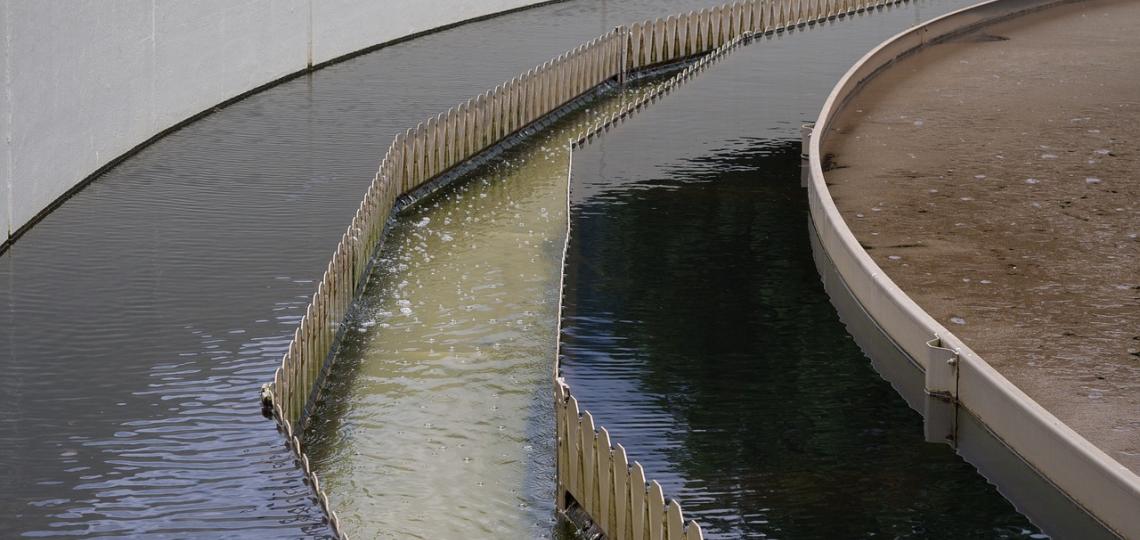
FORECAST, which was the only project selected for funding out of 161 applications, will function as an early warning system, like a “weather report” for pathogen activity. Rather than identifying infections in individual patients, it measures community-wide pathogen activity using wastewater as a public health surveillance tool to detect infectious disease threats before they become a widespread outbreak.
“The science developed from this award will be used to identify never-before-seen relationships between deadly pathogens and the environmental drivers that allow them to enter in human populations while simultaneously training the next generation of microbe hunters and environmental scientists about how these two topics are linked,” Maresso said.
“While we think of climate change as primarily driving environmental risks, a robust response to climate change must include the ability to identify, predict and preempt changing health threats driven by changing weather patterns and extremes,” said co-investigator Dr. Sylvia Dee, a climate scientist at Rice University. “FORECAST not only allows us to build those predictive models, but it also enables us to bring this information to students who will be the leaders, scientists and policymakers of the future.”
During the COVID-19 pandemic, Maresso and his team demonstrated that viral signals detected in sewage often preceded increases in clinically diagnosed cases, enabling public health officials to identify emerging threats earlier and respond more effectively. The approach has since evolved beyond SARS-CoV-2 and has helped to detect pathogens such as avian influenza, measles, HIV and even cancer-causing viruses.
A cornerstone of this effort is the Texas Wastewater Environmental Biomonitoring Network (TexWEB), a statewide surveillance program developed through collaborations among Baylor College of Medicine, UT Health Houston and the Texas Epidemic Public Health Institute (directed by Dr. Eric Boerwinkle). The network regularly samples wastewater from multiple Texas cities.
TexWEB was voted the STAT News breakthrough of the year in 2024 in the STAT Madness competition.
“Hotter days, bigger storms, new disease threats — Texas's future demands preparation. With support from the Burroughs Wellcome Fund, the FORECAST team is helping Texas detect threats earlier and respond faster, saving lives and strengthening our economy,” said co-investigator Dr. Eric Boerwinkle, dean of the UT School of Public Health, who will bring access to a large clinical data sets to the project.
“FORECAST pairs metagenomic surveillance with statewide climate-health education. At the National School of Tropical Medicine, we're eager to expand disease detection across Texas while preparing students, clinicians and communities to act on the growing risk of mosquito-borne illness in a changing climate," said co-investigator and dean of the National School of Tropical Medicine Dr. Peter Hotez, whose team will focus on vector-born pathogen transmission.
Particularly novel will be the program’s development of a new “Middle to Medical” school climate-health educational track that will focus on teaching how pathogens spread and become dangerous as the climate changes. Dr. Nancy Moreno, who developed Baylor’s BioEd online program, and co-investigator Dr. Joseph Campana, a poet and the Shakespeare Professor of English who directs the Center for Environmental Studies and EcoStudio at Rice, are also leading the effort.
“As we work to better understand relationships between climate factors and human health, there couldn't be a better time to reimagine the forms of environmental literacy and communication central to both how we disseminate FORECAST's results and how we understand what it means to educate our students and the public about these vital issues,” said Campana.
“FORECAST will prepare youth across Texas to make informed health decisions that protect themselves, their families and their communities from extreme weather and disease-related risks,” said Moreno.
Continued support of this field will also advance the budding and mostly unexplored field of wastewater science, Maresso said.
“The study will bring world-class science and education together to positively impact climate-health awareness public health over the next few decades,” he added. “Sewer is a cynic … it tells everything.”
Based in Durham, NC, the Burroughs Wellcome Fund is an independent private foundation. Its mission is to serve and strengthen society by nurturing a diverse group of leaders in biomedical sciences to improve human health through education and powering discovery in frontiers of greatest need.