The Zaid Siddiqui Image-Guided Adaptive Therapy Lab
The Zaid Siddiqui - Image-Guided Adaptive Therapy Lab applies computational methods to test biomedical hypotheses on medical images. We use both mechanistic models and statistical methods (embeddings) to derive insights from both routine and novel image acquisition techniques.
Lab Projects
Some current projects include:
- Hydrodynamic modeling of pulmonary embolism and arteriovenous malformations and their response to therapy
- Genomic and anatomic predictors of volume change in brain tumors post-therapy
- Modeling cellular response and fitness to therapy using multi-parametric MRI
- Studying the biophysical effect of adaptive and/or novel radiotherapy delivery mechanisms
- Assessing performance and bias of artificial intelligence classification and generative systems
Our lab is open to collaboration with anyone seeking image analysis at any biomedical scale (live-cell imaging to multiparametric whole-body imaging).
Publications
Some representative publications are listed below:
Han Y, Zhu E, Mekdash MH, Awad O, Pathak P, Liang S, Hamstra DA, Zhang X, Siddiqui ZA, Sun B. Blinded, bias‐controlled multi‐rater evaluation of human‐versus‐AI brain metastasis segmentation using a hybrid foundation‐model framework. Medical Physics. 2026 Jul;53(7):e70538.
Tavakoli M, Wadi‐Ramahi S, Ashmeg S, Lalonde R, Siddiqui Z. Tumor‐driven SRS VMAT planning: Regression models for intermediate and low dose spillage. Journal of Applied Clinical Medical Physics. 2025 Aug;26(8):e70184.
Porter EM, Vu C, Sala IM, Guerrero T, Siddiqui ZA. Deep learning for contour quality assurance for RTOG 0933: In-silico evaluation. Radiotherapy and Oncology. 2024 Dec 1;201:110519.
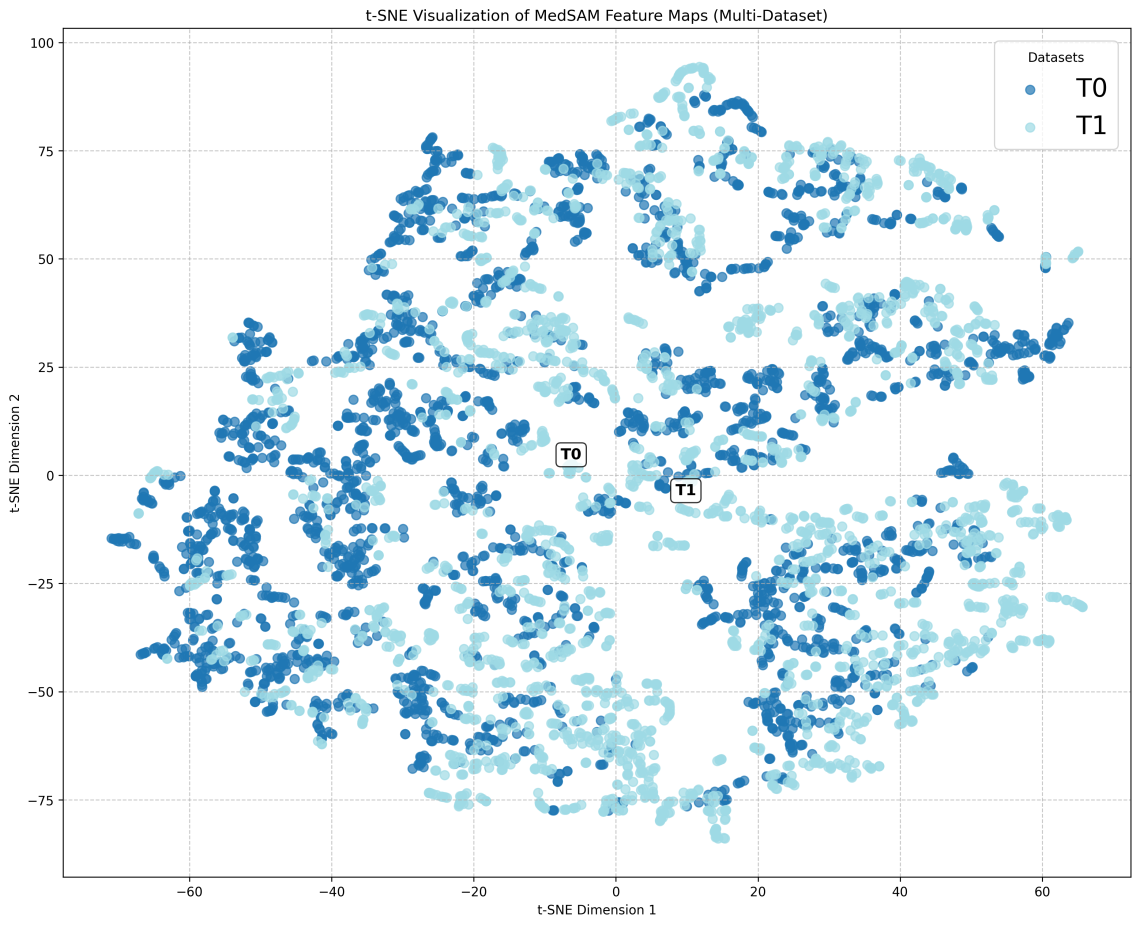
Embeddings on segmentation network showing lesion evolution over time.

Monte Carlo Sampling of segmentation networks can provide uncertainty bounds for quality assurance of segmentation tasks in medicine.
Lab Members