Home
  • Healthcare
    • Specialties
      • Cardiovascular Care
      • Oncology
      • Neurosurgery
      • Primary Care
      • View All Specialties >
    • For Health Professionals
      • Refer a Patient
      • Clinical Trials
      • Professional Development
      • View All >
    • For Patients & Visitors
      • MyChart Login
      • Accepted Insurance
      • Pay My Bill
      • Patient Information
      • View All >
    • Clinical Trials
      • Autism
      • Cancer
      • Obesity
      • Substance Abuse
      • View All Clinical Trials >
    • Find a Doctor
    • Make an Appointment

    General Inquiries

    Call today to schedule an appointment or fill out an online request form. If requested before 2 p.m. you will receive a response today.

    CALL

    713-798-1000

    Monday – Friday 8 a.m. – 5 p.m.


    ONLINE

    Request Now

    Request non-urgent appointments

    Request an appointment, learn about your rights as a patient, read about what to expect from your appointment, and more.

    As Houston's premier academic medical practice, Baylor Medicine delivers compassionate, innovative, evidence-based care.
    Find a Doctor

  • Education
    • Degree Programs & Admissions
      • M.D. Program
      • Ph.D. Programs
      • DNP Program (Nurse Anesthesia)
      • Genetic Counseling Program
      • P.A. Program
      • Orthotics & Prosthetics Program
      • Baccalaureate/M.D. Programs
      • Dual Degree Programs
      • View All Programs >
    • Financing Your Education
      • Tuition & Fees
      • Financial Aid
      • CARES ACT
    • Schools
      • School of Medicine
      • Graduate School of Biomedical Sciences
      • National School of Tropical Medicine
      • School of Health Professions
    • Advanced Training Programs
      • Residency Programs
      • Clinical Fellowships
      • Postdoctoral Research Positions
      • Continuing Professional Development
      • Diploma in Tropical Medicine
      • View All >
    • Resources
      • Departments
      • Academic Centers
      • Academic Calendars
      • Education Cores
      • View All >
    • Information For...
      • Students
      • Postdoctoral Researchers
      • Faculty
      • Alumni
    get-to-know-houston

    America's fourth-largest city is a great place to live, work, and play. Find out why.
    Get to Know Houston

  • Research
    • Research Offices
      • Advanced Technology Cores
      • Clinical Research
      • Institute for Clinical & Translational Research
      • Office of Research Leadership
      • Research IT
      • Sponsored Programs
    • Research at Baylor
      • Academic Centers
      • Departments
      • Faculty Labs
      • From the Labs
      • News
      • Our Research
      • Research Centers
      • Strategic Research Center
    • Additional Research Services
      • BCM Innovation Institute
      • Service Labs
      • VIICTR
    get-to-know-houston

    America's fourth-largest city is a great place to live, work, and play. Find out why.
    Get to Know Houston

  • Community
    • Healthcare Outreach
      • Community Programs
      • More >
    • Global Outreach
      • Global Health
      • Global Programs >
    • Educational Outreach
      • SMART Program
      • BioEd Online
      • More >
    • General Resources
      • Community Events
      • News
      • Blogs
      • Baylor in the Community
    get-to-know-houston

    America's fourth-largest city is a great place to live, work, and play. Find out why.
    Get to Know Houston

  • About
    • About Us
      • Academic Centers
      • Alumni
      • Careers
      • Departments
      • Giving
      • Leadership
      • Mission, Vision, Values
      • News
      • Our Affiliates
      • Fast Facts
      • Accreditation
    • Offices
      • President's Office
      • Office of Research
      • Ombuds Office
      • BCM Innovation Institute
      • View All >
    • Our Campus
      • Compliance
      • Safety and Security
      • Resource Stewardship & Sustainability
      • Team Shop
      • Find a Person
    get-to-know-houston

    America's fourth-largest city is a great place to live, work, and play. Find out why.
    Get to Know Houston

  • GIVE
  • CAREERS
  • INTRANET
  • Careers
  • Contact Us
  • News
LUNA (Learning to Understand and Navigate Anxiety)
  • Caregiver Modules
  • Child Modules
  • Teen Modules
  • Teen Caregiver Modules
  • ASTRO Teen Modules
  • ASTRO Teen Caregiver Modules
  • Caregiver Modules
  • Child Modules
  • Teen Modules
  • Teen Caregiver Modules
  • ASTRO Teen Modules
  • ASTRO Teen Caregiver Modules
  1. Baylor College of Medicine
  2. Research
  3. Faculty Labs
  4. LUNA (Learning to Understand and Navigate Anxiety)
  5. Child Modules
  6. Module 2: How do I know when I’m anxious? How do I get my rewards?
  7. Knowing how anxious you are using the anxiety scale
  • Caregiver Modules
    • Module 1: About LUNA, Anxiety and Your Child's Goals
      • Design of LUNA
      • Structure of our Treatment Program
      • What is Anxiety?
      • Supplemental Information for Autism: Understanding Anxiety in Autistic Children
      • When Does Anxiety Become a Problem?
      • Anxiety or Something Else
      • My Child's Anxiety
      • Setting Goals
      • Summary
    • Module 2: Learning How to Identify Anxiety and Motivate your Child
      • What is Anxiety is Made of?
      • Measuring How Anxious You Are
      • LUNA Rewards System
      • Brave Bucks with a Rewards Menu
      • Direct Rewards
      • Direct Rewards, Brave Bucks, or both?
      • Summary
    • Module 3: The Avoidance Cycle and Fix-Its
      • What Are Quick Fixes?
      • Accommodation of Anxiety Behaviors
      • Congratulations!
    • Module 4: Facing our Fears - Preparing for Mission Plans
      • Avoidance versus Exposure
      • Creating Mission Plans
      • Select a Target Fear
      • Supplemental Information for Autism: Choosing mission plans
      • Specific Mission Plan Goal
      • Mission Plan Steps
      • Assign Anxiety Ratings
      • Make a Rewards Plan
      • Summary
    • Module 5: Executing Mission Plans
      • Plan Your Practice
      • Monitor Progress
      • Repeat Steps of your Mission Plan while also Mixing it Up
      • Debrief After Mission Plan Practice
      • Forms to use When Completing Mission Plans
      • Troubleshooting Mission Plans
      • Summary
    • Module 6: Learning Coping Skills to Manage Anxiety
      • What are Coping Skills? 
      • Relaxation and Mindfulness Skills
      • Other Mindfulness Exercises
      • Choosing your Coping Tools
      • Supplemental Information for Autism: Self-Stimulating Behaviors or "Stimming" as Coping
      • How to Approach Coping Practice
      • A Note on Coping Skills and Exposure Therapy (Facing Fears)
      • Summary
    • Module 7: Testing Expectations during Mission Plans
      • Changing expectations through mission plans
      • Experiencing Feared Consequences
      • Reflecting after doing mission plan activities
      • Summary
    • Module 8: Social Coaching
      • Social Skills
      • Supplemental Information for Autism: Social Coaching
      • Handling Bullying
      • Social Coaching Instructions
      • Social Coaching Example
      • Planning a Social Coaching Mission Plan Step
      • Summary
    • Module 9: Mission Plans for Autism-Related Anxiety
      • Targeting Anxiety Related to Sensory Sensitivity
      • Example of a mission plan with sensory components
      • Making Mission Plans Gradual for Anxiety Related to Features of Autism
      • Example of a mission plan with insistence on sameness and wanting to stick to routines
      • Your Turn to Practice
      • Caregivers Module 9 Summary
    • Module 10: Parenting Strategies for Managing Challenging Behavior
      • How Behaviors are Learned: The ABC Model
      • Supplemental Information for Autism: How Behaviors are Learned
      • Managing Challenging Behaviors by Focusing on Antecedents
      • How to use prevention strategies
      • Caregivers Module 10 Summary
    • Module 11: Managing Multiple Mission Plans
      • When to work on multiple mission plans? - Neil's example
      • When to work on multiple mission plans? - Sally's example
      • Managing multiple mission plans
      • Challenging feared expectations during mission plans
      • Caregivers Module 11 Summary
    • Module 12: Reviewing Your Progress and Planning for the Future
      • Planning for the Future
      • Planning for Anxiety Flares
      • Escalations in Anxiety
      • Finding Future Treatment
      • Supplemental Information for Autism and Special Education: Other Helpful Resources
      • Checking in with YOU
      • Caregivers Module 12 Summary
  • Child Modules
    • Module 1: About LUNA
      • Meet Sally and Neil!
      • What will I do in LUNA?
      • Knowing My Anxiety
      • LUNA Goals
      • Congratulations!
    • Module 2: How do I know when I’m anxious? How do I get my rewards?
      • Knowing how anxious you are using the anxiety scale
      • LUNA Rewards
      • Becoming an Astronaut
      • Congratulations!
    • Module 3: The Avoidance Cycle and Fix-Its
      • Fix-Its
      • ASTRO: The OCD Cycle
      • Congratulations!
    • Module 4: Learning About Mission Plans
      • What is Exposure?
      • Making a Mission Plan
      • Congratulations!
    • Module 5: Doing Mission Plans
      • Planning Practice
      • Practicing Mission Plan Steps
      • Congratulations!
    • Module 6: Coping with Anxiety
      • Deep Breathing
      • Mindfulness
      • Coping Skills Cards
      • Choosing your Coping Tools
      • Congratulations!
    • Module 7: Testing Expectations during Mission Plans
      • Challenging “stinking thinking” during mission plans
      • Congratulations!
    • Modules 8-10: Making Mission Plans Work Better
    • Module 11: Working on More Than One Mission Plan
      • Mission Plan Steps
      • Congratulations!
    • Module 12: Reviewing Your Progress and Planning for the Future
      • When You Start to Feel More Anxious or Afraid
      • Congratulations!
  • Teen Modules
    • Module 1: About LUNA
      • Knowing My Anxiety
      • Setting Goals
      • Congratulations!
    • Module 2: Identifying Anxiety and Staying Motivated
      • Introducing the Anxiety Intensity Scale
      • Getting Motivated
      • Congratulations!
    • Module 3: The Avoidance Cycle and Quick Fixes
      • Congratulations!
    • Module 4: Your Plan of Action
      • Making a Plan of Action
      • Congratulations!
    • Module 5: Completing Your Plan of Action
      • Practicing Your Exposure Activities
      • Congratulations!
    • Module 6: Coping with Anxiety
      • Example Coping Skills
      • Choosing Your Coping Tools
      • Congratulations!
    • Module 7: Challenging Our Expectations
      • Challenging Anxious Thoughts
      • Congratulations!
    • Module 8: Social Barriers and Social Skills
      • Social Skills
      • Handling Bullying and Rejection
      • Practicing Social Skills
      • Congratulations!
    • Module 9: When Anxiety Overlaps with Autism
      • Autism and Anxiety
      • Example Plans of Action
      • Congratulations!
    • Module 10: Managing More Than One Plan of Action
      • Are You Ready for a New Plan of Action?
      • Tips for Managing Multiple Plans of Action
      • Congratulations!
    • Module 11: Maintaining Progress
      • Congratulations!
    • Module 12: Planning for the Future
      • When You Start to Feel Anxious
      • Congratulations!
  • Teen Caregiver Modules
    • Module 1: About LUNA
      • More About Anxiety
      • Is My Child’s Behavior Due to Anxiety?
      • Your Child’s Anxiety
      • Congratulations!
    • Module 2: Identifying Anxiety and Staying Motivated
      • Different Aspects of Anxiety
      • Introducing the Anxiety Intensity Scale
      • Pros and Cons of Making a Change – Getting Motivated!
      • Congratulations!
    • Module 3: The Avoidance Cycle and Quick Fixes
      • What Are Quick Fixes?
      • Accommodation of Anxiety Behaviors
      • Congratulations!
    • Module 4: Your Plan of Action
      • Steps for Making a Plan of Action
      • Congratulations!
    • Module 5: Completing Your Plan of Action
      • Practicing Exposure Activities
      • During Exposure Activity Practice
      • After Practices
      • Troubleshooting
      • Congratulations!
    • Module 6: Coping with Anxiety
      • Example Coping Skills
      • Choosing Coping Tools
      • Congratulations!
    • Module 7: Challenging Our Expectations
      • Challenging Anxious Thoughts
      • Experiencing Feared Consequences & Accepting Uncertainty
      • Congratulations!
    • Module 8: Social Barriers and Social Skills
      • Social Skills
      • Social Coaching
      • Congratulations!
    • Module 9: When Anxiety Overlaps with Autism
      • Anxiety Related to Autism
      • Example Plans of Action
      • Congratulations!
    • Module 10: Managing More Than One Plan of Action
      • Is Your Child Ready for a New Plan of Action?
      • Tips for Managing Multiple Plans of Action
      • Notes About Oppositional Behavior
      • Congratulations!
    • Module 11: Maintaining Progress
      • Congratulations!
    • Module 12: Planning for the Future
      • Thinking About the Future
      • Anxiety Flares and Escalations
      • Finding Future Treatment and Resources
      • Congratulations!
  • ASTRO Teen Modules
    • ASTRO Module 1: About LUNA
      • ASTRO: Knowing My Anxiety
      • ASTRO: Setting Goals
      • Congratulations!
    • ASTRO Module 2: Identifying Anxiety and Staying Motivated
      • ASTRO: Introducing the Anxiety Intensity Scale
      • ASTRO: Getting Motivated
      • Congratulations!
    • ASTRO Module 3: The Avoidance Cycle and Quick Fixes
      • Congratulations!
    • ASTRO Module 4: Your Plan of Action
      • ASTRO Making a Plan of Action
      • Congratulations!
    • ASTRO Module 5: Completing Your Plan of Action
      • ASTRO: Practicing Your Exposure Activities
      • Congratulations!
    • ASTRO Module 6: Coping with Anxiety
      • ASTRO: Example Coping Skills
      • ASTRO: Choosing Your Coping Tools
      • Congratulations!
    • ASTRO Module 7: Challenging Our Expectations
      • ASTRO: Challenging Anxious Thoughts
      • Congratulations!
    • ASTRO Module 8: Social Barriers and Social Skills
      • ASTRO: Social Skills
      • ASTRO: Handling Bullying and Rejection
      • ASTRO: Practicing Social Skills
      • Congratulations!
    • ASTRO Module 9: When Anxiety Overlaps with Autism
      • ASTRO: Autism and Anxiety
      • ASTRO: Example Plans of Action
      • Congratulations!
    • ASTRO Module 10: Managing More Than One Plan of Action
      • ASTRO: Are You Ready for a New Plan of Action?
      • ASTRO: Tips for Managing Multiple Plans of Action
      • Congratulations!
    • ASTRO: Module 11: Maintaining Progress
      • Congratulations!
    • ASTRO: Module 12: Planning for the Future
      • ASTRO: When You Start to Feel Anxious
      • Congratulations!
  • ASTRO Teen Caregiver Modules
    • ASTRO Module 1: About LUNA
      • ASTRO: More About Anxiety
      • ASTRO: Is My Child’s Behavior Due to Anxiety?
      • ASTRO: Your Child’s Anxiety
      • Congratulations!
    • ASTRO Module 2: Identifying Anxiety and Staying Motivated
      • ASTRO: Different Aspects of Anxiety
      • ASTRO: Introducing the Anxiety Intensity Scale
      • ASTRO: Pros and Cons of Making a Change – Getting Motivated!
      • Congratulations!
    • ASTRO Module 3: The Avoidance Cycle and Quick Fixes
      • ASTRO: What Are Quick Fixes?
      • ASTRO: Accommodation of Anxiety Behaviors
      • Congratulations!
    • ASTRO Module 4: Your Plan of Action
      • ASTRO: Steps for Making a Plan of Action
      • Congratulations!
    • ASTRO Module 5: Completing Your Plan of Action
      • ASTRO: Practicing Exposure Activities
      • ASTRO: During Exposure Activity Practice
      • ASTRO: After Practices
      • ASTRO: Troubleshooting
      • Congratulations!
    • ASTRO Module 6: Coping with Anxiety
      • ASTRO: Example Coping Skills
      • ASTRO: Choosing Coping Tools
      • Congratulations!
    • ASTRO Module 7: Challenging Our Expectations
      • ASTRO: Challenging Anxious Thoughts
      • ASTRO: Experiencing Feared Consequences & Accepting Uncertainty
      • Congratulations!
    • ASTRO Module 8: Social Barriers and Social Skills
      • ASTRO: Social Skills
      • ASTRO: Social Coaching
      • Congratulations!
    • ASTRO Module 9: When Anxiety Overlaps with Autism
      • ASTRO: Anxiety Related to Autism
      • ASTRO: Example Plans of Action
      • Congratulations!
    • ASTRO Module 10: Managing More Than One Plan of Action
      • ASTRO: Is Your Child Ready for a New Plan of Action?
      • ASTRO: Tips for Managing Multiple Plans of Action
      • ASTRO: Notes About Oppositional Behavior
      • Congratulations!
    • ASTRO Module 11: Maintaining Progress
      • Congratulations!
    • ASTRO Module 12: Planning for the Future
      • ASTRO: Thinking About the Future
      • ASTRO: Anxiety Flares and Escalations
      • ASTRO: Finding Future Treatment and Resources
      • Congratulations!

Knowing how anxious you are using the anxiety scale

Sometimes you might feel just a little anxious, other times you might feel very anxious, and other times, you may not be anxious at all! 
 
It can be hard to describe how much anxiety we are feeling. 
 
Because of this, it is helpful to have a tool that we can use to tell how anxious or worried we are. The tool we like to use is the anxiety scale!

Anxiety Scale

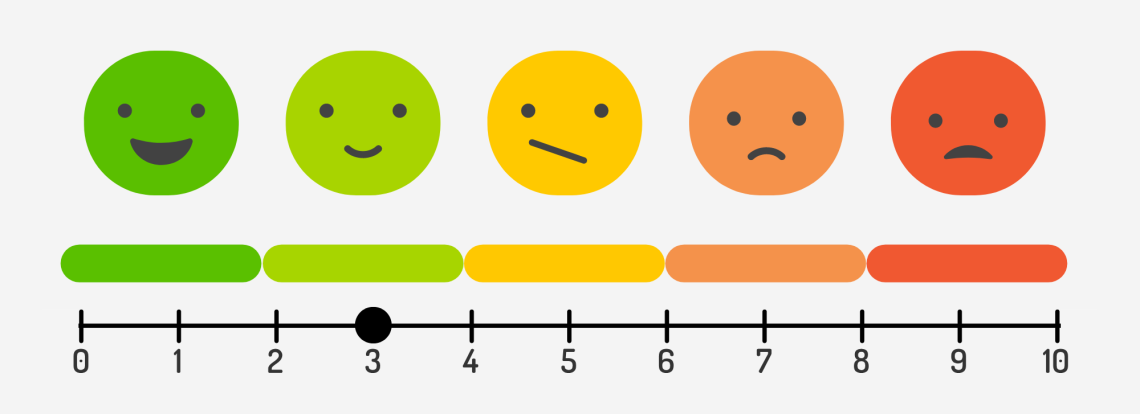
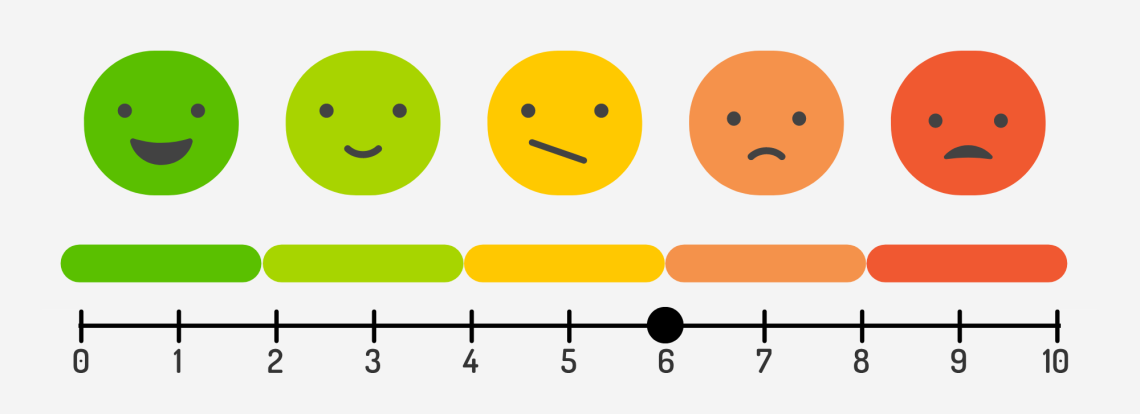
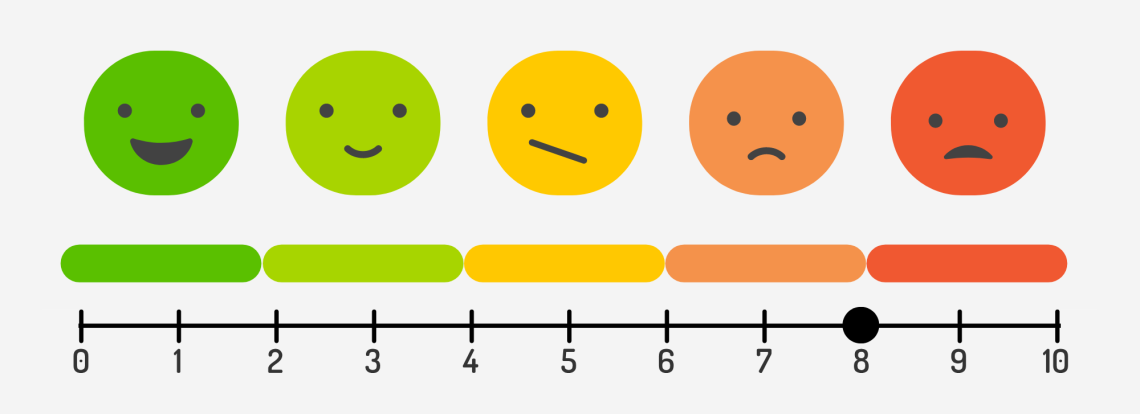
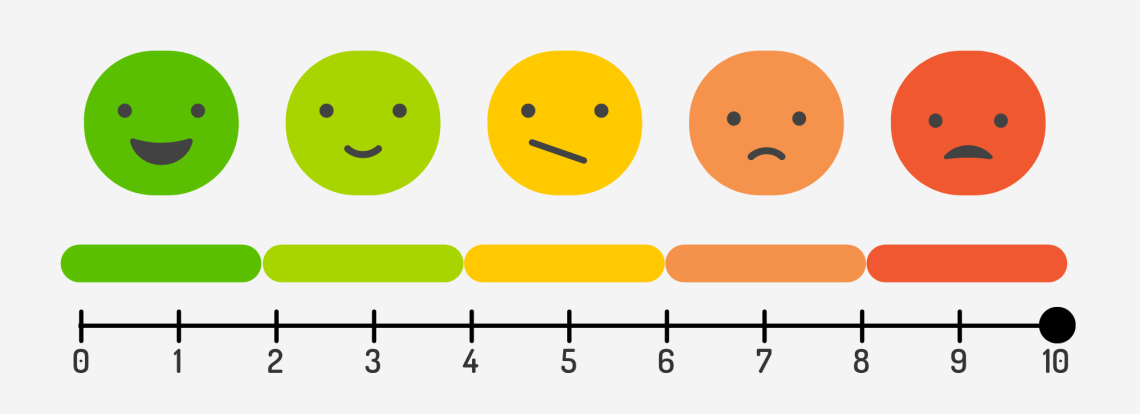
When you are not feeling anxious at all, your rating on the anxiety scale would be 0. 

If you are feeling really anxious, it would be 10. 

If you are feeling anxious, but it isn’t high or intense enough to be a 10, you would choose a number somewhere in between!

Keep scrolling to see some examples from our friend Neil below! 
 
Neil is afraid of the dark. However, his anxiety level is different depending on the situation. He is not always afraid of the dark. When he is with his mom or has several night lights in his room, his anxiety level changes. 
 
Let’s look at the ratings below:

An animated Neil sitting on his bed with a book
The anxiety scale set to level 3


When Neil is alone in his room during the day with lights on, his anxiety scale is at 3. 
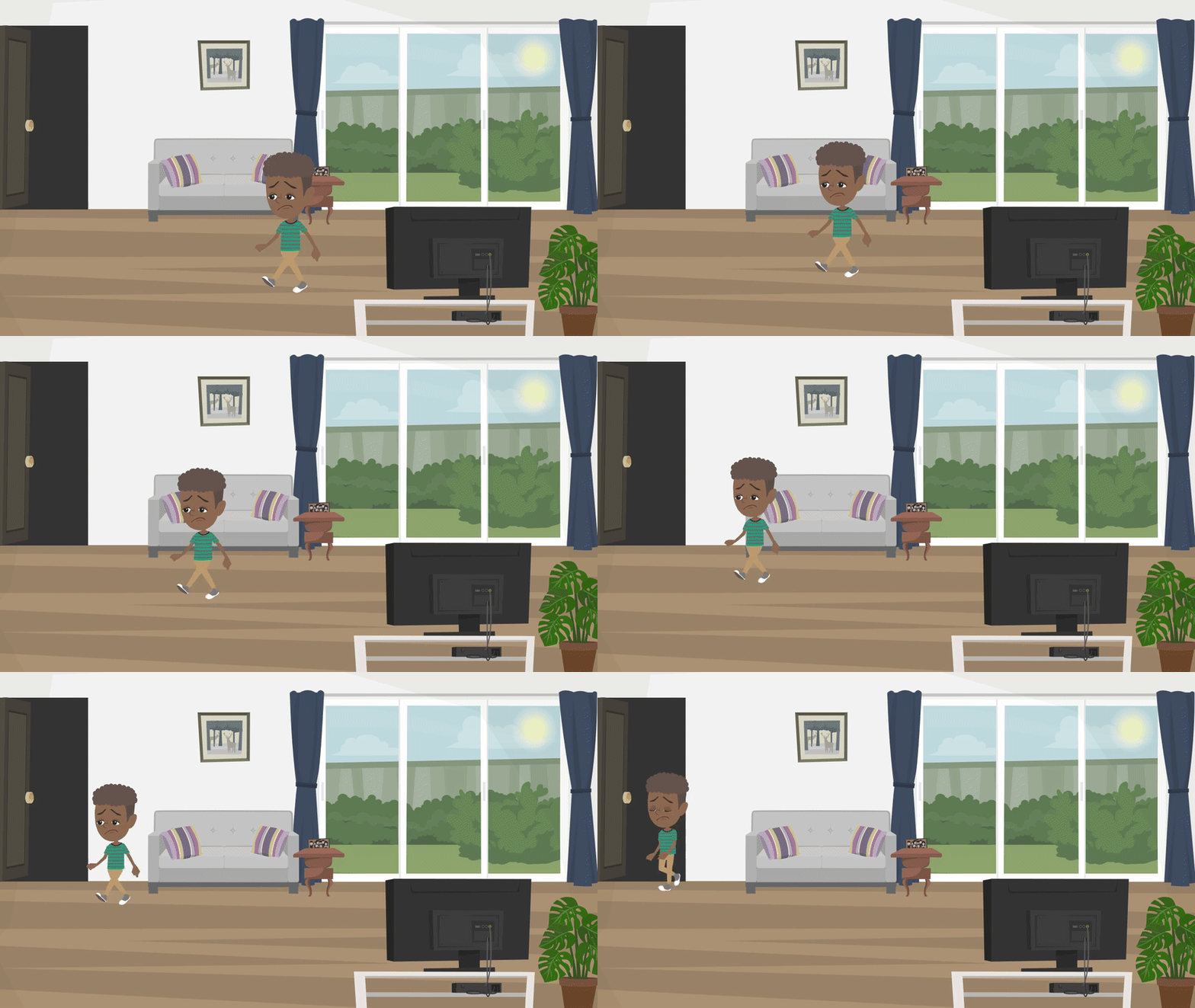
Neil going into a dark room by himself during the day
The anxiety scale set to level 6


When Neil is going into a dark room by himself during the day, his anxiety scale is at 6. 
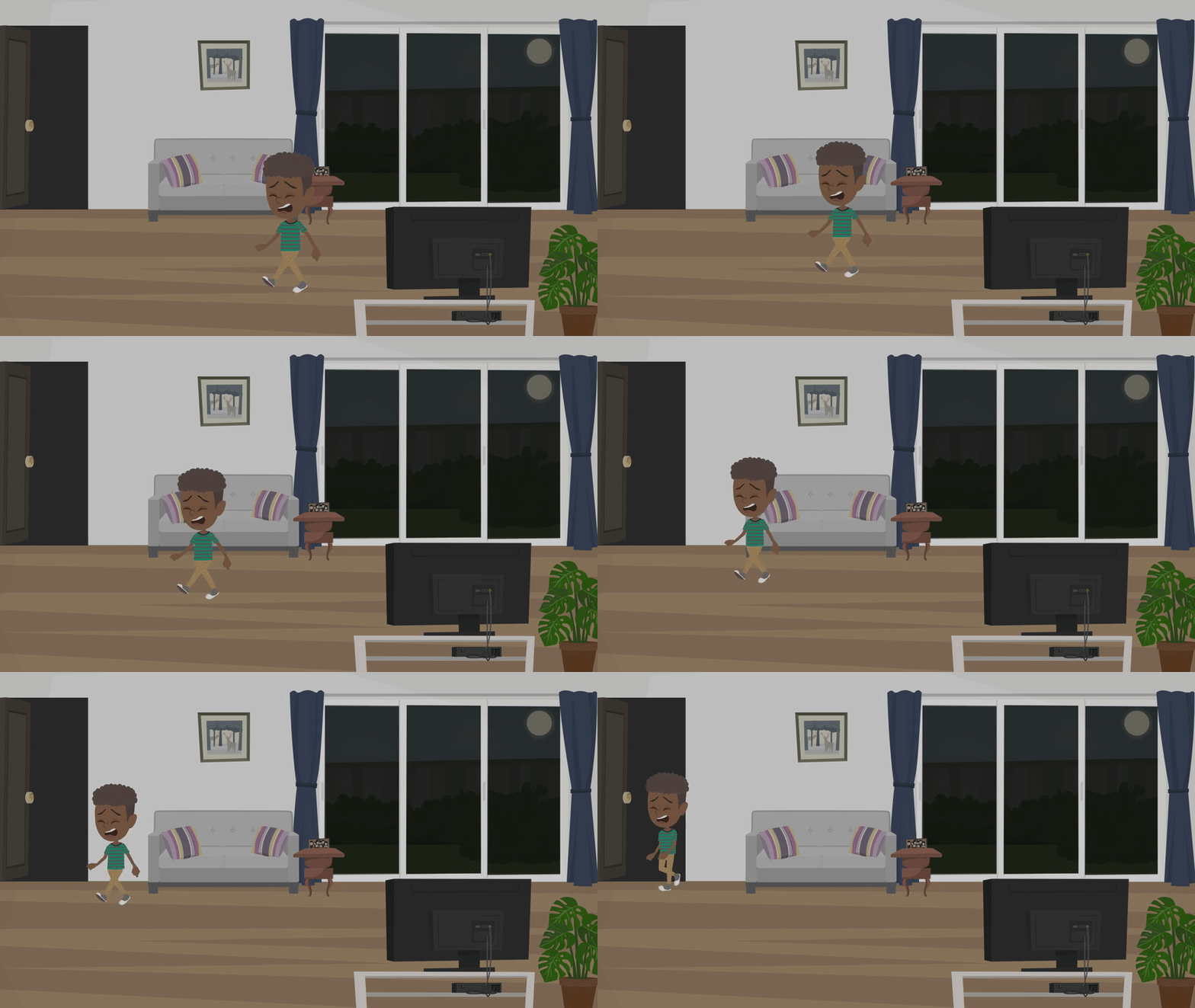
An animated Neil going into a dark room by himself at night
The anxiety scale set to level 8


When Neil is going into a dark room by himself at night, his anxiety scale is at 8. 

An animated Neil falling asleep alone in his room at night
The anxiety scale set to level 10


When Neil is falling asleep alone in his room at night, his anxiety scale is at 10. 

Now, work with your parent to think of three situations that make you feel anxious and write them down on this worksheet: Using the Anxiety Scale. Then mark your anxiety scale rating for each situation. alternatively, you can use this prompt:

For some kids, the 0 to 10 numbers do not work as well. If you are having trouble figuring out your ratings, you can also check either “a little bit anxious,” “anxious,” or “very anxious.”

Now that you’ve had some practice, you are on your way to becoming an anxiety scale expert, which is an important skill for a safe and successful trip to space! 
 
The anxiety scale helps us understand our own anxiety and show other people (like parents) how you are feeling, too! The anxiety scale is also helpful because it can show us that just because something is really scary right now, it doesn’t mean that it is going to be really scary forever! 
 
You are going to use the anxiety scale throughout LUNA, so start practicing using the anxiety scale to see how strong your anxiety and fear are in different situations.

< Back to Module 2 Main Page

Next Page: LUNA Rewards
LUNA (Learning to Understand and Navigate Anxiety)
  • Caregiver Modules
    • Module 1: About LUNA, Anxiety and Your Child's Goals
      • Design of LUNA
      • Structure of our Treatment Program
      • What is Anxiety?
      • Supplemental Information for Autism: Understanding Anxiety in Autistic Children
      • When Does Anxiety Become a Problem?
      • Anxiety or Something Else
      • My Child's Anxiety
      • Setting Goals
      • Summary
    • Module 2: Learning How to Identify Anxiety and Motivate your Child
      • What is Anxiety is Made of?
      • Measuring How Anxious You Are
      • LUNA Rewards System
      • Brave Bucks with a Rewards Menu
      • Direct Rewards
      • Direct Rewards, Brave Bucks, or both?
      • Summary
    • Module 3: The Avoidance Cycle and Fix-Its
      • What Are Quick Fixes?
      • Accommodation of Anxiety Behaviors
      • Congratulations!
    • Module 4: Facing our Fears - Preparing for Mission Plans
      • Avoidance versus Exposure
      • Creating Mission Plans
      • Select a Target Fear
      • Supplemental Information for Autism: Choosing mission plans
      • Specific Mission Plan Goal
      • Mission Plan Steps
      • Assign Anxiety Ratings
      • Make a Rewards Plan
      • Summary
    • Module 5: Executing Mission Plans
      • Plan Your Practice
      • Monitor Progress
      • Repeat Steps of your Mission Plan while also Mixing it Up
      • Debrief After Mission Plan Practice
      • Forms to use When Completing Mission Plans
      • Troubleshooting Mission Plans
      • Summary
    • Module 6: Learning Coping Skills to Manage Anxiety
      • What are Coping Skills? 
      • Relaxation and Mindfulness Skills
      • Other Mindfulness Exercises
      • Choosing your Coping Tools
      • Supplemental Information for Autism: Self-Stimulating Behaviors or "Stimming" as Coping
      • How to Approach Coping Practice
      • A Note on Coping Skills and Exposure Therapy (Facing Fears)
      • Summary
    • Module 7: Testing Expectations during Mission Plans
      • Changing expectations through mission plans
      • Experiencing Feared Consequences
      • Reflecting after doing mission plan activities
      • Summary
    • Module 8: Social Coaching
      • Social Skills
      • Supplemental Information for Autism: Social Coaching
      • Handling Bullying
      • Social Coaching Instructions
      • Social Coaching Example
      • Planning a Social Coaching Mission Plan Step
      • Summary
    • Module 9: Mission Plans for Autism-Related Anxiety
      • Targeting Anxiety Related to Sensory Sensitivity
      • Example of a mission plan with sensory components
      • Making Mission Plans Gradual for Anxiety Related to Features of Autism
      • Example of a mission plan with insistence on sameness and wanting to stick to routines
      • Your Turn to Practice
      • Caregivers Module 9 Summary
    • Module 10: Parenting Strategies for Managing Challenging Behavior
      • How Behaviors are Learned: The ABC Model
      • Supplemental Information for Autism: How Behaviors are Learned
      • Managing Challenging Behaviors by Focusing on Antecedents
      • How to use prevention strategies
      • Caregivers Module 10 Summary
    • Module 11: Managing Multiple Mission Plans
      • When to work on multiple mission plans? - Neil's example
      • When to work on multiple mission plans? - Sally's example
      • Managing multiple mission plans
      • Challenging feared expectations during mission plans
      • Caregivers Module 11 Summary
    • Module 12: Reviewing Your Progress and Planning for the Future
      • Planning for the Future
      • Planning for Anxiety Flares
      • Escalations in Anxiety
      • Finding Future Treatment
      • Supplemental Information for Autism and Special Education: Other Helpful Resources
      • Checking in with YOU
      • Caregivers Module 12 Summary
  • Child Modules
    • Module 1: About LUNA
      • Meet Sally and Neil!
      • What will I do in LUNA?
      • Knowing My Anxiety
      • LUNA Goals
      • Congratulations!
    • Module 2: How do I know when I’m anxious? How do I get my rewards?
      • Knowing how anxious you are using the anxiety scale
      • LUNA Rewards
      • Becoming an Astronaut
      • Congratulations!
    • Module 3: The Avoidance Cycle and Fix-Its
      • Fix-Its
      • ASTRO: The OCD Cycle
      • Congratulations!
    • Module 4: Learning About Mission Plans
      • What is Exposure?
      • Making a Mission Plan
      • Congratulations!
    • Module 5: Doing Mission Plans
      • Planning Practice
      • Practicing Mission Plan Steps
      • Congratulations!
    • Module 6: Coping with Anxiety
      • Deep Breathing
      • Mindfulness
      • Coping Skills Cards
      • Choosing your Coping Tools
      • Congratulations!
    • Module 7: Testing Expectations during Mission Plans
      • Challenging “stinking thinking” during mission plans
      • Congratulations!
    • Modules 8-10: Making Mission Plans Work Better
    • Module 11: Working on More Than One Mission Plan
      • Mission Plan Steps
      • Congratulations!
    • Module 12: Reviewing Your Progress and Planning for the Future
      • When You Start to Feel More Anxious or Afraid
      • Congratulations!
  • Teen Modules
    • Module 1: About LUNA
      • Knowing My Anxiety
      • Setting Goals
      • Congratulations!
    • Module 2: Identifying Anxiety and Staying Motivated
      • Introducing the Anxiety Intensity Scale
      • Getting Motivated
      • Congratulations!
    • Module 3: The Avoidance Cycle and Quick Fixes
      • Congratulations!
    • Module 4: Your Plan of Action
      • Making a Plan of Action
      • Congratulations!
    • Module 5: Completing Your Plan of Action
      • Practicing Your Exposure Activities
      • Congratulations!
    • Module 6: Coping with Anxiety
      • Example Coping Skills
      • Choosing Your Coping Tools
      • Congratulations!
    • Module 7: Challenging Our Expectations
      • Challenging Anxious Thoughts
      • Congratulations!
    • Module 8: Social Barriers and Social Skills
      • Social Skills
      • Handling Bullying and Rejection
      • Practicing Social Skills
      • Congratulations!
    • Module 9: When Anxiety Overlaps with Autism
      • Autism and Anxiety
      • Example Plans of Action
      • Congratulations!
    • Module 10: Managing More Than One Plan of Action
      • Are You Ready for a New Plan of Action?
      • Tips for Managing Multiple Plans of Action
      • Congratulations!
    • Module 11: Maintaining Progress
      • Congratulations!
    • Module 12: Planning for the Future
      • When You Start to Feel Anxious
      • Congratulations!
  • Teen Caregiver Modules
    • Module 1: About LUNA
      • More About Anxiety
      • Is My Child’s Behavior Due to Anxiety?
      • Your Child’s Anxiety
      • Congratulations!
    • Module 2: Identifying Anxiety and Staying Motivated
      • Different Aspects of Anxiety
      • Introducing the Anxiety Intensity Scale
      • Pros and Cons of Making a Change – Getting Motivated!
      • Congratulations!
    • Module 3: The Avoidance Cycle and Quick Fixes
      • What Are Quick Fixes?
      • Accommodation of Anxiety Behaviors
      • Congratulations!
    • Module 4: Your Plan of Action
      • Steps for Making a Plan of Action
      • Congratulations!
    • Module 5: Completing Your Plan of Action
      • Practicing Exposure Activities
      • During Exposure Activity Practice
      • After Practices
      • Troubleshooting
      • Congratulations!
    • Module 6: Coping with Anxiety
      • Example Coping Skills
      • Choosing Coping Tools
      • Congratulations!
    • Module 7: Challenging Our Expectations
      • Challenging Anxious Thoughts
      • Experiencing Feared Consequences & Accepting Uncertainty
      • Congratulations!
    • Module 8: Social Barriers and Social Skills
      • Social Skills
      • Social Coaching
      • Congratulations!
    • Module 9: When Anxiety Overlaps with Autism
      • Anxiety Related to Autism
      • Example Plans of Action
      • Congratulations!
    • Module 10: Managing More Than One Plan of Action
      • Is Your Child Ready for a New Plan of Action?
      • Tips for Managing Multiple Plans of Action
      • Notes About Oppositional Behavior
      • Congratulations!
    • Module 11: Maintaining Progress
      • Congratulations!
    • Module 12: Planning for the Future
      • Thinking About the Future
      • Anxiety Flares and Escalations
      • Finding Future Treatment and Resources
      • Congratulations!
  • ASTRO Teen Modules
    • ASTRO Module 1: About LUNA
      • ASTRO: Knowing My Anxiety
      • ASTRO: Setting Goals
      • Congratulations!
    • ASTRO Module 2: Identifying Anxiety and Staying Motivated
      • ASTRO: Introducing the Anxiety Intensity Scale
      • ASTRO: Getting Motivated
      • Congratulations!
    • ASTRO Module 3: The Avoidance Cycle and Quick Fixes
      • Congratulations!
    • ASTRO Module 4: Your Plan of Action
      • ASTRO Making a Plan of Action
      • Congratulations!
    • ASTRO Module 5: Completing Your Plan of Action
      • ASTRO: Practicing Your Exposure Activities
      • Congratulations!
    • ASTRO Module 6: Coping with Anxiety
      • ASTRO: Example Coping Skills
      • ASTRO: Choosing Your Coping Tools
      • Congratulations!
    • ASTRO Module 7: Challenging Our Expectations
      • ASTRO: Challenging Anxious Thoughts
      • Congratulations!
    • ASTRO Module 8: Social Barriers and Social Skills
      • ASTRO: Social Skills
      • ASTRO: Handling Bullying and Rejection
      • ASTRO: Practicing Social Skills
      • Congratulations!
    • ASTRO Module 9: When Anxiety Overlaps with Autism
      • ASTRO: Autism and Anxiety
      • ASTRO: Example Plans of Action
      • Congratulations!
    • ASTRO Module 10: Managing More Than One Plan of Action
      • ASTRO: Are You Ready for a New Plan of Action?
      • ASTRO: Tips for Managing Multiple Plans of Action
      • Congratulations!
    • ASTRO: Module 11: Maintaining Progress
      • Congratulations!
    • ASTRO: Module 12: Planning for the Future
      • ASTRO: When You Start to Feel Anxious
      • Congratulations!
  • ASTRO Teen Caregiver Modules
    • ASTRO Module 1: About LUNA
      • ASTRO: More About Anxiety
      • ASTRO: Is My Child’s Behavior Due to Anxiety?
      • ASTRO: Your Child’s Anxiety
      • Congratulations!
    • ASTRO Module 2: Identifying Anxiety and Staying Motivated
      • ASTRO: Different Aspects of Anxiety
      • ASTRO: Introducing the Anxiety Intensity Scale
      • ASTRO: Pros and Cons of Making a Change – Getting Motivated!
      • Congratulations!
    • ASTRO Module 3: The Avoidance Cycle and Quick Fixes
      • ASTRO: What Are Quick Fixes?
      • ASTRO: Accommodation of Anxiety Behaviors
      • Congratulations!
    • ASTRO Module 4: Your Plan of Action
      • ASTRO: Steps for Making a Plan of Action
      • Congratulations!
    • ASTRO Module 5: Completing Your Plan of Action
      • ASTRO: Practicing Exposure Activities
      • ASTRO: During Exposure Activity Practice
      • ASTRO: After Practices
      • ASTRO: Troubleshooting
      • Congratulations!
    • ASTRO Module 6: Coping with Anxiety
      • ASTRO: Example Coping Skills
      • ASTRO: Choosing Coping Tools
      • Congratulations!
    • ASTRO Module 7: Challenging Our Expectations
      • ASTRO: Challenging Anxious Thoughts
      • ASTRO: Experiencing Feared Consequences & Accepting Uncertainty
      • Congratulations!
    • ASTRO Module 8: Social Barriers and Social Skills
      • ASTRO: Social Skills
      • ASTRO: Social Coaching
      • Congratulations!
    • ASTRO Module 9: When Anxiety Overlaps with Autism
      • ASTRO: Anxiety Related to Autism
      • ASTRO: Example Plans of Action
      • Congratulations!
    • ASTRO Module 10: Managing More Than One Plan of Action
      • ASTRO: Is Your Child Ready for a New Plan of Action?
      • ASTRO: Tips for Managing Multiple Plans of Action
      • ASTRO: Notes About Oppositional Behavior
      • Congratulations!
    • ASTRO Module 11: Maintaining Progress
      • Congratulations!
    • ASTRO Module 12: Planning for the Future
      • ASTRO: Thinking About the Future
      • ASTRO: Anxiety Flares and Escalations
      • ASTRO: Finding Future Treatment and Resources
      • Congratulations!

Follow Us facebook twitter youtube linkedin instagram rss 

Footer Menu Healthcare

  • Healthcare
    • Specialties
    • MyChart Login
    • For Patients & Visitors
    • For Health Professionals
    • Clinical Trials
    • Find a Physician

Footer Menu Education

  • Education
    • Programs & Admissions
    • Student & Trainee Resources
    • Faculty Resources
    • School of Medicine
    • Graduate School of Biomedical Sciences
    • National School of Tropical Medicine
    • School of Health Professions
    • Tuition & Fees
    • Financial Aid

Footer Menu Research

  • Research
    • Our Research
    • Core Labs
    • Faculty Labs
    • Research Centers
    • Research Offices

Footer Menu Community

  • Community
    • Healthcare Outreach
    • Education Outreach
    • Global Programs
    • Community Events

Footer Menu About

  • About
    • Our Campus
    • Departments
    • Academic Centers
    • Administrative Offices
    • Affiliates
    • Leadership
    • Giving
    • Alumni

Footer Menu Resource Links

  • Resource Links
    • Contact Us
    • Find a Person
    • Careers
    • BCM Team Shop
    • News
    • Title IX Office
    • Compliance
    • Covid Response Site

©1998-2026 Baylor College of Medicine® | 1 Baylor Plaza, Houston, Texas 77030 | 713-798-4951
Have an edit or suggestion for this page?

  • Compliance
  • Privacy
  • Intranet