Home
  • Healthcare
    • Specialties
      • Cardiovascular Care
      • Oncology
      • Neurosurgery
      • Primary Care
      • View All Specialties >
    • For Health Professionals
      • Refer a Patient
      • Clinical Trials
      • Professional Development
      • View All >
    • For Patients & Visitors
      • MyChart Login
      • Accepted Insurance
      • Pay My Bill
      • Patient Information
      • View All >
    • Clinical Trials
      • Autism
      • Cancer
      • Obesity
      • Substance Abuse
      • View All Clinical Trials >
    • Find a Doctor
    • Make an Appointment

    General Inquiries

    Call today to schedule an appointment or fill out an online request form. If requested before 2 p.m. you will receive a response today.

    CALL

    713-798-1000

    Monday – Friday 8 a.m. – 5 p.m.


    ONLINE

    Request Now

    Request non-urgent appointments

    Request an appointment, learn about your rights as a patient, read about what to expect from your appointment, and more.

    As Houston's premier academic medical practice, Baylor Medicine delivers compassionate, innovative, evidence-based care.
    Find a Doctor

  • Education
    • Degree Programs & Admissions
      • M.D. Program
      • Ph.D. Programs
      • DNP Program (Nurse Anesthesia)
      • Genetic Counseling Program
      • P.A. Program
      • Orthotics & Prosthetics Program
      • Baccalaureate/M.D. Programs
      • Dual Degree Programs
      • View All Programs >
    • Financing Your Education
      • Tuition & Fees
      • Financial Aid
      • CARES ACT
    • Schools
      • School of Medicine
      • Graduate School of Biomedical Sciences
      • National School of Tropical Medicine
      • School of Health Professions
    • Advanced Training Programs
      • Residency Programs
      • Clinical Fellowships
      • Postdoctoral Research Positions
      • Continuing Professional Development
      • Diploma in Tropical Medicine
      • View All >
    • Resources
      • Departments
      • Academic Centers
      • Academic Calendars
      • Education Cores
      • View All >
    • Information For...
      • Students
      • Postdoctoral Researchers
      • Faculty
      • Alumni
    get-to-know-houston

    America's fourth-largest city is a great place to live, work, and play. Find out why.
    Get to Know Houston

  • Research
    • Research Offices
      • Advanced Technology Cores
      • Clinical Research
      • Institute for Clinical & Translational Research
      • Office of Research Leadership
      • Research IT
      • Sponsored Programs
    • Research at Baylor
      • Academic Centers
      • Departments
      • Faculty Labs
      • From the Labs
      • News
      • Our Research
      • Research Centers
      • Strategic Research Center
    • Additional Research Services
      • BCM Innovation Institute
      • Service Labs
      • VIICTR
    get-to-know-houston

    America's fourth-largest city is a great place to live, work, and play. Find out why.
    Get to Know Houston

  • Community
    • Healthcare Outreach
      • Community Programs
      • More >
    • Global Outreach
      • Global Health
      • Global Programs >
    • Educational Outreach
      • SMART Program
      • BioEd Online
      • More >
    • General Resources
      • Community Events
      • News
      • Blogs
      • Baylor in the Community
    get-to-know-houston

    America's fourth-largest city is a great place to live, work, and play. Find out why.
    Get to Know Houston

  • About
    • About Us
      • Academic Centers
      • Alumni
      • Careers
      • Departments
      • Giving
      • Leadership
      • Mission, Vision, Values
      • News
      • Our Affiliates
      • Fast Facts
      • Accreditation
    • Offices
      • President's Office
      • Office of Research
      • Ombuds Office
      • BCM Innovation Institute
      • View All >
    • Our Campus
      • Compliance
      • Safety and Security
      • Resource Stewardship & Sustainability
      • Team Shop
      • Find a Person
    get-to-know-houston

    America's fourth-largest city is a great place to live, work, and play. Find out why.
    Get to Know Houston

  • GIVE
  • CAREERS
  • INTRANET
  • Careers
  • Contact Us
  • News
Graduate School of Biomedical Sciences
  • Admissions
  • Degree Programs and Certificates
  • Research
  • Curriculum
  • Current Students
  • Postdoctoral Affairs
  • Faculty Mentoring Resources
  • Connect with GSBS
  • Graduate School Contacts
  • Career Paths
  • Student Life
  • Training Grants and Fellowships
  • Faculty & Staff
  • Admissions
  • Degree Programs and Certificates
  • Research
  • Curriculum
  • Current Students
  • Postdoctoral Affairs
  • Faculty Mentoring Resources
  • Connect with GSBS
  • Graduate School Contacts
  • Career Paths
  • Student Life
  • Training Grants and Fellowships
  • Faculty & Staff
  1. Baylor College of Medicine
  2. Education
  3. Graduate School of Biomedical Sciences
  4. Postdoctoral Affairs
  5. Prospective Postdocs
  6. Why BCM?
  • Admissions
    • Application Process
    • Requirements
    • Technical Standards
    • Standardized Test Scores
    • Stipends & Benefits
      • Fees and Expenses
        • 2023-24 Fees and Expenses
        • 2022-23 Fees and Expenses
        • 2021-22 Fees and Expenses
        • 2020-21 Fees and Expenses
        • 2019-20 Fees and Expenses
        • 2018-19 Fees and Expenses
        • 2017-18 Fees and Expenses
    • Frequently Asked Questions
    • Recruiting Events
  • Degree Programs and Certificates
    • SMART Program
      • Admissions
      • Application Components
      • Frequently Asked Questions
      • SMART Activities
      • Student Life
      • SMART Team
      • For SMART Faculty Mentors
    • Cancer & Cell Biology
      • Research
      • Faculty
      • Curriculum
      • Alumni
    • Chemical, Physical & Structural Biology
      • Research
      • Faculty
      • Curriculum
      • Alumni
    • Development, Disease Models & Therapeutics Graduate Program
      • Research
        • Faculty Involved In Clinical Trials
        • Faculty Research by Disease
          • Birth Defects, Rare, Genetic and Undiagnosed Diseases
          • Blood & Bone Marrow Disease
          • Brain and Spinal Cord Injury, Stroke and Epilepsy
          • Cancer
          • Cardiovascular Diseases and Disorders
          • Diabetes, Obesity and Diseases of Metabolism
          • Diseases of Aging
          • Diseases of the Liver, Kidney and Digestive System
          • Diseases of the Sensory Systems - Blindness, Vision Disorders, Deafness, Pain
          • Immune & Autoimmune Disorders and Inflammation
          • Infection & Infectious Disease
          • Intellectual Disabilities, Autism and Neurodevelopmental Disorders
          • Lung Diseases
          • Muscle Disease & Degeneration
          • Neurodegenerative Disease & Dementia
          • Neurological & Psychiatric Diseases & Addiction
          • Reproductive Dysfunction, Infertility & Sex Development Disorders
          • Skeletal & Joint Disease, Degeneration & Inflammation
          • Skin Disorders & Wound Healing
        • Faculty Research by Organ System
          • Adipose Tissue
          • Blood System & Bone Marrow
          • Bone, Cartilage, Muscle & Craniofacial Tissue
          • Breast and Mammary Gland
          • Cardiovascular System
          • Gastrointestinal System
          • Immune System
          • Liver & Biliary System
          • Lung & Respiratory System
          • Nervous System
          • Reproductive System
          • Sensory Systems (Eye, Ear, Nose)
          • Skin
          • Urinary System (Kidney, Prostate & Bladder)
        • Faculty Research by Topic
          • Aging & Degenerative Disease
          • Cancer, Cell Cycle & Cell Death
          • Cell Signaling Mechanisms
          • Developmental Biology
          • Genetics, Genomics & Epigenetics
          • Inflammation, Allergies, Immunity & Autoimmunity
          • Metabolism, Metabolic Diseases, Hormones & Endocrine Signaling
          • Microbiology, Microbiomes & Infectious Disease
          • Neuroscience
          • Reproductive Biology
          • Stem Cells, Regeneration & Tissue Repair
          • Therapy Development & Implementation
      • Faculty
      • Curriculum
      • Students
      • Alumni
    • Genetics & Genomics
      • Research
        • Topics
        • Model Organisms
        • Experimental Approaches
      • Faculty
      • Curriculum
        • Typical Program
        • Research Rotations
        • Student Advisory Committee
      • Students
        • Student Life
        • Student Awards and Publications
      • Outcomes and Alumni
    • Graduate Certificate in Biomedical Sciences and Health Equity
      • Admissions
        • Requirements
        • Recruitment Events
        • Admissions Frequently Asked Questions
      • Curriculum
      • Financial Aid and Benefits
      • Tuition and Fees
      • Faculty and Staff
      • Student Life
      • Student Profiles
    • Immunology Microbiology
      • Research
        • Antibiotics, Antivirals & Drug Resistance
        • Autoimmune & Inflammatory Diseases
        • Host-Microbe Interactions and Pathogenesis
        • Immune System Development, Metabolism and Function
        • Immunotherapy, Gene Therapy & Vaccine Development
        • Mechanisms of Viral Replication
        • Microbial Macromolecular Structure and Function
        • Microbiome in Health and Disease
        • Molecular & Viral Carcinogenesis & Cancer Immunology
      • Faculty
      • Students
    • Neuroscience
      • Research
        • Molecular & Cellular Neuroscience
        • Systems, Computational, & Theoretical Neuroscience
      • Faculty
      • Curriculum
      • Student Life
      • Students
      • Alumni
    • Quantitative & Computational Biosciences
      • Research
      • Faculty
      • Curriculum
    • Clinical Translational Research
      • Faculty
    • Biomedical Educator Certificate of Added Qualification
    • Master of Science in Biomedical Sciences
      • Admissions
        • Requirements
        • Technical Standards
        • Standardized Test Scores
        • Frequently Asked Questions
      • Curriculum
      • Financial Aid and Benefits
      • Faculty and Staff
      • Student Life
  • Research
    • GSBS Research Resources
  • Curriculum
    • Additional Opportunities
    • Foundational & Interdisciplinary Courses
    • Individual Development Plan
    • Responsible Conduct of Research
    • Visiting Inter-Institutional Graduate Students
  • Current Students
    • Forms
    • Graduate Student Council
      • Art Show
      • Job Opportunities
      • Officers
    • Problem Solving
  • Postdoctoral Affairs
    • Prospective Postdocs
      • Why BCM?
      • Postdoctoral Research Opportunities in Science
      • Find a Mentor
    • Current Postdocs
      • New Postdocs
      • Individual Development Plan
      • Annual Performance Review
      • International Postdocs
      • Funding
      • Professional Development
      • Resources
      • Emotional and Mental Health Wellness
      • National Postdoctoral Appreciation Week
      • Postdoc Grievances
    • Postdoctoral Association
      • Leadership Council
    • Faculty Mentors
    • Administrative Staff
    • Responsible Conduct of Research
  • Faculty Mentoring Resources
    • Effective Communication
    • Creating a Sense of Belonging
    • Mentor Training for Research Faculty
  • Connect with GSBS
  • Graduate School Contacts
  • Career Paths
  • Student Life
  • Training Grants and Fellowships
    • Active Institutional Grants
  • Faculty & Staff

Why BCM for Postdocs?

Our Research

wang-lab-18

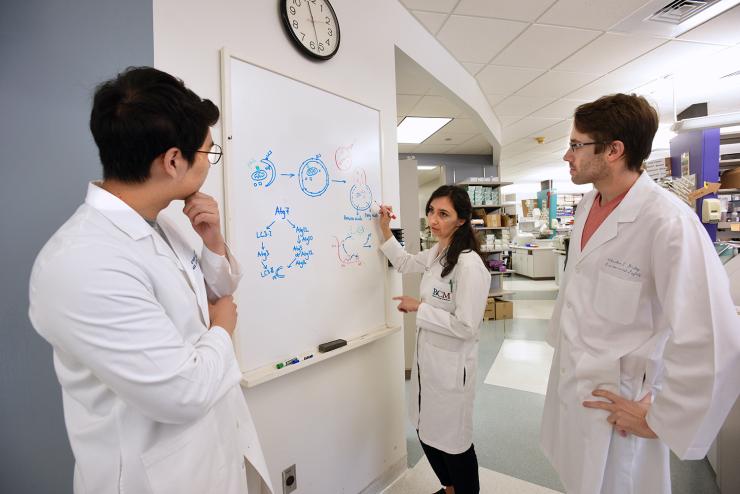
First and foremost among the reasons why BCM is an exceptional place to pursue postdoctoral training is our research. Nature Journal ranked Baylor College of Medicine as the second-fastest growing research institution in North America based on publications in high impact journals. The College ranks among the top 30 academic biomedical research institutions in the world in the 2019 Nature Index. In the Reuters listing of the World's Most Innovative Universities, Baylor ranks in the top 50. Our greatest strength as a research leader comes from our collaborative and innovative culture. Our faculty, which includes numerous members of prestigious scientific societies and award winners, is adept at applying deep knowledge of specific fields and working collaboratively with colleagues across disciplines to identify the right questions to ask and develop innovative protocols to answer them.

Learn more about our research

The Texas Medical Center

Texas Medical Center

Together the institutions of the Texas Medical Center are second in the nation in funding from the National Institutes of Health. In addition to supporting collaborations with the many hospitals, schools and research institutes in the TMC, the Center also facilitates state of the art research through specialized resources, including the TMC Innovation Institute, the TMC Library, and TCM Health Policy Institute. As a postdoctoral researcher here you will have access to all the resources of the world’s largest medical center, networking opportunities with researchers across disciplines and institutions and be able to attend seminars and lectures by experts from around the world who frequently visit the TMC.

Research Resources
JEOL

Everyone at BCM has access to the state-of-the-art instrumentation and technologies of the Advanced Technology Core laboratories as well as training in how, when and why to use these tools. Each core is run by faculty and technicians with highly specialized expertise in the technologies provided. 

Collaborative research centers create dynamic communities in which faculty and trainees engage across traditional scientific divides leveraging skills and resources from throughout the College as well as affiliated institutions.

In contemporary science, large sets of data are essential to investigations in many disciplines. The BCM Human Genome Sequencing Center and Baylor Genetics, provide access to high-quality genetic data. Involvement in the Human Microbiome Project, National Institutes of Health Brain Initiative, and other major national and international collaborations, facilitate access to extensive data repositories. Our extensive network of local hospital affiliates and partnership with CommonSpirit Health provides access to the extensive clinical data.

Houston

HoustonNoLimits
HoustonNoLimits
HoustonNoLimits

The city of Houston ranks among the top 25 science cities, the top 15 cities for life sciences and the top 15 cities for corporate science in the world in the Nature Index. Houston offers something for everyone from a vast range of culinary experiences to professional sports and arts organizations and expansive green spaces. All of this in a city with a cost of living that is 23 percent below the average cost of living in the nation’s 20 largest cities.

Explore Houston

Career Development

Your postdoc years are a pivotal point of transition in your career. While working with a great mentor and expanding your knowledge and skills set are primary, it is also essential to be thinking about your next step from day one of your postdoc training. The BCM Career Development Center provides workshops, seminars, resources, networking events, one-on-one counseling and other programs to help you define your career goals and successfully attain them.

Community

There are over 600 postdoctoral researchers at Baylor College of Medicine who come from across the United States and 46 countries. The Office of Postdoctoral Affairs and the Postdoctoral Association provide resources, services and events designed to help each postdoc find the support they need to succeed.

Graduate School of Biomedical Sciences
  • Admissions
    • Application Process
    • Requirements
    • Technical Standards
    • Standardized Test Scores
    • Stipends & Benefits
      • Fees and Expenses
        • 2023-24 Fees and Expenses
        • 2022-23 Fees and Expenses
        • 2021-22 Fees and Expenses
        • 2020-21 Fees and Expenses
        • 2019-20 Fees and Expenses
        • 2018-19 Fees and Expenses
        • 2017-18 Fees and Expenses
    • Frequently Asked Questions
    • Recruiting Events
  • Degree Programs and Certificates
    • SMART Program
      • Admissions
      • Application Components
      • Frequently Asked Questions
      • SMART Activities
      • Student Life
      • SMART Team
      • For SMART Faculty Mentors
    • Cancer & Cell Biology
      • Research
      • Faculty
      • Curriculum
      • Alumni
    • Chemical, Physical & Structural Biology
      • Research
      • Faculty
      • Curriculum
      • Alumni
    • Development, Disease Models & Therapeutics Graduate Program
      • Research
        • Faculty Involved In Clinical Trials
        • Faculty Research by Disease
          • Birth Defects, Rare, Genetic and Undiagnosed Diseases
          • Blood & Bone Marrow Disease
          • Brain and Spinal Cord Injury, Stroke and Epilepsy
          • Cancer
          • Cardiovascular Diseases and Disorders
          • Diabetes, Obesity and Diseases of Metabolism
          • Diseases of Aging
          • Diseases of the Liver, Kidney and Digestive System
          • Diseases of the Sensory Systems - Blindness, Vision Disorders, Deafness, Pain
          • Immune & Autoimmune Disorders and Inflammation
          • Infection & Infectious Disease
          • Intellectual Disabilities, Autism and Neurodevelopmental Disorders
          • Lung Diseases
          • Muscle Disease & Degeneration
          • Neurodegenerative Disease & Dementia
          • Neurological & Psychiatric Diseases & Addiction
          • Reproductive Dysfunction, Infertility & Sex Development Disorders
          • Skeletal & Joint Disease, Degeneration & Inflammation
          • Skin Disorders & Wound Healing
        • Faculty Research by Organ System
          • Adipose Tissue
          • Blood System & Bone Marrow
          • Bone, Cartilage, Muscle & Craniofacial Tissue
          • Breast and Mammary Gland
          • Cardiovascular System
          • Gastrointestinal System
          • Immune System
          • Liver & Biliary System
          • Lung & Respiratory System
          • Nervous System
          • Reproductive System
          • Sensory Systems (Eye, Ear, Nose)
          • Skin
          • Urinary System (Kidney, Prostate & Bladder)
        • Faculty Research by Topic
          • Aging & Degenerative Disease
          • Cancer, Cell Cycle & Cell Death
          • Cell Signaling Mechanisms
          • Developmental Biology
          • Genetics, Genomics & Epigenetics
          • Inflammation, Allergies, Immunity & Autoimmunity
          • Metabolism, Metabolic Diseases, Hormones & Endocrine Signaling
          • Microbiology, Microbiomes & Infectious Disease
          • Neuroscience
          • Reproductive Biology
          • Stem Cells, Regeneration & Tissue Repair
          • Therapy Development & Implementation
      • Faculty
      • Curriculum
      • Students
      • Alumni
    • Genetics & Genomics
      • Research
        • Topics
        • Model Organisms
        • Experimental Approaches
      • Faculty
      • Curriculum
        • Typical Program
        • Research Rotations
        • Student Advisory Committee
      • Students
        • Student Life
        • Student Awards and Publications
      • Outcomes and Alumni
    • Graduate Certificate in Biomedical Sciences and Health Equity
      • Admissions
        • Requirements
        • Recruitment Events
        • Admissions Frequently Asked Questions
      • Curriculum
      • Financial Aid and Benefits
      • Tuition and Fees
      • Faculty and Staff
      • Student Life
      • Student Profiles
    • Immunology Microbiology
      • Research
        • Antibiotics, Antivirals & Drug Resistance
        • Autoimmune & Inflammatory Diseases
        • Host-Microbe Interactions and Pathogenesis
        • Immune System Development, Metabolism and Function
        • Immunotherapy, Gene Therapy & Vaccine Development
        • Mechanisms of Viral Replication
        • Microbial Macromolecular Structure and Function
        • Microbiome in Health and Disease
        • Molecular & Viral Carcinogenesis & Cancer Immunology
      • Faculty
      • Students
    • Neuroscience
      • Research
        • Molecular & Cellular Neuroscience
        • Systems, Computational, & Theoretical Neuroscience
      • Faculty
      • Curriculum
      • Student Life
      • Students
      • Alumni
    • Quantitative & Computational Biosciences
      • Research
      • Faculty
      • Curriculum
    • Clinical Translational Research
      • Faculty
    • Biomedical Educator Certificate of Added Qualification
    • Master of Science in Biomedical Sciences
      • Admissions
        • Requirements
        • Technical Standards
        • Standardized Test Scores
        • Frequently Asked Questions
      • Curriculum
      • Financial Aid and Benefits
      • Faculty and Staff
      • Student Life
  • Research
    • GSBS Research Resources
  • Curriculum
    • Additional Opportunities
    • Foundational & Interdisciplinary Courses
    • Individual Development Plan
    • Responsible Conduct of Research
    • Visiting Inter-Institutional Graduate Students
  • Current Students
    • Forms
    • Graduate Student Council
      • Art Show
      • Job Opportunities
      • Officers
    • Problem Solving
  • Postdoctoral Affairs
    • Prospective Postdocs
      • Why BCM?
      • Postdoctoral Research Opportunities in Science
      • Find a Mentor
    • Current Postdocs
      • New Postdocs
      • Individual Development Plan
      • Annual Performance Review
      • International Postdocs
      • Funding
      • Professional Development
      • Resources
      • Emotional and Mental Health Wellness
      • National Postdoctoral Appreciation Week
      • Postdoc Grievances
    • Postdoctoral Association
      • Leadership Council
    • Faculty Mentors
    • Administrative Staff
    • Responsible Conduct of Research
  • Faculty Mentoring Resources
    • Effective Communication
    • Creating a Sense of Belonging
    • Mentor Training for Research Faculty
  • Connect with GSBS
  • Graduate School Contacts
  • Career Paths
  • Student Life
  • Training Grants and Fellowships
    • Active Institutional Grants
  • Faculty & Staff

Office of Postdoctoral Affairs

Phone 713–798–4475
Email postdocaffairs@bcm.edu

Related Links

Postdoctoral Research Opportunities in Science
Open Postdoc Positions
get-to-know-houston

America's fourth largest city is a great place to live, work and play. Find out why.
Get to Know Houston

Credit
Visit Houston

Connect with us

Follow Us facebook twitter youtube linkedin instagram rss 

Footer Menu Healthcare

  • Healthcare
    • Specialties
    • MyChart Login
    • For Patients & Visitors
    • For Health Professionals
    • Clinical Trials
    • Find a Physician

Footer Menu Education

  • Education
    • Programs & Admissions
    • Student & Trainee Resources
    • Faculty Resources
    • School of Medicine
    • Graduate School of Biomedical Sciences
    • National School of Tropical Medicine
    • School of Health Professions
    • Tuition & Fees
    • Financial Aid

Footer Menu Research

  • Research
    • Our Research
    • Core Labs
    • Faculty Labs
    • Research Centers
    • Research Offices

Footer Menu Community

  • Community
    • Healthcare Outreach
    • Education Outreach
    • Global Programs
    • Community Events

Footer Menu About

  • About
    • Our Campus
    • Departments
    • Academic Centers
    • Administrative Offices
    • Affiliates
    • Leadership
    • Giving
    • Alumni

Footer Menu Resource Links

  • Resource Links
    • Contact Us
    • Find a Person
    • Careers
    • BCM Team Shop
    • News
    • Title IX Office
    • Compliance
    • Covid Response Site

©1998-2026 Baylor College of Medicine® | 1 Baylor Plaza, Houston, Texas 77030 | 713-798-4951
Have an edit or suggestion for this page?

  • Compliance
  • Privacy
  • Intranet