
Student Voices: James Okoh
James Okoh describes his motivation in joining the neuroscience graduate program.
Student Voices: Madaline Mocchi
Meet Maddie Mocchi and learn why she chose BCM for her graduate education.
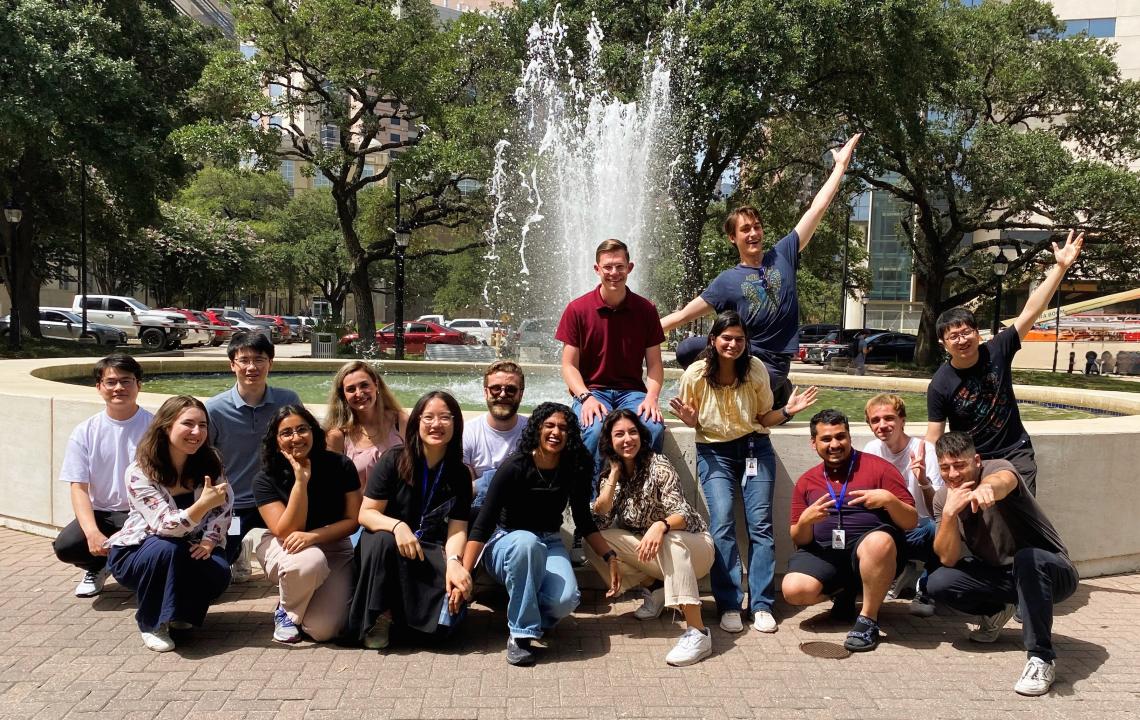
Supporting Your Success
From our extensive research resources, including advanced technology core labs and numerous collaborative research centers, to academic and support services, which include career development and physical and mental wellness services, we are committed to providing the resources and services you need to realize your goals.

Amanda Brown: Student Corner
Amanda Brown, a student in Baylor’s Graduate School of Biomedical Sciences, was interviewed about what drives her fascination with science, her interest in science communications and her future plans in academia.
Student Voices
Graduate student Asante Hatcher discusses the relevance of team skills for his career plans and his involvement with BCM's unique Team Launch program.
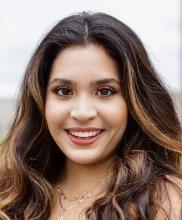
Ana Chavez
Mentor: Benjamin Hayden, Ph.D.
Undergraduate major: Neuroscience
Undergraduate school: Rice University
Research Interests: My research interests include computational modeling of single unit neural data, spatial navigation, and cognitive neuroscience.
Why did you choose BCM?
I chose BCM because of its great diversity. Not only is the community of scientists diverse, but also the research that is being conducted. This gave me the unique opportunity to experiment with different techniques and experimental questions. BCM's community is also very passionate about the research and science that is happening in each lab, so it provides a great spirit of encouragement.
What is your Research Interest?
My main research interest can be explained in one word "decode." I am in a unique position where I have access to human intracranial eCoG data from epilepsy patients. Thanks to them, we can ask important questions that can otherwise not be answered with non-human models. I am particularly interested in spatial navigation and mapping out place cells, as well as how they can be modulated with different forms of stimulation. I'm also interested in how thoughts about specific concepts are represented at the single neuron level. Additionally modeling how we make choices based on the underlying neural environment through abstracting these complicated processes with mathematics is another avenue I frequently explore. Although these interests may all seem completely unrelated, they all share the same driving force, which is communication among neurons. My goal is to better understand and decode this "language."
Why did you choose your mentor?
I chose my mentor for many reasons. Immediately we sat down to discuss my interests and how he could help me come up with a project that satisfied both of our interests. Something unique about my mentor is that no idea is "too crazy" for him, so the sense of support has been there since the beginning. He has a very flexible mentoring style, where he can be as hands on/off as you need depending on where you are. It seems to me that he is swimming in opportunities and his idea of science and discovery is very fun to partake in! Which brings me to the main reason I chose my mentor, which is that he is never shy about sharing ideas for new projects and asks for my input in his own research endeavors.
What aspects of training have been most influential in preparing for your intended career?
Classes have really been influential in setting up a strong foundation for my research. I was pleasantly surprised at the amount I could learn within my first year of grad school! I would also owe a lot of appreciation to journal clubs and seminars. Learning how to read a paper, dissect it, and present your take on it has been incredibly helpful in my science communication skills and with my experimental design.
Did Baylor's location in the Texas Medical Center enhance your experience?
Being in the TMC has enhanced my experience. I appreciate the ability to collaborate with other hospitals and research institutions. This has directly impacted my research because I work with patients across different hospitals. Additionally, being so close to Rice University has allowed me to take Rice courses critical for my advancement.
What are your career plans?
I am leaning towards a career in industry. I really enjoy working with loads of data and finding creative ways to wrangle it into something interpretable. I am still deciding whether I want to pursue a career in tech, startups, or even venture capital. My main motivation is to continue doing research but on a more global scale. Working on making science accessible to all is something that drives me towards a career in industry.
What do you enjoy about living in Houston?
I am originally from the Houston area, so I would say I enjoy being so close to my family! Escaping to my parent's house when things get overwhelming is a special privilege of living here. I know that is not the case for every student, but Houston is such a welcoming place, that it's not hard to find a home away from home. At first glance, it may seem that Houston is "flat" in all senses of the word, but that couldn't be further from the truth! (well except for in the physical sense). Houston's diverse community allows for fun experiences with cultural events, food, and overall exploration of the city.
What advice to you have for prospective students?
I would say that the most important piece of advice is to keep an open mind. I feel like a lot of graduate students come in with a specific idea of what they want to do, who they want to work with, and with what model species even if they don't want to admit that to themselves. Yet, as you go through your graduate career, you really could not be more surprised and intrigued by areas of research that you never even knew existed or thought would interest you! Don't fear the unknown, but rather embrace it and view it as a "fun" way to learn. This is obviously very scary to do, but it may lead students to an opportunity that turns out better than what they expected. I would also suggest asking questions and for help whenever possible because so many of us have been in the same boat and are more than willing to offer a helping hand.
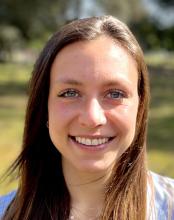
Assia Chericoni
Mentor: Benjamin Hayden, Ph.D.
Undergraduate major: Biomedical Engineering
Undergraduate school: University Campus Bio-Medico of Rome, Italy
Research Interests: Decision making, executive control and curiosity
Why did you choose BCM?
I chose BCM because it has a tailored neuroscience program, which is extremely well organized. They value communication and interactions between students, science wise, but also community wise. I remember that when I was interviewing, I felt extremely welcome and that was important to me, to feel part of something. Also, BCM offers a lot of amazing mentors covering different aspects of neuroscience.
What is your Research Interest?
I am really into basic science. My research interests include decision making and executive control, specifically I am interested in studying the neural correlates of choice and planning. Something that I'd also like to investigate is what is driving curiosity in our brain and how that happens. I am interested in investigating those questions using machine learning as well as reinforcement learning approaches coupled to human electrophysiology/spikes data.
Why did you choose your mentor?
What I prefer about Ben is that he is an extremely energetic person, he is always full of ideas that span on different topics. I feel he does his best to offer his students the opportunity of learning, discovering, and understanding what they'd like to study. He is an amazing writing teacher, and he always stimulates me to read more! I became an avid reader since I joined his lab! He is empathetic, compassionate, and careful, and that is really valuable. I also feel he knows how to support students when they feel defeated and how to push them to do better. I have also chosen Ben as a mentor because he is able to show me my potential, and without him I would not always be aware of having it.
What aspects of training have been most influential in preparing for your intended career?
My master's degree in biomedical engineering was a game changer. While achieving it I started to study neuroengineeering and I understood that I was interested in studying the brain. Then I was in Boston for almost a year where I studied sleep and epilepsy, which was fundamental for my applications to grad schools.
Did Baylor's location in the Texas Medical Center enhance your experience?
Absolutely! I feel that it promotes interdisciplinary interactions, and it offers so many perspectives on different research topics. Whatever you are studying you are always able to find someone to talk to who will enrich your knowledge. For instance, working with human electrophysiological data I spend time in the epilepsy monitoring unit at St. Luke's Hospital and the interactions with the patients and surgeons make it always an enriching experience.
What are your career plans?
I would say that being a computational person, after my PhD I would like to move to industry, maybe working as a data analyst. I would not exclude the possibility of an academic career, but right now it is not in my plans.
What do you enjoy about living in Houston?
Houston is an extremely diverse city, and the food is just amazing. Here you can find so many different cultures and coming from a city where the culture is not that diverse, for me it is extremely interesting and exciting! Houston is a big city which can be scary, and it may take time to get used to it. You can find people coming from every part of the world, in one hour you can be at the beach, and if you feel you need a break from the crowds of the city you can go camping in many natural parks. If you are careful, you can also find nice art exhibitions or really cool DJ-sets (I am really into techno :)) One year ago I would have never thought I'd say that, but Houston became my second home!
What advice to you have for prospective students?
Just never stop putting effort and being committed to what you are doing. I think is important to set goals and at the same time be flexible in achieving them, because things change all the time, but we can also make changes. I would also say don't be afraid of grad school; it is a process, and you need to trust it. I cannot explain enough how much I have been improving myself since I have been at Baylor. Be strong; I crossed an ocean to be here, and I am still convinced it was the right choice!
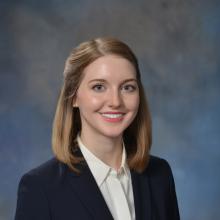
Jennifer Deger
Mentor: Hugo Bellen, Ph.D., D.V.M. and Joshua Shulman, M.D., Ph.D.
Undergraduate major: Neuroscience
Undergraduate school: The University of Texas at Austin
Research Interests: Broadly speaking, I'm interested in brain aging and longevity. More specifically, I'm interested in mitochondrial contributions to Alzheimer's disease.
Why did you choose BCM?
I really liked the students and faculty of BCM when I interviewed. Everyone is so smart and driven, yet friendly and fun. I knew BCM would provide an excellent environment for my growth as a physician and a neuroscientist.
What is your Research Interest?
Mitochondrial impairments have long been associated with neurodegenerative diseases such as Alzheimer's. However, we lack a complete understanding of mitochondrial contributions to neurodegeneration, especially because most of the research examining Alzheimer's-associated mitochondrial dysfunction has been neuron-centric. Glial mitochondria have been relatively neglected but may serve important roles in the health of the aging brain. Thus, I am interested in how glial mitochondrial dynamics change in Alzheimer's disease and contribute to disease risk.
Why did you choose your mentor?
Hugo and Josh are both dedicated, wise, and compassionate leaders. I felt at home when I rotated in both their labs, which are in adjoining spaces. I was thrilled when they agreed to co-mentor me. Their research, areas of expertise, and even personalities complement each other. I'm learning so much from them and feel privileged to call myself a member of both teams.
What aspects of training have been most influential in preparing for your intended career?
Learning to work with others and asking for help have been essential. You need to collaborate to be successful in science. Also, I'm grateful for the opportunities I've had to refine my presentation and communication skills. I want to be able to share my ideas and research not only with the scientific community, but also with the public.
Did Baylor's location in the Texas Medical Center enhance your experience?
Absolutely! The TMC is the NYC of biomedical research. The TMC not only offers abundant research and clinical opportunities, but also an inspiring environment. Walking to and from lab every day I can feel the enthusiasm people have for medical excellence. Also, if you need a good doctor, or (hopefully not) acute care, there's no better place to be than the TMC.
What are your career plans?
I'm not sure how exactly I want to do it yet, but I know I want to make the world a better place through science and medicine. I also know I want to never stop learning.
What do you enjoy about living in Houston?
Houston is bustling and festive like any big city, but it's full of friendly folks like a small town. Any activity or cuisine you can think of is within reach, and you can't beat the quality of life. Also, I've never had to shovel snow here.
What advice to you have for prospective students?
Work hard, eat your vegetables, and follow your heart. Remember that anything worth doing can be done.
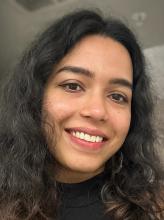
Britya Ghosh
Mentor: Kara Marshall, Ph.D.
Undergraduate major: Biotechnology
Undergraduate school: National Institute of Technology, Durgapur
Research Interests: Sensory system, interoception, ion channels
What is your Research Interest?
I am fascinated by how visceral organs can relay the state of the body to the brain. We have all felt hunger pangs after a skipped lunch or that 'filling feeling' after a heavy dinner. I am interested to understand how mechanical signals evoked by contraction and distention in the gut play a role in sensing hunger and satiety. My research won't cure a disease, but it has the potential to uncover molecular targets to treat obesity and feeding disorders.
Why did you choose your mentor?
I feel supported and encouraged to be creative and critical in answering questions that truly excite me. I come out of every one-on-one meeting with the ability to think more deeply and objectively about my research. I also appreciate Dr. Marshall's superpower of putting me back on track when I veer too much.
What are your career plans?
I hope to make significant contributions to science as a PhD student (and someday as a PI).
What do you enjoy about living in Houston?
I love the proximity of the art museums to the campus and the good food.
What advice do you have for prospective students?
Enjoy the process and find a mentor who is ready to support your dreams.
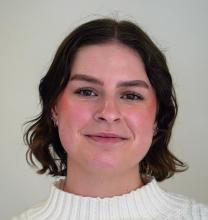
Alexandra Larson
Mentor: Joshua Shulman, M.D., Ph.D. and Steven Boeynaems, Ph.D.
Undergraduate major: Biochemistry and Molecular Biology
Undergraduate school: Oregon State University
Research Interests: Cellular mechanisms regarding nervous system development and developmental diseases
Why did you choose BCM?
The students were immediately welcoming and very honest about the pros and cons of studying here. Their honesty let me know they'd be there for support and advice when I hit roadblocks. We were taken care of at every step, whereas other institutions left it up to me to arrange flights, and transportation to hotels or to campus. Additionally, the science at BCM and the Texas Medical Center in general is amazing and I knew I would be able to pursue any scientific questions I had here.
What is your Research Interest?
My main goal is to characterize the role of TDP-43 in the development of limbic-predominant age-related TDP-43 encephalopathy, or LATE disease. In addition to determining the mechanisms of LATE, I am interested in overlapping pathology with other diseases like Alzheimer's, and how TDP-43 may be involved in comorbidity of LATE with other diseases.
Why did you choose your mentor?
There are many reasons that I chose to be co-mentored, and by these two scientists, most important is that I genuinely feel that they both believe in me and take me seriously as a growing scientist. I also feel comfortable being honest and asking for help from both mentors, which will be important later on when I inevitably mess something up.
Did Baylor's location in the Texas Medical Center enhance your experience?
Yes. For any technical or conceptual question regarding your research, there is probably someone here that could help you. Listening to faculty chalk talks I am constantly amazed by the research happening here. Even just in the NRI (Neurological Research Institute), I have been able to reach out to people from various labs to discuss or learn techniques that people in my own lab are not familiar with.
What advice to you have for prospective students?
Make sure you feel comfortable with the current students and other interviewees while visiting different institutions. These people will potentially be your support system for the next 5 years, so you want to make sure you get along with them. Make sure to ask faculty questions during your interviews, about their mentorship style and whatever else you need to know to determine if they could be your thesis mentor. Make sure there are at least a few faculty you could see yourself working with, but also know that your interests or needs may change over the course of your first year. Also be realistic about the location, and if you would be happy living there. School is hard enough, so you want to be sure that you like where you live and that the things you enjoy doing are available for you in that location.
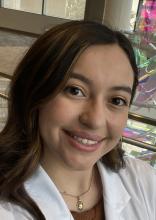
Estefania Torres
Mentor: Mirjana Maletic-Savatic, M.D., Ph.D.
Undergraduate major: Neuroscience with a minor in Linguistics
Undergraduate school: The University of Texas at El Paso
Research Interests: I became fascinated by neurodevelopment from instruction in the 1st year courses. I was astonished by the sophisticated methods of using stem cells for regenerative medicine. Translational research now allows us to obtain patient-derived cells to reprogram into pluripotent stem cells and be able to make organoid disease models to test pharmacological therapeutics.
Why did you choose BCM?
I knew BCM was the right place to pursue graduate school when I experienced the collaborative environment during the SMART program internship. It is in the heart of the Texas Medical Center, as students we have a unique opportunity to learn from the best scientists and clinicians.
The Neuroscience program is a student-centered environment where there are opportunities for growth: academically, professionally and in research pursuits. During the interviews I felt supported to pursue futuristic research like space health.
What is your Research Interest?
I am interested in merging the fields of neuroscience and space health to find ways to countermeasure the effects of outer space risks (microgravity and radiation) specifically for neurological states. For example, examining the effects of radiation on neurogenesis and cognition.
Why did you choose your mentor?
I chose my mentor because she encourages me to challenge myself and supports my career goals of working for NASA. She is a kind mentor who understands and prioritizes the wellbeing of her students!
What aspects of training have been most influential in preparing for your intended career?
I believe communication is the key to success so networking to me has been most influential, to meet professionals working in my field of interest. Another aspect of communication is learning to present your research in a clear and concise manner, which I am always actively working on by attending writing workshops and participating in scientific conferences.
Did Baylor's location in the Texas Medical Center enhance your experience?
Being at TMC makes conducting translational research a very vivid and relevant experience. Having access to ongoing clinical trials and the latest technologies enhances the learning environment for a well-rounded PhD.
What are your career plans?
I plan to be a research scientist at NASA to study neuroscience in the context of space medicine and to eventually apply to become an astronaut.
What do you enjoy about living in Houston?
I appreciate the cultural and culinary diversity the city has. Although it has been overwhelming to adjust to the big city life.
What advice to you have for prospective students?
Surround yourself with successful people and a good support system.