Home
  • Healthcare
    • Specialties
      • Cardiovascular Care
      • Oncology
      • Neurosurgery
      • Primary Care
      • View All Specialties >
    • For Health Professionals
      • Refer a Patient
      • Clinical Trials
      • Professional Development
      • View All >
    • For Patients & Visitors
      • MyChart Login
      • Accepted Insurance
      • Pay My Bill
      • Patient Information
      • View All >
    • Clinical Trials
      • Autism
      • Cancer
      • Obesity
      • Substance Abuse
      • View All Clinical Trials >
    • Find a Doctor
    • Make an Appointment

    General Inquiries

    Call today to schedule an appointment or fill out an online request form. If requested before 2 p.m. you will receive a response today.

    CALL

    713-798-1000

    Monday – Friday 8 a.m. – 5 p.m.


    ONLINE

    Request Now

    Request non-urgent appointments

    Request an appointment, learn about your rights as a patient, read about what to expect from your appointment, and more.

    As Houston's premier academic medical practice, Baylor Medicine delivers compassionate, innovative, evidence-based care.
    Find a Doctor

  • Education
    • Degree Programs & Admissions
      • M.D. Program
      • Ph.D. Programs
      • DNP Program (Nurse Anesthesia)
      • Genetic Counseling Program
      • P.A. Program
      • Orthotics & Prosthetics Program
      • Baccalaureate/M.D. Programs
      • Dual Degree Programs
      • View All Programs >
    • Financing Your Education
      • Tuition & Fees
      • Financial Aid
      • CARES ACT
    • Schools
      • School of Medicine
      • Graduate School of Biomedical Sciences
      • National School of Tropical Medicine
      • School of Health Professions
    • Advanced Training Programs
      • Residency Programs
      • Clinical Fellowships
      • Postdoctoral Research Positions
      • Continuing Professional Development
      • Diploma in Tropical Medicine
      • View All >
    • Resources
      • Departments
      • Academic Centers
      • Academic Calendars
      • Education Cores
      • View All >
    • Information For...
      • Students
      • Postdoctoral Researchers
      • Faculty
      • Alumni
    get-to-know-houston

    America's fourth-largest city is a great place to live, work, and play. Find out why.
    Get to Know Houston

  • Research
    • Research Offices
      • Advanced Technology Cores
      • Clinical Research
      • Institute for Clinical & Translational Research
      • Office of Research Leadership
      • Research IT
      • Sponsored Programs
    • Research at Baylor
      • Academic Centers
      • Departments
      • Faculty Labs
      • From the Labs
      • News
      • Our Research
      • Research Centers
      • Strategic Research Center
    • Additional Research Services
      • BCM Innovation Institute
      • Service Labs
      • VIICTR
    get-to-know-houston

    America's fourth-largest city is a great place to live, work, and play. Find out why.
    Get to Know Houston

  • Community
    • Healthcare Outreach
      • Community Programs
      • More >
    • Global Outreach
      • Global Health
      • Global Programs >
    • Educational Outreach
      • SMART Program
      • BioEd Online
      • More >
    • General Resources
      • Community Events
      • News
      • Blogs
      • Baylor in the Community
    get-to-know-houston

    America's fourth-largest city is a great place to live, work, and play. Find out why.
    Get to Know Houston

  • About
    • About Us
      • Academic Centers
      • Alumni
      • Careers
      • Departments
      • Giving
      • Leadership
      • Mission, Vision, Values
      • News
      • Our Affiliates
      • Fast Facts
      • Accreditation
    • Offices
      • President's Office
      • Office of Research
      • Ombuds Office
      • BCM Innovation Institute
      • View All >
    • Our Campus
      • Compliance
      • Safety and Security
      • Resource Stewardship & Sustainability
      • Team Shop
      • Find a Person
    get-to-know-houston

    America's fourth-largest city is a great place to live, work, and play. Find out why.
    Get to Know Houston

  • GIVE
  • CAREERS
  • INTRANET
  • Careers
  • Contact Us
  • News
Healthcare: Cardiovascular Medicine
  • Specialties
  • Find a Physician
  • For Patients
  • For Physicians
  • Clinical Trials
  • Request an Appointment
  • MyChart
  • News
  • Specialties
  • Find a Physician
  • For Patients
  • For Physicians
  • Clinical Trials
  • Request an Appointment
  • MyChart
  • News
  1. Baylor College of Medicine
  2. Healthcare
  3. Specialties
  4. Cardiovascular Medicine
  5. Cardiothoracic Surgery
  6. Pericardiectomy
  • You and Your Heart
    • About the Heart
    • General Cardiology
    • Interventional Cardiology
    • Cardiac Electrophysiology
      • Cardiac Electrophysiology and Arrhythmias
      • Meet Our Team
    • Women and Heart Disease
    • Meet our Team
  • Services and Diagnostic Procedures
  • Specialty Centers and Programs
    • Advanced Heart Failure Clinic
      • Heart Failure FAQs
      • Hypertrophic Cardiomyopathy
      • Pulmonary Hypertension
      • Meet Our Team
    • Center for Aortic Surgery
      • Meet Our Team
    • Inherited Arrhythmia and Cardiomyopathy Clinic
      • Meet Our Team
    • Structural Heart Disease Center
      • Atrial Septal Defect (ASD) Repair
      • Patent Foramen Ovale
      • Structural Heart Disease FAQs
      • Meet Our Team
    • Texas Adult Congenital Heart Center
      • Meet Our Team
    • Lipid Metabolism and Atherosclerosis Clinic
      • Meet Our Team
  • Cardiothoracic Surgery
    • Abdominal Aortic Aneurysm
    • Aortic Graft and Stent-Graft Infections
    • Ascending Aneurysm
    • Ascending and Arch Aortic Aneurysms and Dissection
    • Bentall Procedure
    • Beveled Aortic Hemiarch Replacement
    • Cabrol Procedure
    • Cardiopulmonary Bypass
    • Carotid Artery Stent Procedure
    • Carotid-Carotid Bypass
    • Carotid-Subclavian Bypass
    • Coronary Artery Disease Coronary Bypass
    • Descending Aneurysm
    • Elephant Trunk Repair
    • Hybrid Arch Repair
    • Heart Valve Repair
    • Minivalve Repair
      • Request Appointment Minivalve
    • Pacemaker
    • Pericardiectomy
    • Prolapse
    • Pulmonary Endarterectomy
    • Robotic Heart Surgery
    • TAVR
    • Total Aortic Arch Replacement
    • Meet Our Team
  • Invasive & Non-Invasive Tests
  • Vascular Health
    • Angioplasty and Stent Placement
    • Carotid Artery Disease
    • Deep Vein Thrombosis
    • Diabetic Foot Limb Salvage
    • Hemodialysis
    • Mesenteric Artery Disease
    • Peripheral Artery Disease
    • Peripheral Artery Bypass
    • Varicose Veins
      • Noninvasive Treatments for Varicose Veins
      • Varicose Vein Stripping (Phlebectomy )
    • Vascular Problems in Athletes
    • Venous Insufficiency and Venous Ulcers
    • Frequently Asked Questions
    • Meet Our Team
  • For Patients
  • Meet Our Team

Pericardiectomy

Scott Holmes
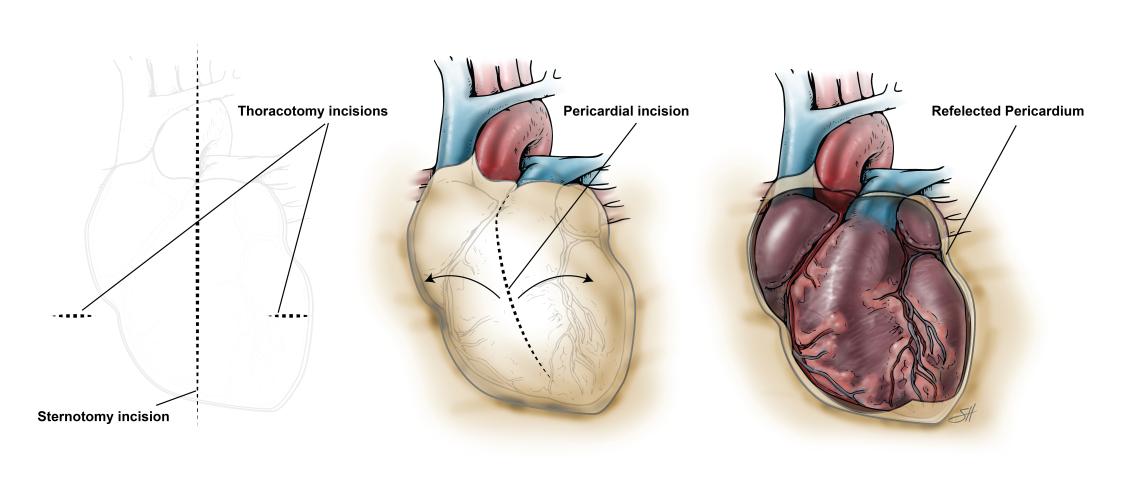
Illustration of a pericardiectomy

What is Pericarditis?

Pericarditis refers to swelling and irritation of the layers of sac-like tissue that is surrounding the heart. A small amount of fluid will ensure the layers stay separate and have no friction between them. Pericarditis can cause sharp chest pains that begin when the irritated or swollen layers begin to rub on each other. Pericarditis is typically mild and can be managed on its own or with simple treatment. If treatment is needed, it can include medication and rarely will include surgery. 

Cause of Pericarditis

The root cause of pericarditis is sometimes hard to determine, or deemed to be unknown. 

Possible causes of pericarditis are:

  • Heart attack and/or heart surgery, which may trigger pericarditis or cause delayed pericarditis
  • Infection from viral or respiratory agents 
  • Systemic inflammatory disorders such as rheumatoid arthritis and/or lupus 
  • Trauma suffered from a motor vehicle or other accident to your heart or chest
  • Other health disorders, including but not limited to kidney failure, AIDS, tuberculosis, and cancer
  • Medication

Symptoms

Pericarditis can cause chest pain, which is the most common of the symptoms. This will typically feel like sharp pains. Although, it may feel dull, achy, or pressure-like. 

The pain may be felt behind the breastbone or left side of the chest. There is a possibility that it will spread or migrate to your left shoulder or neck region. You may notice an increase in the symptoms when you either cough, lie down, or attempt to take a deep breath, and will feel relief when you sit up or lean forward. 

Additional symptoms can include:

  • Shortness of breath while lying down
  • Low-grade fever
  • Heart palpitations
  • Fatigue 
  • Cough 
  • Abdominal or leg swelling

Specific symptoms will be determined based off the type of pericarditis you have. It is grouped into four different categories, based on patterns and longevity of the symptoms.

Acute Pericarditis begins abruptly but doesn’t last longer than three to four weeks.

Recurrent Pericarditis can typically last for four to six weeks after an episode of acute pericarditis.

Incessant Pericarditis occurs for about four to six weeks but will last less than three months. The symptoms experienced during this category, are continuous.

Chronic Constrictive Pericarditis will develop slowly and last longer than a three-month time span. 

Diagnosing Pericarditis

If you are experiencing sharp pains in your chest and on the back of your shoulders and experiencing difficulty breathing, these are two major indicators that you may have pericarditis. Your doctor will begin by listening to your heartbeat, seeing if they can hear a rubbing or creaking sound, which is caused by the rubbing of the inflamed pericardium.

Blood tests will be performed to check for any indication of a heart attack, inflammation, and/or infection. Additional tests used to diagnose pericarditis include:

Electrocardiogram (ECG): a quick test that records electrical signals in your heart. 

Chest X-Rays can show changes in the size and shape of your heart and if there is any excess fluid.

Echocardiogram or sound waves used to create a picture of your heart and the surrounding lining.

Cardiac computerized tomography (CT) scan uses X-rays to create images of your heart and chest and may help to show thickening of the pericardial lining.

Cardiac magnetic resonance imaging (MRI) uses a magnetic field and radio waves to create cross-sectional images of the heart. MRI is an important test for chronic pericarditis which will help show if the lining is severely thickened and would benefit from resection. The MRI can also show the function of the heart and tell us if the chronic inflammation is obstructing normal blood flow. 

Treatment

Treatment plans will depend on both the cause and the severity of your symptoms. Typically it is seen that mild cases may get better on their own without treatment. 

Some cases may be treated with medication to reduce the inflammation and swelling. Some of these include:

  • Pain relievers
  • Colchicine
  • Corticosteroids

Surgeries or alternative procedures

If there has been fluid that is building up around the heart, you may need to have it drained with a needle, small tube, or open surgery. The treatment plans include 

Pericardiocentesis: the doctor will use a small catheter to remove the excess fluid from the pericardial cavity and this will stay in place for several days.  

Pericardial window: The surgeon will make a small incision at the very bottom of the sternum to access the pericardial sac and drain any fluid. An alternative approach is to use a camera through the side of the chest. The pericardial window may be used ahead of pericardiocentesis or after recurrence of effusion after pericardiocentesis. 

Pericardiectomy: this will remove the entire pericardium. This is typically reserved for cases of chronic pericarditis where the thickened sac is causing obstruction of normal heart function. In this procedure, the surgeon will remove as much of the pericardium as possible while avoiding injury to critical structures. These structures include the coronary arteries and the phrenic nerves that control diaphragm function. It is important to have this surgery done at a center that uses a multidisciplinary team skilled in the diagnosis and management of chronic pericarditis. In addition, this procedure may be performed through the front of the chest (sternotomy) or through the sides (thoracotomy) depending on the extent of the disease. Also, the surgery may or may not require the use of cardiopulmonary bypass to assist the heart. This is often the case when there is very extensive thickening that needs to be removed behind the heart.  

  • You and Your Heart
    • About the Heart
    • General Cardiology
    • Interventional Cardiology
    • Cardiac Electrophysiology
      • Cardiac Electrophysiology and Arrhythmias
      • Meet Our Team
    • Women and Heart Disease
    • Meet our Team
  • Services and Diagnostic Procedures
  • Specialty Centers and Programs
    • Advanced Heart Failure Clinic
      • Heart Failure FAQs
      • Hypertrophic Cardiomyopathy
      • Pulmonary Hypertension
      • Meet Our Team
    • Center for Aortic Surgery
      • Meet Our Team
    • Inherited Arrhythmia and Cardiomyopathy Clinic
      • Meet Our Team
    • Structural Heart Disease Center
      • Atrial Septal Defect (ASD) Repair
      • Patent Foramen Ovale
      • Structural Heart Disease FAQs
      • Meet Our Team
    • Texas Adult Congenital Heart Center
      • Meet Our Team
    • Lipid Metabolism and Atherosclerosis Clinic
      • Meet Our Team
  • Cardiothoracic Surgery
    • Abdominal Aortic Aneurysm
    • Aortic Graft and Stent-Graft Infections
    • Ascending Aneurysm
    • Ascending and Arch Aortic Aneurysms and Dissection
    • Bentall Procedure
    • Beveled Aortic Hemiarch Replacement
    • Cabrol Procedure
    • Cardiopulmonary Bypass
    • Carotid Artery Stent Procedure
    • Carotid-Carotid Bypass
    • Carotid-Subclavian Bypass
    • Coronary Artery Disease Coronary Bypass
    • Descending Aneurysm
    • Elephant Trunk Repair
    • Hybrid Arch Repair
    • Heart Valve Repair
    • Minivalve Repair
      • Request Appointment Minivalve
    • Pacemaker
    • Pericardiectomy
    • Prolapse
    • Pulmonary Endarterectomy
    • Robotic Heart Surgery
    • TAVR
    • Total Aortic Arch Replacement
    • Meet Our Team
  • Invasive & Non-Invasive Tests
  • Vascular Health
    • Angioplasty and Stent Placement
    • Carotid Artery Disease
    • Deep Vein Thrombosis
    • Diabetic Foot Limb Salvage
    • Hemodialysis
    • Mesenteric Artery Disease
    • Peripheral Artery Disease
    • Peripheral Artery Bypass
    • Varicose Veins
      • Noninvasive Treatments for Varicose Veins
      • Varicose Vein Stripping (Phlebectomy )
    • Vascular Problems in Athletes
    • Venous Insufficiency and Venous Ulcers
    • Frequently Asked Questions
    • Meet Our Team
  • For Patients
  • Meet Our Team

Make an Appointment

Call today to schedule an appointment or fill out an online request form. If requested before 2 p.m. you will receive a response today.

Call 832–355–9910 Monday-Friday 7 a.m.-5 p.m.
Dr. Gabriel Loor 832–355–3000

ONLINE

Request Now

Request non-urgent appointments

Find a Physician
mychart

MyChart is a patient-accessible website that enables you to interact with your Baylor Medicine healthcare team.

Login

mobile-phone-image

Follow Us facebook twitter youtube linkedin instagram rss 

Footer Menu Healthcare

  • Healthcare
    • Specialties
    • MyChart Login
    • For Patients & Visitors
    • For Health Professionals
    • Clinical Trials
    • Find a Physician

Footer Menu Education

  • Education
    • Programs & Admissions
    • Student & Trainee Resources
    • Faculty Resources
    • School of Medicine
    • Graduate School of Biomedical Sciences
    • National School of Tropical Medicine
    • School of Health Professions
    • Tuition & Fees
    • Financial Aid

Footer Menu Research

  • Research
    • Our Research
    • Core Labs
    • Faculty Labs
    • Research Centers
    • Research Offices

Footer Menu Community

  • Community
    • Healthcare Outreach
    • Education Outreach
    • Global Programs
    • Community Events

Footer Menu About

  • About
    • Our Campus
    • Departments
    • Academic Centers
    • Administrative Offices
    • Affiliates
    • Leadership
    • Giving
    • Alumni

Footer Menu Resource Links

  • Resource Links
    • Contact Us
    • Find a Person
    • Careers
    • BCM Team Shop
    • News
    • Title IX Office
    • Compliance
    • Covid Response Site

©1998-2026 Baylor College of Medicine® | 1 Baylor Plaza, Houston, Texas 77030 | 713-798-4951
Have an edit or suggestion for this page?

  • Compliance
  • Privacy
  • Intranet