Home
  • Healthcare
    • Specialties
      • Cardiovascular Care
      • Oncology
      • Neurosurgery
      • Primary Care
      • View All Specialties >
    • For Health Professionals
      • Refer a Patient
      • Clinical Trials
      • Professional Development
      • View All >
    • For Patients & Visitors
      • MyChart Login
      • Accepted Insurance
      • Pay My Bill
      • Patient Information
      • View All >
    • Clinical Trials
      • Autism
      • Cancer
      • Obesity
      • Substance Abuse
      • View All Clinical Trials >
    • Find a Doctor
    • Make an Appointment

    General Inquiries

    Call today to schedule an appointment or fill out an online request form. If requested before 2 p.m. you will receive a response today.

    CALL

    713-798-1000

    Monday – Friday 8 a.m. – 5 p.m.


    ONLINE

    Request Now

    Request non-urgent appointments

    Request an appointment, learn about your rights as a patient, read about what to expect from your appointment, and more.

    As Houston's premier academic medical practice, Baylor Medicine delivers compassionate, innovative, evidence-based care.
    Find a Doctor

  • Education
    • Degree Programs & Admissions
      • M.D. Program
      • Ph.D. Programs
      • DNP Program (Nurse Anesthesia)
      • Genetic Counseling Program
      • P.A. Program
      • Orthotics & Prosthetics Program
      • Baccalaureate/M.D. Programs
      • Dual Degree Programs
      • View All Programs >
    • Financing Your Education
      • Tuition & Fees
      • Financial Aid
      • CARES ACT
    • Schools
      • School of Medicine
      • Graduate School of Biomedical Sciences
      • National School of Tropical Medicine
      • School of Health Professions
    • Advanced Training Programs
      • Residency Programs
      • Clinical Fellowships
      • Postdoctoral Research Positions
      • Continuing Professional Development
      • Diploma in Tropical Medicine
      • View All >
    • Resources
      • Departments
      • Academic Centers
      • Academic Calendars
      • Education Cores
      • View All >
    • Information For...
      • Students
      • Postdoctoral Researchers
      • Faculty
      • Alumni
    get-to-know-houston

    America's fourth-largest city is a great place to live, work, and play. Find out why.
    Get to Know Houston

  • Research
    • Research Offices
      • Advanced Technology Cores
      • Clinical Research
      • Institute for Clinical & Translational Research
      • Office of Research Leadership
      • Research IT
      • Sponsored Programs
    • Research at Baylor
      • Academic Centers
      • Departments
      • Faculty Labs
      • From the Labs
      • News
      • Our Research
      • Research Centers
      • Strategic Research Center
    • Additional Research Services
      • BCM Innovation Institute
      • Service Labs
      • VIICTR
    get-to-know-houston

    America's fourth-largest city is a great place to live, work, and play. Find out why.
    Get to Know Houston

  • Community
    • Healthcare Outreach
      • Community Programs
      • More >
    • Global Outreach
      • Global Health
      • Global Programs >
    • Educational Outreach
      • SMART Program
      • BioEd Online
      • More >
    • General Resources
      • Community Events
      • News
      • Blogs
      • Baylor in the Community
    get-to-know-houston

    America's fourth-largest city is a great place to live, work, and play. Find out why.
    Get to Know Houston

  • About
    • About Us
      • Academic Centers
      • Alumni
      • Careers
      • Departments
      • Giving
      • Leadership
      • Mission, Vision, Values
      • News
      • Our Affiliates
      • Fast Facts
      • Accreditation
    • Offices
      • President's Office
      • Office of Research
      • Ombuds Office
      • BCM Innovation Institute
      • View All >
    • Our Campus
      • Compliance
      • Safety and Security
      • Resource Stewardship & Sustainability
      • Team Shop
      • Find a Person
    get-to-know-houston

    America's fourth-largest city is a great place to live, work, and play. Find out why.
    Get to Know Houston

  • GIVE
  • CAREERS
  • INTRANET
  • Careers
  • Contact Us
  • News
Healthcare: Cardiovascular Medicine
  • Specialties
  • Find a Physician
  • For Patients
  • For Physicians
  • Clinical Trials
  • Request an Appointment
  • MyChart
  • News
  • Specialties
  • Find a Physician
  • For Patients
  • For Physicians
  • Clinical Trials
  • Request an Appointment
  • MyChart
  • News
  1. Baylor College of Medicine
  2. Healthcare
  3. Specialties
  4. Cardiovascular Medicine
  5. Cardiothoracic Surgery
  6. Minivalve Repair
  • You and Your Heart
    • About the Heart
    • General Cardiology
    • Interventional Cardiology
    • Cardiac Electrophysiology
      • Cardiac Electrophysiology and Arrhythmias
      • Meet Our Team
    • Women and Heart Disease
    • Meet our Team
  • Services and Diagnostic Procedures
  • Specialty Centers and Programs
    • Advanced Heart Failure Clinic
      • Heart Failure FAQs
      • Hypertrophic Cardiomyopathy
      • Pulmonary Hypertension
      • Meet Our Team
    • Center for Aortic Surgery
      • Meet Our Team
    • Inherited Arrhythmia and Cardiomyopathy Clinic
      • Meet Our Team
    • Structural Heart Disease Center
      • Atrial Septal Defect (ASD) Repair
      • Patent Foramen Ovale
      • Structural Heart Disease FAQs
      • Meet Our Team
    • Texas Adult Congenital Heart Center
      • Meet Our Team
    • Lipid Metabolism and Atherosclerosis Clinic
      • Meet Our Team
  • Cardiothoracic Surgery
    • Abdominal Aortic Aneurysm
    • Aortic Graft and Stent-Graft Infections
    • Ascending Aneurysm
    • Ascending and Arch Aortic Aneurysms and Dissection
    • Bentall Procedure
    • Beveled Aortic Hemiarch Replacement
    • Cabrol Procedure
    • Cardiopulmonary Bypass
    • Carotid Artery Stent Procedure
    • Carotid-Carotid Bypass
    • Carotid-Subclavian Bypass
    • Coronary Artery Disease Coronary Bypass
    • Descending Aneurysm
    • Elephant Trunk Repair
    • Hybrid Arch Repair
    • Heart Valve Repair
    • Minivalve Repair
      • Request Appointment Minivalve
    • Pacemaker
    • Pericardiectomy
    • Prolapse
    • Pulmonary Endarterectomy
    • Robotic Heart Surgery
    • TAVR
    • Total Aortic Arch Replacement
    • Meet Our Team
  • Invasive & Non-Invasive Tests
  • Vascular Health
    • Angioplasty and Stent Placement
    • Carotid Artery Disease
    • Deep Vein Thrombosis
    • Diabetic Foot Limb Salvage
    • Hemodialysis
    • Mesenteric Artery Disease
    • Peripheral Artery Disease
    • Peripheral Artery Bypass
    • Varicose Veins
      • Noninvasive Treatments for Varicose Veins
      • Varicose Vein Stripping (Phlebectomy )
    • Vascular Problems in Athletes
    • Venous Insufficiency and Venous Ulcers
    • Frequently Asked Questions
    • Meet Our Team
  • For Patients
  • Meet Our Team

Minimally Invasive and Robotic Valve Repair

What You Need to Know About Mitral Valve Repair

Open heart surgery for aortic or mitral valve repair or replacement has traditionally required opening the patient’s chest through their sternum (breast bone). In many cases today, a minimally invasive technique can be used to avoid this invasive approach. A minimally invasive approach to the heart can be done through small incisions between the ribs (sometimes called “keyhole surgery”). In addition to these smaller scars being cosmetically more appealing and can be hidden under clothing, a minimally invasive approach has consistently been show in scientific reports to be associated with a shorter hospital stays (by about one to two days), faster recovery, less bleeding and other complications, as well as better patient satisfaction when compared to an open procedure.

In comparison to robotic surgery, which is performed through similar “keyhole" incisions, the surgeon is operating directly on the patient with minimally invasive surgery (without a robot), and procedures are generally shorter, less costly, and less complicated. On the other hand, minimally invasive valve surgery is more technically challenging than an open approach and requires a trained and experienced surgeon.

Valve Stenosis
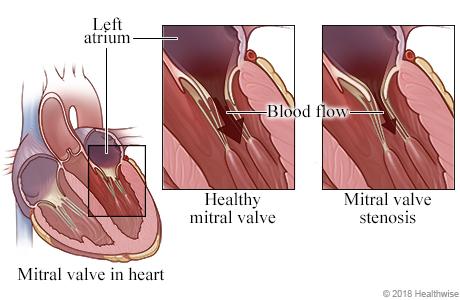
Healthwise, Incorporated
Valve Stenosis

With valve stenosis, the heart valve can become scarred and calcified, which causes narrowing of the valve.

Stenosis happens most often in the aortic valve, but can occur in any of the heart’s four valves. When a healthy aortic valve (illustrated) is open, it's close to the size of a half dollar. With stenosis, the valve's opening becomes narrowed, even down to the diameter of a pencil eraser. In many cases, this is caused by the natural wear and tear of aging. As we get older, calcium can form on the valve’s leaflets. As this deposit builds up, the opening can become narrower and blood can’t flow as easily through the valve.

When aortic valve stenosis becomes severe, the valve should usually be replaced.

Valve Insufficiency or Regurgitation

Valve insufficiency or regurgitation happens more often in the mitral valve. When a valve leaks, the leaflets don’t close completely and some blood leaks backward rather than all of the blood flowing completely in one direction. Like stenosis, valve leakage most often happens because the valve simply wears out as we get older. Other circumstances such as a defective valve at birth, or rheumatic fever, can also cause a leak. In some cases, these valves can be repaired. In many cases, the valve must be replaced.

Symptoms of Valve Disease

You can have either valve stenosis or leakage and not know anything is wrong. However, if your condition becomes more severe you may begin to experience symptoms such as:

  • Shortness of breath
  • Chest pain
  • Lightheadedness
  • Fainting
  • Fatigue
  • Heart murmur

Treatment Options

Surgical Procedures
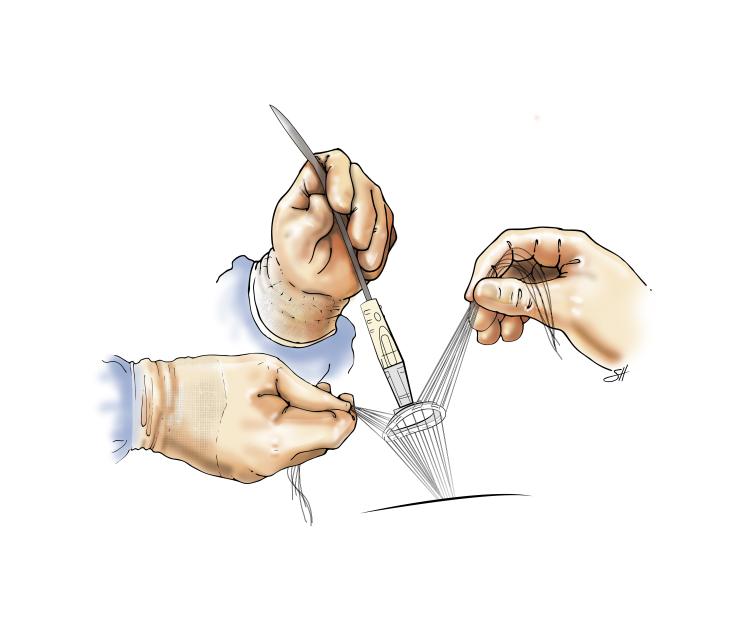
Scott Holmes
Mitral valve annuloplast ring placement.

While narrowing of either the aortic or mitral valve typically requires valve replacement (with a manufactured “mechanical” valve, or with a tissue valve which typically comes from a cow or pig), mitral valve disease can typically be corrected by repairing the patient’s own native valve. Repair of the mitral or aortic valve usually involves remodeling of the valve tissue to make it smaller or less redundant (valvular “plastic surgery”), and is most often reinforced with a synthetic ring or band to support and remove tension on the repair.

Mitral valve repair techniques include trimming loose tissue from the leaflets and re-suspension of the leaflets as well as annuloplasty - inserting ring around the valve to bring the leaflets back into a normal position.

What to Expect After Mitral Valve Surgery

After surgery, you will be taken to the recovery room.. When you wake up, you will feel groggy and a little “out of it." You will be connected to some monitors and IV lines for medications and fluids. You may also have a special IV in your neck to measure heart function. You typically may have several other tubes and catheters that are not painful and will remain in place for one or two days after surgery to help your medical team monitor your condition.

After typically a day or so in the intensive care unit, you will be transferred to a hospital room for additional recovery in the hospital. You will assisted to begin walking in your room and in the hallways, typically within a day or so after surgery. You will be discharge to home or to a skilled nursing facility, depending on your level of support at home, within typically about five to seven days after surgery.

Outcome

Valve repair, when it is possible to perform, is typically associated with fewer complications and prolonged survival compared to valve replacement. Repair also less commonly requires the use of blood thinner medication for prolonged periods of time after surgery.

  • You and Your Heart
    • About the Heart
    • General Cardiology
    • Interventional Cardiology
    • Cardiac Electrophysiology
      • Cardiac Electrophysiology and Arrhythmias
      • Meet Our Team
    • Women and Heart Disease
    • Meet our Team
  • Services and Diagnostic Procedures
  • Specialty Centers and Programs
    • Advanced Heart Failure Clinic
      • Heart Failure FAQs
      • Hypertrophic Cardiomyopathy
      • Pulmonary Hypertension
      • Meet Our Team
    • Center for Aortic Surgery
      • Meet Our Team
    • Inherited Arrhythmia and Cardiomyopathy Clinic
      • Meet Our Team
    • Structural Heart Disease Center
      • Atrial Septal Defect (ASD) Repair
      • Patent Foramen Ovale
      • Structural Heart Disease FAQs
      • Meet Our Team
    • Texas Adult Congenital Heart Center
      • Meet Our Team
    • Lipid Metabolism and Atherosclerosis Clinic
      • Meet Our Team
  • Cardiothoracic Surgery
    • Abdominal Aortic Aneurysm
    • Aortic Graft and Stent-Graft Infections
    • Ascending Aneurysm
    • Ascending and Arch Aortic Aneurysms and Dissection
    • Bentall Procedure
    • Beveled Aortic Hemiarch Replacement
    • Cabrol Procedure
    • Cardiopulmonary Bypass
    • Carotid Artery Stent Procedure
    • Carotid-Carotid Bypass
    • Carotid-Subclavian Bypass
    • Coronary Artery Disease Coronary Bypass
    • Descending Aneurysm
    • Elephant Trunk Repair
    • Hybrid Arch Repair
    • Heart Valve Repair
    • Minivalve Repair
      • Request Appointment Minivalve
    • Pacemaker
    • Pericardiectomy
    • Prolapse
    • Pulmonary Endarterectomy
    • Robotic Heart Surgery
    • TAVR
    • Total Aortic Arch Replacement
    • Meet Our Team
  • Invasive & Non-Invasive Tests
  • Vascular Health
    • Angioplasty and Stent Placement
    • Carotid Artery Disease
    • Deep Vein Thrombosis
    • Diabetic Foot Limb Salvage
    • Hemodialysis
    • Mesenteric Artery Disease
    • Peripheral Artery Disease
    • Peripheral Artery Bypass
    • Varicose Veins
      • Noninvasive Treatments for Varicose Veins
      • Varicose Vein Stripping (Phlebectomy )
    • Vascular Problems in Athletes
    • Venous Insufficiency and Venous Ulcers
    • Frequently Asked Questions
    • Meet Our Team
  • For Patients
  • Meet Our Team

Make an Appointment

Call today to schedule an appointment or fill out an online request form. If requested before 2 p.m. you will receive a response today.

Call 713–798–1300 Monday - Friday 8 a.m. - 5 p.m.

ONLINE

Request Now

Request non-urgent appointments

Find a Physician

Surgeon Who Performs Minimally Invasive Repair of Mitral Valves

  • Kenneth K Liao, M.D., Ph.D., FACS
  • Lauren Barron, M.D.
  • Marc Moon, M.D.
  • Todd K. Rosengart, M.D.
mychart

MyChart is a patient-accessible website that enables you to interact with your Baylor Medicine healthcare team.

Login

mobile-phone-image

Follow Us facebook twitter youtube linkedin instagram rss 

Footer Menu Healthcare

  • Healthcare
    • Specialties
    • MyChart Login
    • For Patients & Visitors
    • For Health Professionals
    • Clinical Trials
    • Find a Physician

Footer Menu Education

  • Education
    • Programs & Admissions
    • Student & Trainee Resources
    • Faculty Resources
    • School of Medicine
    • Graduate School of Biomedical Sciences
    • National School of Tropical Medicine
    • School of Health Professions
    • Tuition & Fees
    • Financial Aid

Footer Menu Research

  • Research
    • Our Research
    • Core Labs
    • Faculty Labs
    • Research Centers
    • Research Offices

Footer Menu Community

  • Community
    • Healthcare Outreach
    • Education Outreach
    • Global Programs
    • Community Events

Footer Menu About

  • About
    • Our Campus
    • Departments
    • Academic Centers
    • Administrative Offices
    • Affiliates
    • Leadership
    • Giving
    • Alumni

Footer Menu Resource Links

  • Resource Links
    • Contact Us
    • Find a Person
    • Careers
    • BCM Team Shop
    • News
    • Title IX Office
    • Compliance
    • Covid Response Site

©1998-2026 Baylor College of Medicine® | 1 Baylor Plaza, Houston, Texas 77030 | 713-798-4951
Have an edit or suggestion for this page?

  • Compliance
  • Privacy
  • Intranet