
About the Lab
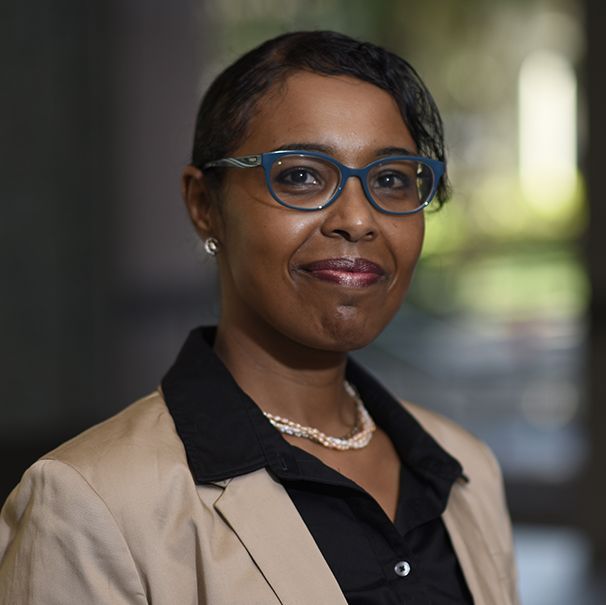
The Biostatistics and Data Research Lab (BDRL) is housed in the Children’s Nutrition Research Center (CNRC) at Baylor College of Medicine. It serves as a centralized resource for consultative and analytical support, fostering collaboration and synergy in research data across projects. In addition to traditional office software, BDRL staff have access to a variety of statistical software packages including PASS, SAS, R, SPSS, Stata, MPlus, and Python. The BDRL is under the direction of Dr. Salma Musaad and includes Master’s and Ph.D. level statisticians, a Program Management Coordinator and a dedicated research assistant. Dr. Musaad has extensive experience in consulting and collaboration, largely focused on chronic disorders including obesity, as well as rare diseases. She previously built and managed the Illinois Biostatistics Core (now the Illinois Biostatistics, Epidemiology, and Research Design Core) at the Interdisciplinary Health Sciences Institute, University of Illinois at Urbana-Champaign. At the CNRC, she has contributed to the design and analysis of numerous observational cohorts and randomized controlled trials for obesity prevention, promoting physical activity, and other related outcomes.
Mission
The BDRL aims to provide cutting-edge biostatistical and methodological consulting, research, and education to investigators and trainees through engagement and collaboration.
Introducing Biostatistics and Data Research Lab Consultation Office Hours (3 months trial)
To enhance access to statistical expertise across our research community and based on feedback from CNRC faculty and our team, the Biostatistics and Data Research Lab will hold drop-in office hours for CNRC investigators and research teams seeking advice on study design, power/sample size, data management, statistical analysis plans, data interpretation, grants and manuscripts methodology support. We will hold them for three months then reassess whether to stop or continue.
- Office Hours: Every other Tuesday starting Sept. 29 2026 at 11 a.m. - 12 p.m.
- Location: CNRC 2nd floor, Sam Fomon Conference Room
Researchers at all stages of project development are encouraged to attend. Early consultation is particularly valuable for optimizing study design and analytic approaches. Mentor approval is required from trainees. We look forward to partnering with you to advance high-quality research in the CNRC.
Our Services
The BDRL has established successful and long-term collaborations with multiple faculty members within and outside the CNRC, contributing to study design, analysis plans, and power calculations. These efforts include critical thinking activities that have resulted in successful funding for a variety of grant mechanisms.
The BDRL provides high-quality analytical and methodological support to investigators interested in basic, clinical, and epidemiological research projects. A significant portion of the lab’s work focuses on diet, environmental, and molecular factors that impact chronic diseases including obesity, diabetes, cancer, and bone disorders, and how social drivers of health can moderate these factors. The lab can assist with statistical planning for postdoctoral fellowships, Data Safety and Monitoring Boards and manuscripts. Its expertise spans multiple analytic methods with a special interest in longitudinal designs, hierarchical modeling, and simulations of complex models. While primarily serving CNRC, BCM, and Texas Children’s Hospital, the BDRL occasionally collaborates with external investigators and trainees.
The lab collaborates with research teams on designing questionnaires and assessment tools to ensure high-quality, reliable data capture. Services include designing REDCap databases for project screening forms, surveys, and health-related data collection, building data analysis specifications, and conducting data quality control checks to prepare analysis-ready datasets. The BDRL also processes publicly available data or collaborates to transfer and summarize data, generating descriptive statistics and charts. In the discipline of biostatistics, these steps optimize the effective use of data and provide a critical foundation for answering research questions.
In addition to its core research and analytic activities, the Biostatistics and Data Research Lab is committed to advancing rigor, reproducibility, and transparency (RRT) across its many research activities. The lab supports the preparation of National Institutes of Health and other funding proposals by addressing the rigor of prior research, embedding rigorous research practices within the research strategy, and detailing assurances for how proposed studies will produce robust and unbiased results. Lab members maintain and continually refine reproducible coding practices, staying current with emerging tools and techniques to enhance computational reproducibility in all analytic work. The lab also assists internal investigators with critical review of and computational reproducibility analyses of published studies, helping to verify and strengthen the evidence base that informs ongoing and future research. Looking ahead, the lab plans to further support RRT efforts possibly through targeted training and workshops and the development of internal standard operating procedures for analytic reproducibility.
The team conducts literature reviews based on the latest guidance and appropriate databases such as PubMed, Embase, and other research repositories. These reviews allow the lab to stay current on hot topics like AI/ML, obesity prediction, and methods development. This effort enhances contributions to publications and grants while providing the preliminary data essential for proposals.
Each project concludes with a comprehensive report containing narratives, tables, and charts. The team assists with creating table shells, checking narrative content for methodological accuracy, ensuring results are correctly interpreted, and identifying errors in formatting or typing. These reports serve as key productivity milestones and deliverables. Additionally, the lab generates productivity reports that document project distribution, collaborator demographics, end-of-study satisfaction scores, and subject areas to ensure sustainability and quality improvement.
The BDRL is committed to educating and assisting faculty, staff, and fellows in biostatistics and software training. The lab is equipped with state-of-the-art computing and analytical tools, including SAS, SPSS, Mplus, Python, and R. It maintains an inventory of relevant literature, workshops, training sessions, and webinars to advance team knowledge and technical skills. These resources are leveraged for training and one-on-one mentoring, ensuring the continuous development of faculty and trainees.
Deliverable Timelines and Charging Rates
Disclaimer: If a data set is provided, it needs to be ready for analysis with clear documentation. We can provide guidance for creating and organizing datasets.
We do not provide data extraction services unless they fit the scope of an ongoing project or for grant development purposes.
Note: Timeline for service deliverables will be discussed during the initial phases of the project and vary based on scope and study complexity. However general guidelines are allow to at least 4-5 weeks for grant development which includes providing advice about the study design, writing or reviewing the statistical section of the grant, and sample size analysis; 1-2 weeks for review of the statistical section of manuscripts; 3-4 weeks for performing statistical analysis for a publication.
The Biostatistics and Data Management Core offers services within three primary tiers: consultation, grant preparation, and analysis of existing data. Initial consultations are subsidized for up to 10 hours. Grant preparation services hold a flat $100 fee per hour with the expectation that Core members will be included in the budget as % effort level depending on project complexity and duration. For analysis of existing data, fees vary depending on dataset size and core member designation. The analysis work includes, but is not limited to, data management, statistical programming and analysis, and results presentation/manuscript work. Projects can be charged to USDA funding, NIH, or other funding sources provided by the project investigator. Charging rates are available upon request.
General Inquiries
For general enquiries, to establish a collaboration around a project or scientific area, or for enquiring about ways to engage with trainees, please complete the Information Request Form. If you are a trainee or staff, your Faculty PI or team lead needs to attend the first consultation meeting.
Services Booking
Whether you are designing an experiment, building a database, troubleshooting analysis, requesting a follow up meeting, looking to collaborate with biostatisticians on a grant, or could benefit from a second expert opinion on your research, book a consultation, and we can work through it together
Director
Members




Alumni
- Mirabile Y
- Nguyen T
- Setodji K