Home
  • Healthcare
    • Specialties
      • Cardiovascular Care
      • Oncology
      • Neurosurgery
      • Primary Care
      • View All Specialties >
    • For Health Professionals
      • Refer a Patient
      • Clinical Trials
      • Professional Development
      • View All >
    • For Patients & Visitors
      • MyChart Login
      • Accepted Insurance
      • Pay My Bill
      • Patient Information
      • View All >
    • Clinical Trials
      • Autism
      • Cancer
      • Obesity
      • Substance Abuse
      • View All Clinical Trials >
    • Find a Doctor
    • Make an Appointment

    General Inquiries

    Call today to schedule an appointment or fill out an online request form. If requested before 2 p.m. you will receive a response today.

    CALL

    713-798-1000

    Monday – Friday 8 a.m. – 5 p.m.


    ONLINE

    Request Now

    Request non-urgent appointments

    Request an appointment, learn about your rights as a patient, read about what to expect from your appointment, and more.

    As Houston's premier academic medical practice, Baylor Medicine delivers compassionate, innovative, evidence-based care.
    Find a Doctor

  • Education
    • Degree Programs & Admissions
      • M.D. Program
      • Ph.D. Programs
      • DNP Program (Nurse Anesthesia)
      • Genetic Counseling Program
      • P.A. Program
      • Orthotics & Prosthetics Program
      • Baccalaureate/M.D. Programs
      • Dual Degree Programs
      • View All Programs >
    • Financing Your Education
      • Tuition & Fees
      • Financial Aid
      • CARES ACT
    • Schools
      • School of Medicine
      • Graduate School of Biomedical Sciences
      • National School of Tropical Medicine
      • School of Health Professions
    • Advanced Training Programs
      • Residency Programs
      • Clinical Fellowships
      • Postdoctoral Research Positions
      • Continuing Professional Development
      • Diploma in Tropical Medicine
      • View All >
    • Resources
      • Departments
      • Academic Centers
      • Academic Calendars
      • Education Cores
      • View All >
    • Information For...
      • Students
      • Postdoctoral Researchers
      • Faculty
      • Alumni
    get-to-know-houston

    America's fourth-largest city is a great place to live, work, and play. Find out why.
    Get to Know Houston

  • Research
    • Research Offices
      • Advanced Technology Cores
      • Clinical Research
      • Institute for Clinical & Translational Research
      • Office of Research Leadership
      • Research IT
      • Sponsored Programs
    • Research at Baylor
      • Academic Centers
      • Departments
      • Faculty Labs
      • From the Labs
      • News
      • Our Research
      • Research Centers
      • Strategic Research Center
    • Additional Research Services
      • BCM Innovation Institute
      • Service Labs
      • VIICTR
    get-to-know-houston

    America's fourth-largest city is a great place to live, work, and play. Find out why.
    Get to Know Houston

  • Community
    • Healthcare Outreach
      • Community Programs
      • More >
    • Global Outreach
      • Global Health
      • Global Programs >
    • Educational Outreach
      • SMART Program
      • BioEd Online
      • More >
    • General Resources
      • Community Events
      • News
      • Blogs
      • Baylor in the Community
    get-to-know-houston

    America's fourth-largest city is a great place to live, work, and play. Find out why.
    Get to Know Houston

  • About
    • About Us
      • Academic Centers
      • Alumni
      • Careers
      • Departments
      • Giving
      • Leadership
      • Mission, Vision, Values
      • News
      • Our Affiliates
      • Fast Facts
      • Accreditation
    • Offices
      • President's Office
      • Office of Research
      • Ombuds Office
      • BCM Innovation Institute
      • View All >
    • Our Campus
      • Compliance
      • Safety and Security
      • Resource Stewardship & Sustainability
      • Team Shop
      • Find a Person
    get-to-know-houston

    America's fourth-largest city is a great place to live, work, and play. Find out why.
    Get to Know Houston

  • GIVE
  • CAREERS
  • INTRANET
  • Careers
  • Contact Us
  • News
Department of Pediatrics
  • Meet Our Team
  • Divisions and Centers
  • Education
  • Research
  • Healthcare
  • News
  • Faculty Development
  • Meet Our Team
  • Divisions and Centers
  • Education
  • Research
  • Healthcare
  • News
  • Faculty Development
  1. Baylor College of Medicine
  2. Pediatrics
  3. Divisions and Centers
  4. Cardiology
  5. Research
  6. Pediatric Molecular Cardiology Lab
  7. Left Ventricular Non-Compaction
  • Faculty
  • Education
    • Pediatric Cardiology Fellowship
      • Admissions
      • Director's Message
      • Curriculum
        • Didactic
        • Research
        • Unique Educational Opportunities
      • Subspecialty Programs
      • Fellows
        • Fellow Life
        • Post-Graduate Outcomes
      • Stipend and Benefits
    • Pediatric Cardiology Electrophysiology Fellowship
  • Research
    • Research Labs
      • Pediatric Molecular Cardiology Lab
        • Arrhythmogenic Right Ventricular Dysplasia
        • Dilated Cardiomyopathy
        • Left Ventricular Non-Compaction
        • Myocarditis
  • Healthcare
  • Subspecialty Areas
    • Electrophysiology

Left Ventricular Non-Compaction

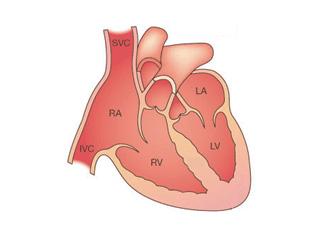
LVNC Heart. Towbin, JA and Bowles, NE. The Failing Heart. Nature. 2002; 415:227-33.

Left ventricular noncompaction is characterized by deep trabeculations in the LV endocardium in association with left ventricular hypertrophy, dilation or hypertrophy/dilation. Noncompaction of the ventricular myocardium is a rare congenital cardiomyopathy of children and adults resulting from arrested myocardial development during embryogenesis.

In some patients, the left ventricle is hypercontractile, whereas in others, systolic dysfunction predominates. Two forms of LVNC have been described, an isolated form and a form associated with congenital heart disease; in the latter case, this non-isolated LV noncompaction may be found in combination with septal defects, pulmonic stenosis or hypoplastic left ventricle. The two forms of LVNC are found in all age groups, although an infantile presentation appears to be most common; survival appears to be good.

In this disorder, echocardiography demonstrates a thin epicardium with extremely hypertrophied endocardium and prominent trabeculations with deep recesses. These features tend to be apically localized.

Frequency of LVNC

The incidence of LVNC is unknown, but considered rare. However, many cases likely are overlooked due to the often subtle echocardiographic changes being mistaken for dilated cardiomyopathy or hypertrophic cardiomyopathy.

Causes of LVNC

Echocardiogram of an LVNC heart

All hereditary information is transmitted through DNA, which encodes many genes (approximately 100,000) that are transcribed to make specific proteins. Inherited disorders caused by a single abnormal gene are transmitted to offspring in a predictable fashion, termed Mendelian transmission. As a result of gene mutations, abnormal genes located on any of the 22 autosomal pairs or the two sex chromosomes may produce phenotypes inherited by simple patterns classified as autosomal (dominant or recessive) or X-linked, respectively. When different genes induce the same phenotype, it is referred to as genetic heterogeneity, and most diseases in humans exhibit genetic heterogeneity.

Families with multiple individuals who have LVNC are likely to have a genetically inherited form. Not all affected individuals, however, must have an affected parent because, in all autosomal dominant diseases, a certain proportion of cases occur due to a new mutation (i.e., they are sporadic). The parent whose germ cells contain the new mutation will be clinically normal because the mutation affects only a single germ cell, but the disease-causing allele can be transmitted to their offspring.

In isolated LVNC, familial recurrence is high and found in approximately 40 percent of patients. The inheritance patterns of LVNC include X-linked inheritance in males with isolated LVNC and an autosomal dominant pattern in some isolated and non-isolated cases. In the X-linked form, mutations in the gene G4.5 (TAZ), which encodes tafazzin, were initially identified by Bleyl and colleagues. This is the same gene previously identified by Bione and colleagues as causative of Barth syndrome; some patients with LVNC also have clinical features of Barth syndrome.

Recently, we identified a gene for NLVNC in a family with broad clinical features ranging from apparent isolated LVNC, to LVNC with septal defects alone, to LVNC associated with hypoplastic left ventricle. This gene encodes alpha-dystrobrevin, which is a dystrophin-associated protein mapped to chromosome 18q12. This DGC protein helps to maintain structural integrity of the muscle membrane, but also has signaling functions via the nitric oxide synthase pathway and is also a substrate for tyrosine kinases. Mutant mice develop cardiomyopathy when this gene is knocked out, supporting it as the cause of ventricular dysfunction. Again, skeletal myopathy is a feature to be noted. It is possible that the cardiac muscle abnormality is caused by disturbance of structural integrity and the congenital heart disease is due to perturbation in these signaling pathways in humans.

In the John Welsh Cardiovascular Diagnostic Laboratory, we offer analysis of the G4.5 (TAZ) gene for genetic mutations.

  • Faculty
  • Education
    • Pediatric Cardiology Fellowship
      • Admissions
      • Director's Message
      • Curriculum
        • Didactic
        • Research
        • Unique Educational Opportunities
      • Subspecialty Programs
      • Fellows
        • Fellow Life
        • Post-Graduate Outcomes
      • Stipend and Benefits
    • Pediatric Cardiology Electrophysiology Fellowship
  • Research
    • Research Labs
      • Pediatric Molecular Cardiology Lab
        • Arrhythmogenic Right Ventricular Dysplasia
        • Dilated Cardiomyopathy
        • Left Ventricular Non-Compaction
        • Myocarditis
  • Healthcare
  • Subspecialty Areas
    • Electrophysiology

Contact

Contact 832–826–5048
Contact 832–826–5715
Fax 832–826–4297

Division of Cardiology

Texas Children's Hospital
6651 Main St. Suite E1920 Houston, TX 77030

Related Links

Department of Pediatrics

Follow Us facebook twitter youtube linkedin instagram rss 

Footer Menu Healthcare

  • Healthcare
    • Specialties
    • MyChart Login
    • For Patients & Visitors
    • For Health Professionals
    • Clinical Trials
    • Find a Physician

Footer Menu Education

  • Education
    • Programs & Admissions
    • Student & Trainee Resources
    • Faculty Resources
    • School of Medicine
    • Graduate School of Biomedical Sciences
    • National School of Tropical Medicine
    • School of Health Professions
    • Tuition & Fees
    • Financial Aid

Footer Menu Research

  • Research
    • Our Research
    • Core Labs
    • Faculty Labs
    • Research Centers
    • Research Offices

Footer Menu Community

  • Community
    • Healthcare Outreach
    • Education Outreach
    • Global Programs
    • Community Events

Footer Menu About

  • About
    • Our Campus
    • Departments
    • Academic Centers
    • Administrative Offices
    • Affiliates
    • Leadership
    • Giving
    • Alumni

Footer Menu Resource Links

  • Resource Links
    • Contact Us
    • Find a Person
    • Careers
    • BCM Team Shop
    • News
    • Title IX Office
    • Compliance
    • Covid Response Site

©1998-2026 Baylor College of Medicine® | 1 Baylor Plaza, Houston, Texas 77030 | 713-798-4951
Have an edit or suggestion for this page?

  • Compliance
  • Privacy
  • Intranet