
Dr. Lubna Khan
From Geneva to Global Equity: Elevating Surgery on the World Stage
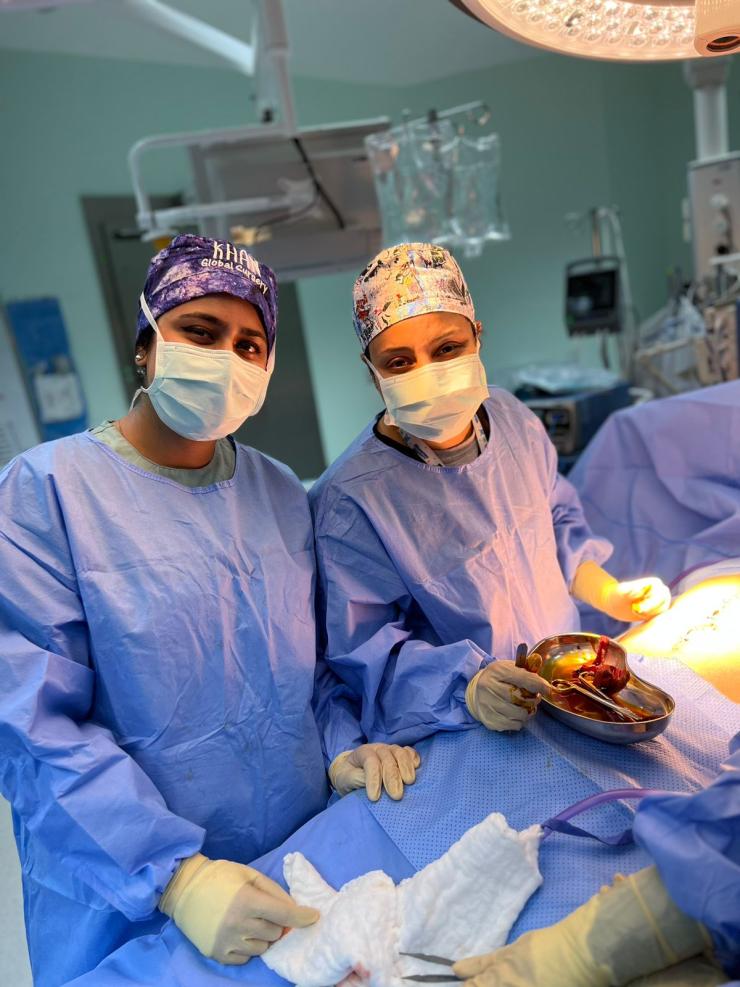
Although fundamental in the U.S., operative care—encompassing surgery, anesthesia and obstetrics/gynecology—has historically not been prioritized within WHO strategies. That is beginning to change. Dr. Lubna Khan, Baylor College of Medicine resident in the global surgery track, played an instrumental role in drafting the Operative Care section, marking a major step forward for global surgery advocacy at the 79th World Health Assembly in Geneva.
The Emergency, Critical Care and Operative Care (ECO) plan provides a framework for countries to strengthen the continuum of emergency, critical and operative care, formally recognizing surgery as a public health priority. While implementation remains a challenge, the plan establishes important momentum toward expanding surgical access worldwide.
The need for such progress is stark. Recent work in Sub-Saharan Africa highlights profound disparities in care: rheumatic heart disease is far more prevalent than in the U.S., yet fewer than 1% of patients have access to lifesaving surgical treatment.
At the World Heart Summit, this gap was further underscored by the absence of surgeons in global cardiovascular discussions. A call for greater collaboration between medical and surgical disciplines led to new engagement with Project REACH, demonstrating how even small interventions can bridge longstanding divides.
The takeaway is clear: surgery is not a silo—it is an essential component of the healthcare continuum. Strengthening surgical systems elevates overall care delivery, as demonstrated during the COVID-19 pandemic, when surgical expertise proved critical to life-saving interventions such as ECMO.
As global health efforts move forward, two principles remain central: surgery must be recognized as integral across all specialties, and “global surgery” must be understood simply as surgery—grounded in equity, access and the shared goal of improving health outcomes worldwide.
Dr. David Holmes
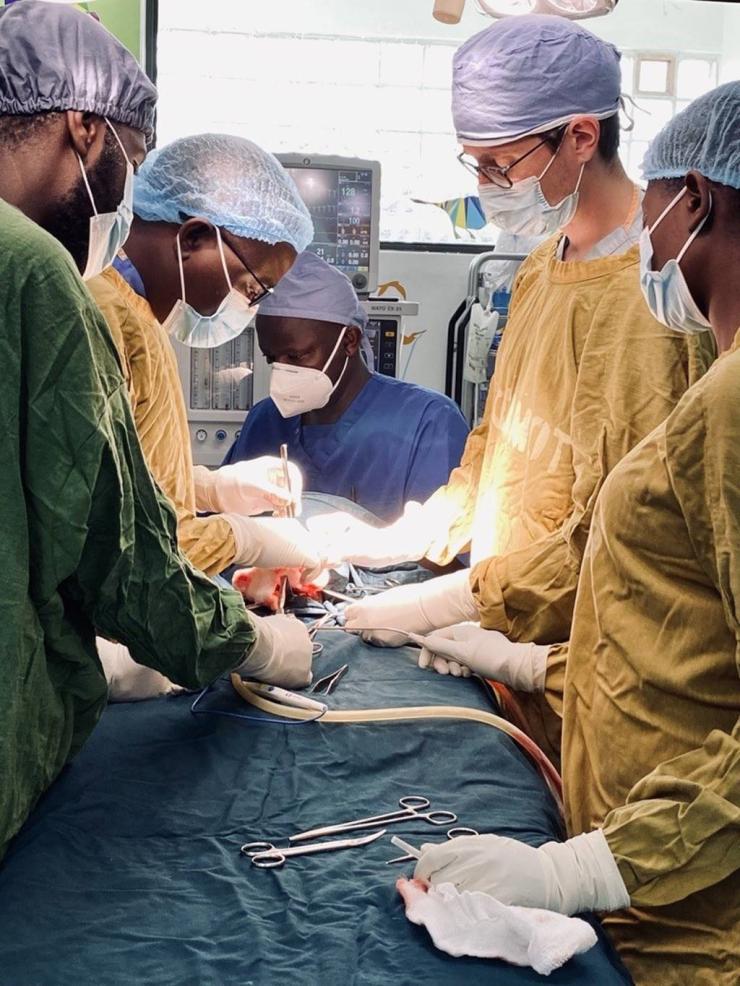
As part of his first dedicated global surgery year, Dr. David Holmes spent three months living and working in Malawi. He worked at Kamuzu Central Hospital (KCH), a major government referral hospital located in Lilongwe, the capital city of Malawi. KCH serves a surrounding population of roughly 5 million people. During this time, Dr. Holmes gained a combination of clinical and research experience.
Dr. Holmes worked alongside Dr. Bip Nandi, a pediatric surgeon with Texas Children’s Hospital who has lived and worked in Malawi for nearly a decade. Together, Dr. Nandi’s team and Dr. Holmes cared for patients with various pediatric surgical diseases including neonatal bowel atresia, anorectal malformations, gastroschisis, Hirschsprung’s disease, intussusception, incarcerated inguinal hernias and oncologic diseases, such as Wilms tumor.
Dr. Holmes was also involved with two research projects in Malawi. The first assessed the impact that the COVID-19 pandemic has had on the pediatric surgical case volume, case type and surgical outcomes. The second project was a health economics study that sought to determine the cost of pediatric surgery at KCH.
Global surgery in action: Resident expands training, cancer care, and advocacy worldwide
Dr. Yao Yang
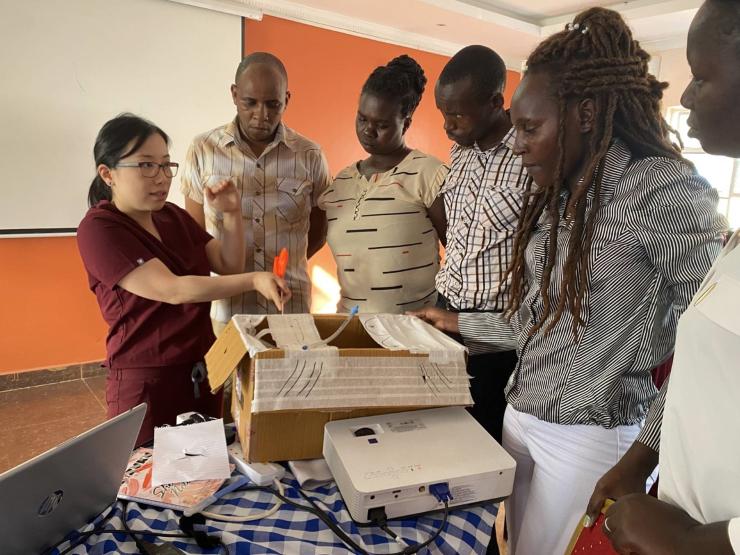
Dr. Yao Yang in Kenya
Dr. Yao Yang spent two months of her first dedicated global surgery year in Kenya where she trained first responders and surgical residents. Her time in Kenya began in Turkana County in the Northwest, where low surgeon density and resource limitations pose great challenges to trauma care. Alongside a multidisciplinary team of surgeons and anesthesiologists, she helped teach frontline health care workers a systematic approach to assessing and managing trauma patients. Collectively, these health care workers are a critical lifeline for the one million inhabitants of Turkana County.
Dr. Yang continued her efforts at Tenwek Hospital, a tertiary referral center in the western part of Kenya, where she helped build a laparoscopic simulation curriculum for Tenwek’s general surgery residency program. With the generous guidance of Tenwek surgical faculty and residents, she formulated a system of simulation tasks that could be implemented in an affordable manner, with a gamified component to help maintain resident engagement.
On top of these meaningful projects, Dr. Yang had the privilege of caring for surgical patients at Kakuma Refugee Camp, a UNHCR settlement hosting refugees from East and Central African nations including South Sudan, Somalia, Ethiopia and The Democratic Republic of the Congo. She was able to witness how local providers expertly navigate the challenges of serving vulnerable populations with constrained resources.