
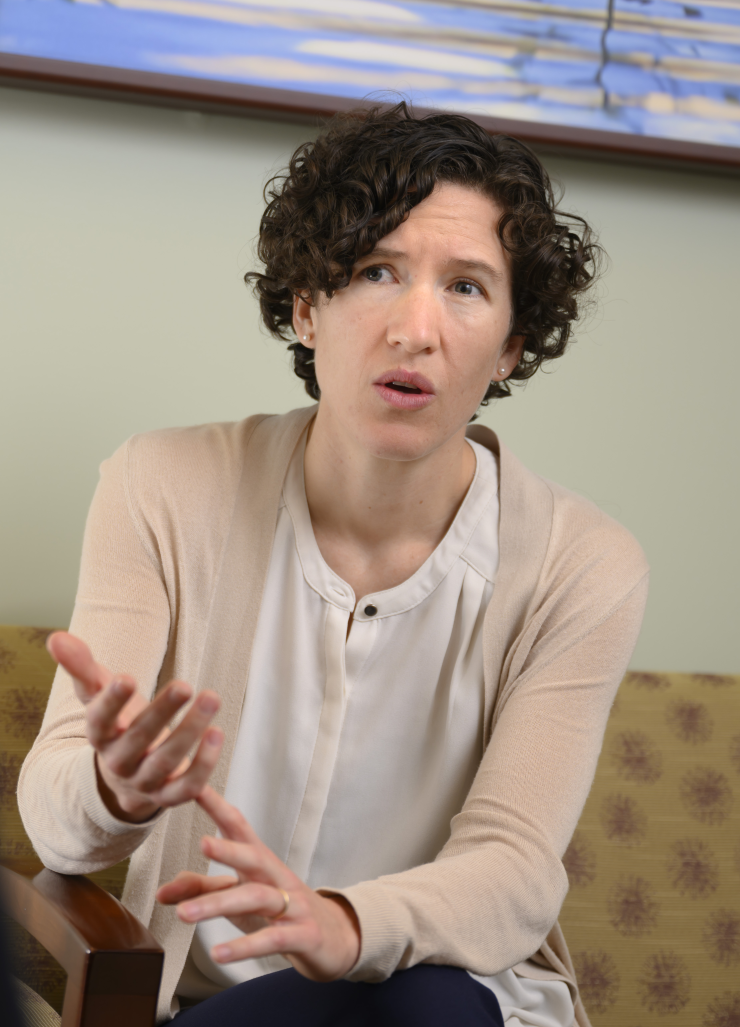
The Women's Mental Health Track is a comprehensive curriculum in preparing future women's mental health experts with broad clinical experience. The track will expand on the existing women's mental health curriculum and training that all psychiatry residents receive and will provide a more comprehensive, in-depth exploration of the exciting field of women's mental health through clinical rotations, mentorship, teaching, and scholarship.
Goals
The Women's Mental Health Track aims to prepare leaders in the field of women's mental health and reproductive psychiatry who are able to:
- Provide high-quality psychiatric care to women across the reproductive lifespan, including preconception, pregnancy, postpartum, lactation, and menopause
- Serve as educators to peers in psychiatry, pediatrics, obstetrics, psychology, and other related fields regarding perinatal mental health and psychoneuroendocrinology
- Critically appraise literature pertinent to the field and contribute their own scholarly work
Core Curriculum
Clinical rotations:
- PGY3: Goal for half of outpatient clinic to have WMH focus. Options include:
- BT OB-Psych Clinic (Smith)
- BT MPAT clinic (Ojeda)
- TCH Northwest Clinic (Doghor)
- TCH PFW
- The Women's Home
- VA Women’s Mental Health (Skalany)
- PGY4
- 4-6 months at The Women's Place clinic
Academic activities:
- Academic Project or scholarly work related to the field of women's mental health
- Attendance and presentation at monthly reproductive psychiatry journal club
- Lecture to psychiatry residents on perinatal psychiatry
Mentorship:
- Regular meetings with track director for self-assessment, identification of goals, and evaluation of progress on scholarly activity
Selection Process:
Applications to the WMH track are solicited in the fall of each year. Those interested in joining the track will submit their CV and a brief essay and may be asked to interview depending on number of applications received. The track can currently accommodate up to two residents per year.
Track Residents

Alyssa Schrock, M.D.
"I am excited to be joining the Women’s Mental Health Track. This opportunity will equip me with the training needed to provide excellent and evidence-based care for women with psychiatric disorders during pregnancy, postpartum, infertility, menopause, breastfeeding, and more. Reproductive Psychiatry is a unique sub-specialty that liaisons between OBGYN and psychiatry, that also provides the opportunity to educate patients and other providers. The multiple rotations and clinics I will participate in during my residency training, the many opportunities for mentorship, and the in-depth exploration of women’s mental health will give me the experience needed to be confident in my knowledge after residency. I am dedicated to pursuing a career in reproductive psychiatry, and I am certain that the Women’s Mental Health Track can help me achieve this goal."

Gabriella F. Rodriguez, M.D.
"I am so grateful to join the Women’s Mental Health track here at Baylor. It is a privilege to care for the women of our Houston community and have reproductive psychiatry education integrated into all four years of residency training. We are lucky to have numerous renowned reproductive psychiatry faculty who provide us with longitudinal mentorship. I am interested in peripartum and perimenopausal mood disorders, disorders of female sexual dysfunction, and substance use disorders in pregnancy, and here at Baylor, we have faculty specializing in each of these areas. I am confident that the WMH track will allow me to gain confidence in the diagnosis and management of various psychiatric illnesses across the reproductive lifespan so that after residency, I can specialize fully in the psychiatric care of women."

Taylor Wolfenberger, M.D.
"I am elated to join the Women’s Mental Health Track within the Baylor College of Medicine Psychiatry Residency Program. Through my volunteer and clinical endeavors in shelters and women’s health clinics, I have found fulfillment in caring for women at all stages of life. These experiences have fueled my passion for trauma-informed care, the postpartum period, and reproductive endocrinology and infertility. The Women’s Mental Health Track offers invaluable opportunities to deepen my expertise in psychopharmacology during the pregnant, postpartum, and perimenopausal states. I look forward to gaining a deeper understanding of the social determinants of health and collaborating with colleagues in other specialties, reciprocally learning from and providing education to others regarding the intricacies of women's mental health care. The resources, mentorship, and clinical opportunities provided by the track will enable me to achieve my aspirations of providing comprehensive, patient-centered care to the women of Houston as I pursue a career in Reproductive Psychiatry."

Anusia Mansukhani, D.O.
"I am deeply grateful for the opportunity to join the Women’s Mental Health Track at Baylor College of Medicine. Women’s mental health has long been a passion of mine, shaped by both personal and clinical experiences. I chose this track because of its integrated approach to training, which combines longitudinal mentorship, early clinical exposure through dedicated rotations, and opportunities to engage in meaningful research. I am excited to contribute to the track, learn from renowned faculty, and develop the skills necessary to provide compassionate, evidence-based care to women across all stages of life. Ultimately, my goal is to specialize in reproductive psychiatry and serve the women of the Houston community by providing culturally responsive, patient-centered psychiatric care."

Judith Gutierrez, M.D., MPH
"I am grateful for the opportunity to join the Women’s Mental Health Track at Baylor College of Medicine. Throughout my training, I have become increasingly interested in how biological sex, hormonal physiology, and reproductive stage influence the presentation and treatment of psychiatric illness. My interests include reproductive psychopharmacology, mental health across the reproductive lifespan, eating disorders, and the intersection of reproductive physiology and psychiatric care.
I am especially excited for the opportunity to learn across Baylor’s diverse clinical settings and to better understand how biological factors interact with trauma, medical comorbidity, socioeconomic circumstances, and access to care. I also look forward to expanding my research and scholarly work in women’s mental health while learning from faculty across psychiatry and other specialties. Ultimately, I hope to pursue a career in psychiatry that combines clinical care, research, and education and allows me to provide individualized, evidence-based care to women across the reproductive lifespan."