Home
  • Healthcare
    • Specialties
      • Cardiovascular Care
      • Oncology
      • Neurosurgery
      • Primary Care
      • View All Specialties >
    • For Health Professionals
      • Refer a Patient
      • Clinical Trials
      • Professional Development
      • View All >
    • For Patients & Visitors
      • MyChart Login
      • Accepted Insurance
      • Pay My Bill
      • Patient Information
      • View All >
    • Clinical Trials
      • Autism
      • Cancer
      • Obesity
      • Substance Abuse
      • View All Clinical Trials >
    • Find a Doctor
    • Make an Appointment

    General Inquiries

    Call today to schedule an appointment or fill out an online request form. If requested before 2 p.m. you will receive a response today.

    CALL

    713-798-1000

    Monday – Friday 8 a.m. – 5 p.m.


    ONLINE

    Request Now

    Request non-urgent appointments

    Request an appointment, learn about your rights as a patient, read about what to expect from your appointment, and more.

    As Houston's premier academic medical practice, Baylor Medicine delivers compassionate, innovative, evidence-based care.
    Find a Doctor

  • Education
    • Degree Programs & Admissions
      • M.D. Program
      • Ph.D. Programs
      • DNP Program (Nurse Anesthesia)
      • Genetic Counseling Program
      • P.A. Program
      • Orthotics & Prosthetics Program
      • Baccalaureate/M.D. Programs
      • Dual Degree Programs
      • View All Programs >
    • Financing Your Education
      • Tuition & Fees
      • Financial Aid
      • CARES ACT
    • Schools
      • School of Medicine
      • Graduate School of Biomedical Sciences
      • National School of Tropical Medicine
      • School of Health Professions
    • Advanced Training Programs
      • Residency Programs
      • Clinical Fellowships
      • Postdoctoral Research Positions
      • Continuing Professional Development
      • Diploma in Tropical Medicine
      • View All >
    • Resources
      • Departments
      • Academic Centers
      • Academic Calendars
      • Education Cores
      • View All >
    • Information For...
      • Students
      • Postdoctoral Researchers
      • Faculty
      • Alumni
    get-to-know-houston

    America's fourth-largest city is a great place to live, work, and play. Find out why.
    Get to Know Houston

  • Research
    • Research Offices
      • Advanced Technology Cores
      • Clinical Research
      • Institute for Clinical & Translational Research
      • Office of Research Leadership
      • Research IT
      • Sponsored Programs
    • Research at Baylor
      • Academic Centers
      • Departments
      • Faculty Labs
      • From the Labs
      • News
      • Our Research
      • Research Centers
      • Strategic Research Center
    • Additional Research Services
      • BCM Innovation Institute
      • Service Labs
      • VIICTR
    get-to-know-houston

    America's fourth-largest city is a great place to live, work, and play. Find out why.
    Get to Know Houston

  • Community
    • Healthcare Outreach
      • Community Programs
      • More >
    • Global Outreach
      • Global Health
      • Global Programs >
    • Educational Outreach
      • SMART Program
      • BioEd Online
      • More >
    • General Resources
      • Community Events
      • News
      • Blogs
      • Baylor in the Community
    get-to-know-houston

    America's fourth-largest city is a great place to live, work, and play. Find out why.
    Get to Know Houston

  • About
    • About Us
      • Academic Centers
      • Alumni
      • Careers
      • Departments
      • Giving
      • Leadership
      • Mission, Vision, Values
      • News
      • Our Affiliates
      • Fast Facts
      • Accreditation
    • Offices
      • President's Office
      • Office of Research
      • Ombuds Office
      • BCM Innovation Institute
      • View All >
    • Our Campus
      • Compliance
      • Safety and Security
      • Resource Stewardship & Sustainability
      • Team Shop
      • Find a Person
    get-to-know-houston

    America's fourth-largest city is a great place to live, work, and play. Find out why.
    Get to Know Houston

  • GIVE
  • CAREERS
  • INTRANET
  • Careers
  • Contact Us
  • News
Healthcare: Neurosurgery
  • Specialties
  • Find a Physician
  • For Patients
  • For Physicians
  • Clinical Trials
  • Request an Appointment
  • MyChart
  • News
  • Specialties
  • Find a Physician
  • For Patients
  • For Physicians
  • Clinical Trials
  • Request an Appointment
  • MyChart
  • News
  1. Baylor College of Medicine
  2. Healthcare
  3. Specialties
  4. Neurosurgery
  5. Cerebrovascular and Stroke Surgery
  6. Carotid Stenosis
  • Brain and Skull Base Tumor Surgery
  • Cerebrovascular and Stroke Surgery
    • Acute Ischemic Stroke
    • Brain Aneurysms
    • Brain Arteriovenous Malformations (AVMs)
    • Carotid Stenosis
    • Cavernous Malformations
    • Dural Arteriovenous Fistulas
    • Endovascular Neurosurgical Oncology
    • Moyamoya Disease
    • Spinal Vascular Malformations
    • Meet Our Team
  • Deep Brain Stimulation (DBS)
  • Epilepsy Surgery
    • Neurostimulation
  • Functional Neurosurgery
  • MR-Guided Focused Ultrasound
  • Pain Including Trigeminal Neuralgia
  • Pituitary Center
    • Cushing's Disease
    • Acromegaly
    • Prolactinoma
    • Minimally Invasive - Maximally Effective Pituitary Surgery
    • Physician Referral
    • Meet Our Team
  • Spine Surgery
  • Stereotactic Radiosurgery
  • For Patients
    • Neurosurgery FAQ
    • Neurosurgery Terms
    • Patient Resources
  • For Referring Physicians
  • Meet Our Team

Carotid Stenosis

What Is Carotid Stenosis?

The most common cause of carotid artery narrowing is a buildup of plaque in the arteries due to multiple risk factors such as smoking, high cholesterol, high blood pressure, family history and diabetes. This is the same disease that affects the vessels in the heart and can result in heart attacks and in leg vessels resulting in poor blood flow. Carotid stenosis is also known as carotid disease and carotid atherosclerosis.

The cerebrovascular neurosurgeons at Baylor Medicine and Baylor St. Luke’s Medical Center in Houston, Texas, specialize in the diagnosis and treatment of carotid disease in and outside the brain. Each patient is different and our doctors provide expertise managing this disorder.
Request an appointment
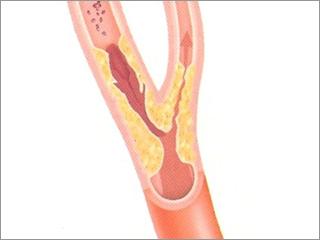
Figure 1. Carotid artery in the neck with stenosis

The image to the right (Figure 1) shows an image of a carotid artery in the neck where it divides into the artery of the external carotid artery (smaller vessel on the right) and the internal carotid artery (ICA) leading to the brain (larger vessel on the left). The image depicts the yellow colored plaque buildup inside the walls of the vessel. The image also depicts blood clot forming on the plaque in the ICA (larger vessel on the left), colored in darker red, which can lead to strokes or complete vessel blockage.

Symptoms

The buildup of plaque in the walls of the blood vessel happens slowly over time and may be silent for many years. Often people with carotid artery disease, even with severe narrowing, experience no symptoms. The narrowing is found on a routine physical or an ophthalmological examination. Other times, the narrowing in the carotid can lead to an acute ischemic stroke, which is an emergency and can lead to permanent brain damage. Common symptoms of carotid atherosclerotic disease include:

Transient Ischemic Attacks - An episode of stroke-like symptoms that last less than 24 hours. These symptoms may come and go but mean the patient is at high risk of having a stroke soon.

Acute Ischemic Stroke - Sudden numbness in the face, arm or leg, weakness in the face arm or leg, drooping of one side of the face, slurring of difficulty speaking, difficulty understanding speech, balance difficulty. If you or someone you know is having symptoms of a stroke, call 911 immediately. For more information see acute ischemic stroke.

Visual Changes - Sudden visual changes in one eye may indicate that there is a narrowing in the carotid artery in the neck on that side. The classic description is a "curtain falling" down over the vision and usually returns. This is usually related to low blood flow to the eye or small pieces of the plaque blocking the eye blood supply. Contact your doctor immediately if you or someone you know has these types of visual symptoms.

Diagnosis

Carotid artery disease can be detected multiple ways including:

Bruit - This is a rushing sound in the neck that is often heard by a doctor using a stethoscope during routine physical exams. A high pitch sound or "bruit" coming from the carotid artery may indicate significant narrowing.

Carotid Artery Ultrasound Doppler Scan - This is a noninvasive diagnostic test that uses ultrasound to detect narrowing of the arteries in the neck and can estimate the degree of narrowing or "stenosis."

CT Angiogram or MRI Angiogram - These tests are both able to obtain accurate pictures of the blood vessels in the neck to look for vessel narrowing.

Diagnostic Cerebral Angiogram - This is the most accurate test to determine the presence of carotid stenosis and calculate the percentage of vessel narrowing. However, this test involves a more invasive diagnostic procedure (similar to a heart catheterization) and is often only needed if the other types of tests do not provide clear information.

Outcome of Untreated Carotid Disease

Once a patient has experienced a stroke or TIA from significant carotid stenosis, the risk of a stroke recurring is about 25 percent in two years without treatment. The stroke risk of a patient with asymptomatic carotid narrowing is much lower. In general, the narrower the artery, the higher the risk of stroke.

Treatment

The goal of treatment for carotid artery disease is to reduce the possibility of TIA or stroke, or to prevent the recurrence of a stroke.

Medical Therapy - Medications such as aspirin, other antiplatelets agents (like Plavix), diabetic medications, and medications that lower cholesterol and blood pressure are commonly prescribed when the degree of narrowing is less than 60 percent. Smoking cessation, exercise, and a healthy diet is also important for managing carotid artery disease and preventing further narrowing.

Carotid Endarterectomy - For patients with significant carotid artery narrowing with or without stroke-like symptoms, surgery may be recommended. Carotid Endarterectomy surgery involves exposing the carotid artery in the neck, clamping the artery above and below the plaque buildup, opening up the artery with a knife while it is clamped and directly removing the plaque (Figure 2).

Carotid Stenting - Alternatively, for select patients, carotid angioplasty and stenting, may be recommended. This procedure involves placing a self-expanding stent in the artery at the site of the narrowing and the stent expands holding the artery open (Figure 3), thereby, reducing the risk of future strokes.

Artist depiction of a carotid endarterectomy surgery at the stage where the atherosclerotic plaque is being removed from the artery

Figure 2: Artist depiction of a carotid endarterectomy surgery at the stage where the atherosclerotic plaque is being removed from the artery

(a) Neck angiogram lateral (side) view of left carotid artery with severe stenosis of internal carotid artery (red arrow) at its origin. (b) Lateral view of same patient after placement of carotid stent showing full re-opening of stenosis (red arrow).

Figure 3a: Neck angiogram lateral (side) view of the left carotid artery. There is severe stenosis or narrowing of the internal carotid artery (red arrow) at its origin. Figure 3b: Lateral view of the same patient after placement of a carotid stent showing full re-opening of the stenosis (red arrow).

More information for patients

Patient Information

• For Patients
• Locations

  • Brain and Skull Base Tumor Surgery
  • Cerebrovascular and Stroke Surgery
    • Acute Ischemic Stroke
    • Brain Aneurysms
    • Brain Arteriovenous Malformations (AVMs)
    • Carotid Stenosis
    • Cavernous Malformations
    • Dural Arteriovenous Fistulas
    • Endovascular Neurosurgical Oncology
    • Moyamoya Disease
    • Spinal Vascular Malformations
    • Meet Our Team
  • Deep Brain Stimulation (DBS)
  • Epilepsy Surgery
    • Neurostimulation
  • Functional Neurosurgery
  • MR-Guided Focused Ultrasound
  • Pain Including Trigeminal Neuralgia
  • Pituitary Center
    • Cushing's Disease
    • Acromegaly
    • Prolactinoma
    • Minimally Invasive - Maximally Effective Pituitary Surgery
    • Physician Referral
    • Meet Our Team
  • Spine Surgery
  • Stereotactic Radiosurgery
  • For Patients
    • Neurosurgery FAQ
    • Neurosurgery Terms
    • Patient Resources
  • For Referring Physicians
  • Meet Our Team

Make an Appointment

Call today to schedule an appointment or fill out an online request form. If requested before 2 p.m. you will receive a response today.

Call 713–798–4696 Monday - Friday 8 a.m. - 5 p.m.
Fax 713–798–3739

ONLINE

Request Now

Request non-urgent appointments

Find a Physician
mychart

MyChart is a patient-accessible website that enables you to interact with your Baylor Medicine healthcare team.

Login

mobile-phone-image

Follow Us facebook twitter youtube linkedin instagram rss 

Footer Menu Healthcare

  • Healthcare
    • Specialties
    • MyChart Login
    • For Patients & Visitors
    • For Health Professionals
    • Clinical Trials
    • Find a Physician

Footer Menu Education

  • Education
    • Programs & Admissions
    • Student & Trainee Resources
    • Faculty Resources
    • School of Medicine
    • Graduate School of Biomedical Sciences
    • National School of Tropical Medicine
    • School of Health Professions
    • Tuition & Fees
    • Financial Aid

Footer Menu Research

  • Research
    • Our Research
    • Core Labs
    • Faculty Labs
    • Research Centers
    • Research Offices

Footer Menu Community

  • Community
    • Healthcare Outreach
    • Education Outreach
    • Global Programs
    • Community Events

Footer Menu About

  • About
    • Our Campus
    • Departments
    • Academic Centers
    • Administrative Offices
    • Affiliates
    • Leadership
    • Giving
    • Alumni

Footer Menu Resource Links

  • Resource Links
    • Contact Us
    • Find a Person
    • Careers
    • BCM Team Shop
    • News
    • Title IX Office
    • Compliance
    • Covid Response Site

©1998-2026 Baylor College of Medicine® | 1 Baylor Plaza, Houston, Texas 77030 | 713-798-4951
Have an edit or suggestion for this page?

  • Compliance
  • Privacy
  • Intranet