Home
  • Healthcare
    • Specialties
      • Cardiovascular Care
      • Oncology
      • Neurosurgery
      • Primary Care
      • View All Specialties >
    • For Health Professionals
      • Refer a Patient
      • Clinical Trials
      • Professional Development
      • View All >
    • For Patients & Visitors
      • MyChart Login
      • Accepted Insurance
      • Pay My Bill
      • Patient Information
      • View All >
    • Clinical Trials
      • Autism
      • Cancer
      • Obesity
      • Substance Abuse
      • View All Clinical Trials >
    • Find a Doctor
    • Make an Appointment

    General Inquiries

    Call today to schedule an appointment or fill out an online request form. If requested before 2 p.m. you will receive a response today.

    CALL

    713-798-1000

    Monday – Friday 8 a.m. – 5 p.m.


    ONLINE

    Request Now

    Request non-urgent appointments

    Request an appointment, learn about your rights as a patient, read about what to expect from your appointment, and more.

    As Houston's premier academic medical practice, Baylor Medicine delivers compassionate, innovative, evidence-based care.
    Find a Doctor

  • Education
    • Degree Programs & Admissions
      • M.D. Program
      • Ph.D. Programs
      • DNP Program (Nurse Anesthesia)
      • Genetic Counseling Program
      • P.A. Program
      • Orthotics & Prosthetics Program
      • Baccalaureate/M.D. Programs
      • Dual Degree Programs
      • View All Programs >
    • Financing Your Education
      • Tuition & Fees
      • Financial Aid
      • CARES ACT
    • Schools
      • School of Medicine
      • Graduate School of Biomedical Sciences
      • National School of Tropical Medicine
      • School of Health Professions
    • Advanced Training Programs
      • Residency Programs
      • Clinical Fellowships
      • Postdoctoral Research Positions
      • Continuing Professional Development
      • Diploma in Tropical Medicine
      • View All >
    • Resources
      • Departments
      • Academic Centers
      • Academic Calendars
      • Education Cores
      • View All >
    • Information For...
      • Students
      • Postdoctoral Researchers
      • Faculty
      • Alumni
    get-to-know-houston

    America's fourth-largest city is a great place to live, work, and play. Find out why.
    Get to Know Houston

  • Research
    • Research Offices
      • Advanced Technology Cores
      • Clinical Research
      • Institute for Clinical & Translational Research
      • Office of Research Leadership
      • Research IT
      • Sponsored Programs
    • Research at Baylor
      • Academic Centers
      • Departments
      • Faculty Labs
      • From the Labs
      • News
      • Our Research
      • Research Centers
      • Strategic Research Center
    • Additional Research Services
      • BCM Innovation Institute
      • Service Labs
      • VIICTR
    get-to-know-houston

    America's fourth-largest city is a great place to live, work, and play. Find out why.
    Get to Know Houston

  • Community
    • Healthcare Outreach
      • Community Programs
      • More >
    • Global Outreach
      • Global Health
      • Global Programs >
    • Educational Outreach
      • SMART Program
      • BioEd Online
      • More >
    • General Resources
      • Community Events
      • News
      • Blogs
      • Baylor in the Community
    get-to-know-houston

    America's fourth-largest city is a great place to live, work, and play. Find out why.
    Get to Know Houston

  • About
    • About Us
      • Academic Centers
      • Alumni
      • Careers
      • Departments
      • Giving
      • Leadership
      • Mission, Vision, Values
      • News
      • Our Affiliates
      • Fast Facts
      • Accreditation
    • Offices
      • President's Office
      • Office of Research
      • Ombuds Office
      • BCM Innovation Institute
      • View All >
    • Our Campus
      • Compliance
      • Safety and Security
      • Resource Stewardship & Sustainability
      • Team Shop
      • Find a Person
    get-to-know-houston

    America's fourth-largest city is a great place to live, work, and play. Find out why.
    Get to Know Houston

  • GIVE
  • CAREERS
  • INTRANET
  • Careers
  • Contact Us
  • News
Research
  • Baylor Research
  • Research Offices
  • Research Centers
  • Faculty Labs
  • ATC Core Labs
  • Research Service Labs
  • Submit a Clinical Trial
  • Baylor Research
  • Research Offices
  • Research Centers
  • Faculty Labs
  • ATC Core Labs
  • Research Service Labs
  • Submit a Clinical Trial
  1. Baylor College of Medicine
  2. Research
  3. Research Centers
  4. Center for Research on Women with Disabilities
  5. A to Z Directory
  6. Reproductive Health
  7. Well Woman Exam
  • Resources
  • A to Z Directory
    • National Study of Women with Physical Disabilities
      • Final Report
      • Introduction
      • Major Findings
      • Sample Description
      • Sense of Self
      • Relationships
      • Sexuality Information
      • Sexual Functioning
      • Abuse
      • Chronic Conditions
      • Gynecologic Health
      • Health Care Utilization
      • Health Maintenance Behaviors
      • Pregnancy
      • Sexually Transmitted Diseases
    • Access to Healthcare
    • Action Planning
    • Aging
      • Aging and Sexuality
      • Fall Prevention
    • Arthritis
    • Autonomic Dysreflexia
    • Bladder Health
      • Neurogenic Bladder
      • Urinary Incontinence
      • Urinary Tract Infections
    • Blood Pressure (Hypertension)
    • Bowel Health
      • Constipation
      • Fecal Incontinence
      • Neurogenic Bowel
    • Breast Health
      • Breast Self-Exam
      • Mammography
      • Breast Cancer
    • COVID-19 and Disabilities
    • Circulatory Problems
    • Communicating Effectively
    • Diabetes
    • Fatigue
    • Health Care
      • Access to Reproductive Health Care
      • Finding a Health Care Provider
      • Health Insurance
      • Medical Professionals Knowledge
    • Healthy Behaviors
      • Health Promotion Programs
      • Physical Activity
      • Stop Smoking
      • Weight Management
        • Barriers to Weight Management
        • Interventions-GoWoman
          • Curriculum
          • GoWoman Poster Abstract
          • Materials
          • Methods
          • Publications
          • Results
          • Second Life
        • Limits to Clinical Guidelines
        • Measurement Issues
        • Negative Body Image
        • Overweight And Obesity Statistics
        • Overweight or Obese?
        • Physical Activity
        • Resources for Managing Your Weight
    • Heart Disease
    • Hormone Replacement Therapy
    • Hysterectomy
    • Interpersonal Violence
      • Safety Planning
      • Types of Interpersonal Violence
      • Warning Signs of a Violent Relationship
      • Warning Signs of Abusive Personal Assistant
      • Health Consequences
      • Internet Safety
      • Vulnerabilities and Risk Factors
      • Healing from Abuse and Violence
    • Menopause Research
    • Mental Health
      • Body Image
      • Depression
      • Self-Efficacy
      • Self-Esteem
        • Self-Esteem in Second Life Project
        • Self-Esteem in Second Life for Women with Spinal Cord Injury
      • Stress
    • Minority Status
    • Osteoporosis
    • Pain
    • Parenting
    • Pelvic Health
      • Pelvic Health Initiative Conceptual Model
      • Pelvic Floor Disorders
        • Causes
        • Diagnosis
        • Prevalence
        • Symptoms
        • Treatment
        • Types of Pelvic Floor Disorders
      • What is the Definition of Pelvic Health?
      • Why is it important to talk about Pelvic Health?
      • Pregnancy and Delivery
        • First Trimester
        • Labor and Delivery
        • Second Trimester
        • Third Trimester
      • Access to Pelvic Health Care
      • Pelvic Health Webinars
    • Reproductive Health
      • Assisted Reproduction
      • Contraception
      • Fertility
      • Menstruation
      • Pregnancy and Delivery
        • LGBTQ+ Pregnancy
        • Pregnancy Disparities
        • After Pregnancy
        • Pregnancy and Childbirth
        • Prenatal Care
        • Stages of Pregnancy
      • Well Woman Exam
    • Respiratory Problems
    • Secondary Conditions
      • Bladder Problems
      • Bowel Problems
    • Sexual Health
      • Sexual Esteem
      • Sexual Communication with a Partner
      • Safer Sex
      • Positioning
      • Self-Pleasuring (Masturbation)
      • Sex Surrogates
    • Sexually Transmitted Infections
    • Skin Problems
    • Sleep Disturbance
    • Social Health
      • Intimate Relationships
      • Social Connectedness
    • Spirituality
      • Publication
    • Substance Abuse
    • Transitions - Teens and Young Women
    • Weakness
  • Publications
    • Americans with Disabilities Act
    • Health Promotion
    • Independent Living
    • Personal Assistance Services
    • Psychological Health
    • Secondary Conditions
    • Sexuality and Reproductive Health
    • Social Issues
    • Spirituality
    • Violence
  • Demographics
  • Health Disparities
  • CROWD Studies
  • Faculty and Staff
    • Research Collaborators
    • Medical Advisors
    • Consumer Advisors

Well Woman Exam and Disabilities

The Well Woman Exam is the time to meet with your healthcare provider who will screen you for possible reproductive health problems and discuss your concerns. It is important that you have the exams regularly so that any problems you may have can be treated early when they are easier to treat and have caused the least amount of damage.

What Will Happen During the Well Woman Exam?

Basic Health History and Physical Exam

Your healthcare provider will ask you a few questions about your sexual, medical, and family history and then perform a basic physical exam to check your overall health. For example, they will take weight and height measurement, check your heart rate, and take your blood pressure. Be sure to tell or remind your provider about your disability including the type of underlying condition and any health-related problems caused by your disability. If the scale at your doctor's office is not accessible, ask the staff to make some calls to identify a physical therapy centers, rehabilitation hospital, or other place that has a platform scale on which you can roll your wheelchair. The weight of your wheelchair will be subtracted from the total to calculate your weight. If you are taking any herbs, vitamins, or nutritional supplements, be sure to tell your healthcare provider as some of them can affect your menstrual cycle and hormone balance.

Breast Exam

Your healthcare provider will inspect and press on your breasts and your armpits to look for unusual lumps, textures, or swollen lymph nodes while your arms are in various positions. If your arm mobility is limited, tell your provider that you need to be in a position comfortable for you. Ask about getting additional breast examinations such as a mammogram, which is a special x-ray of the breast to screen for breast cancer. Although most guidelines no longer recommend breast self-exams for average risk women1-4 it is still important for you to be aware of how your breasts usually look and feel, and notify your provider about any changes. For more information on breast health and breast cancer, please see Breast Health InfoGuide and Breast Cancer InfoGuide.

Pelvic Exam

Your healthcare provider will examine your vagina and reproductive organs for problems. They will usually screen for cervical cancer. This exam is described in detail below (See About the Pelvic Exam section below).

Contraceptive Counseling 

As a woman with a disability, remember that you have a right to obtain accurate information and counseling regarding birth control options. You also have the right to obtain information about any birth control  issues related to your specific disability. Depending on the method, contraceptives can help prevent unplanned pregnancies and possibly sexually transmitted infections. Contraception is especially important when a woman’s periods are becoming less regular as she approaches menopause. At that time, it is more difficulty to know when she is  ovulating (releasing an egg). If you are using hormonal contraception, such as the birth control  pill, your periods will not stop as menopause approaches. For detailed information, see Contraception InfoGuide.

Menopause Counseling 

If you are over age 45 or having perimenopausal symptoms, your healthcare provider may discuss the risks and benefits of using hormone replacement therapy (HRT) to restore the estrogen and progesterone hormones that decrease toward menopause. The benefits of using HRT may outweigh the risks, especially if you a) are at high risk for osteoporosis (fragile bones), heart disease, b) have experienced premature menopause (before 40), or c) have lost function of your ovaries before the age of 40. During your exam, your provider may order a bone density test, as many women with mobility impairments are at risk for osteoporosis (bone disease). You should also report any increased problems with bladder function or vaginal dryness.

Laboratory Testing 

Standard blood screens should be done. If you are over 45, when heart disease and underactive thyroid become more common, serum cholesterol levels and thyroid testing may be included.

Tips for Preparing for the Exam

  • Schedule the exam to occur on a day when you will not have your period.
  • Tell the appropriate staff about your disability.
  • Make a written list of questions and problems.
  • If you experience spasticity, consider taking your antispasmodic. If you also take sedating medication, make sure someone accompanies you home to avoid falling.
  • Wear an easily removable skirt or pair of pants and a button-up or zipper shirt.
  • Don't douche.
  • Ask the office staff whether a urine sample will be necessary. If so, ask if you could bring the urine sample with you, which will be easier than collecting a sample in the office, especially if the restroom is not accessible to you.
  • If you have a latex allergy, be sure to inform staff.
  • To feel more comfortable during your exam, you may request that another person be in the room.
  • Be sure to tell your provider if accessing or getting to your body parts might be difficult due to scoliosis, muscle or tendon contractures, spasticity, etc.

About the Pelvic Exam
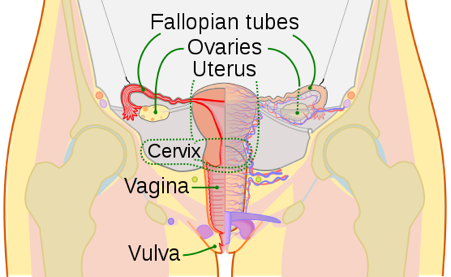
Source: commons.wikimedia.org
Pelvic Exam

During the pelvic exam, your healthcare provider will examine your reproductive organs, including your ovaries, uterus, cervix, vagina, and vulva.

As shown in the diagram, the cervix is the portion of your uterus that comes down into your vagina, where cancer can develop. Your provider may do a pap test to screen for cervical cancer.

You still need an annual pelvic exam even if your uterus and both ovaries have been removed. The exam can detect pre-cancers in the vagina and any remaining cervical tissues.

The steps in the pelvic exam are as follows.

  • To view the cervix, your practitioner will insert a sterile instrument called a speculum into your vagina. The speculum is made either of plastic or metal.
    • If you have a spinal cord injury, then the pressure or the cold of a speculum can cause you to have problems with autonomic dysreflexia. Be sure that your healthcare provider understands that this phenomenon can occur, and that they need to gently insert a warm speculum. Some uninformed healthcare providers falsely assume that because you have little sensation, they do not need to use this kind of care. If you start feeling sick, sweaty, or dizzy at any time during the exam, ask your healthcare provider to stop immediately.
  • While the speculum is in place, your healthcare provider can perform a pap test by gently scraping some of the cells from your cervix and then send the sample to be tested for pre-cancerous or cancerous cells. Your healthcare provider will notify you of the results of the test and discuss further treatment if they found a problem. You should call the healthcare provider if you have not received any results within a few weeks of your exam.
  • Your healthcare provider also may take a sample of the mucus (slippery fluid) around your cervix so the mucus can be tested for vaginal infections and sexually transmitted infections (STIs), such as herpes, gonorrhea, human papillomavirus (HPV), and chlamydia. It is possible to have STIs without symptoms. If your healthcare provider does not routinely take a specimen for these tests, ask that it be done – especially if you have symptoms such as a rash or vaginal discharge, or concerns about your sexual partners.
  • Your healthcare provider will then feel your uterus and ovaries. Wearing an examination glove, they will insert one or two lubricated fingers into your vagina and then press down on your lower abdomen with her other hand. You can ask the healthcare provider to explain what they are doing. They may even place a mirror so you can see what is happening. The pelvic exam is particularly important for women over age 40, when the risks of ovarian and uterine cancer are higher.
  • The research is mixed regarding the use talcum powder in a woman’s genital region.5-7

Other Information About the Well Woman Exam

The Well Woman Exam is typically an annual visit to your Obstetrician/ Gynecologist (OBGYN). You may need more frequent exams if you intend to become pregnant soon, have a history of sexual health problems, or have a parent or other close family member who has had breast or cervical cancer.

Watch closely for changes in your health: you should schedule an exam immediately if you detect a lump or other unusual change in your breast, experience bleeding outside of your normal menstrual period or after menopause, experience unusual and painful cramping, or have symptoms of a sexually transmitted disease or vaginal infection.

Disparities

Women with disabilities are screened for breast cancer and cervical cancer less frequently than women without disabilities.8-13 Moreover, women with severe physical disabilities may be even less likely to receive preventive health screenings than women with less severe disabilities.14-15 Healthcare providers may have misguided attitudes and assumptions regarding sexuality in women with disabilities, which could cause them to be less likely to be screened for sexually transmitted diseases or provided with resources for sexual violence and abuse.16-19

Barriers

The American with Disabilities Act (ADA) of 1990 is a clear mandate (order) to eliminate (end) discrimination against people with disability by ensuring their integration into all aspects of society, including health care. Decades after passage of the ADA, women with disabilities continue to face many barriers to receiving healthcare, including access to the preventive health screenings typically included in the Well Woman Exam. Women with disabilities commonly experience inaccessible facilities, equipment, and gynecological services, problematic attitudes and limited disability-sensitive knowledge of health care providers, lack of transportation, communication barriers, limited finances, lack of insurance coverage, and poor quality health screenings.11,19-26.

Reference List

  1. American Academy of Family Physicians [AAFP]. Clinical practice service recommendation: Breast cancer; self breast exam (SBE). Updated 2016.
  2. American Cancer Society [ACS]. (2020). American Cancer Society recommendations for the early detection of breast cancer. Updated March 5, 2020. Accessed Aug. 29, 2020.
  3. Committee on Practice Bulletins- Gynecology. Practice bulletin number 179: Breast cancer risk assessment and screening in average-risk women. Obstet Gynecol. 2017;130(1):e1-e16. doi:10.1097/AOG.0000000000002158
  4. Kösters JP, Gøtzsche, PC. Regular self-examination or clinical examination for early detection of breast cancer. Cochrane Database Syst Rev, 2003;2(2):CD003373. doi:10.1002/14651858.CD003373
  5. Gertig DM, Hunter DJ, Cramer DW, et al. Prospective study of talc use and ovarian cancer. J Natl Cancer Inst. 2000;92(3):249–252
  6. Houghton SC, Reeves KW, Hankinson SE, et al. Perineal powder use and risk of ovarian cancer. J Natl Cancer Inst. 2014;106(9):dju208. doi:10.1093/jnci/dju208
  7. Terry KL, Karageorgi S, Shvetsov YB, et al. Genital powder use and risk of ovarian cancer: a pooled analysis of 8,525 cases and 9,859 controls. Cancer Prev Res (Phila). 2013;6(8):811–821
  8. Armour BS, Thierry JM, Wolf LA. State-level differences in breast and cervical cancer screening by disability status: United States. Women's Health Issues; 2008;19(6):406–14.
  9. Courtney-Long E, Armour B, Frammartino B, Miller J. Factors associated with self-reported mammography use for women with and women without a disability. J Women's Health, 2011;20(9);1279–1286.
  10. Iezzoni LI, Kurtz SG, Rao SR. Trends in Pap testing over time for women with and without chronic disability. Am J Prev Med. 2016;50:210-219.
  11. Ramjan L, Cotton A, Algoso M, Peters K. Barriers to breast and cervical cancer screening for women with physical disability: A review. Women Health. 2016;56(2):141-156. doi:10.1080/03630242.2015.1086463
  12. Ramirez A, Farmer GC, Grant D, Papachristou T. Disability and preventive cancer screening: results from the 2001 California Health Interview Survey. Am J Public Health, 2005;95(11):2057–2064. doi:10.2105/AJPH.2005.066118
  13. Steele CB, Townsend JS, Courtney-Long EA, Young M. Prevalence of cancer screening among adults with disabilities, United States, 2013. Prev Chronic Dis, 2017;14:e09. doi:10.5888/pcd14.160312
  14. Horner-Johnson W, Dobbertin K, Andresen E, Iezzoni L. Breast and cervical cancer screening disparities associated with disability severity. Women's Health Issues. 2014;24(1):e147-e153.
  15. Smeltzer SC. Preventive health screening for breast and cervical cancer and osteoporosis in women with physical disabilities. Fam Community Health. 2006;29:35S–43S
  16. Becker H, Stuifbergen A, Tinkle M, et al. Reproductive health care experiences of women with physical disabilities. Arch. Phys. Med. Rehabil. 1997;78(12):S26–S33.
  17. Nosek MA, Young ME, Rintala DH. Barriers to reproductive health maintenance among women with physical disabilities. J Women's Health. 1995;4(5):505–518.
  18. Kaplan C. Special issues in contraception: Caring for women with disabilities. J Midwifery Women's Health. 2006;6:450-456. doi:10.1016/j.jmwh.2006.07.009
  19. Stockburger S, Omar HA. Women with disabilities: Reproductive care and women’s health. Int J Child Health Hum Dev. 2015;8(4):429-447.
  20. Angus J, Seto L, Barry N, et al. Access to cancer screening for women with mobility disabilities. J Cancer Educ. 2012;27(1):75–82. doi:10.1007/s13187-011-0273-4.
  21. Barr JK, Giannotti TE, Van Hoof TJ, Mongoven J, Curry M. Understanding barriers to participation in mammography by women with disabilities. Am J Health Promot. 2008;22(6):381-385.
  22. Chevarley FM, Thierry JM, Gill CJ, Ryerson AB, Nosek MA. (2006). Health, preventative health care, and health care access among women with disabilities in the 1994–1995 National Health Interview Survey, Supplement on Disability. Women's Health Issues. 2006;16(6):297–312. doi:10.1016/j.whi.2006.10.002.
  23. Follette-Story M, Schwier E, Kailes JI. Perspectives of patients with disabilities on the accessibility of medical equipment: Examination tables, imaging equipment, medical chairs, and weight scales. Disabil Health J. 2009;2(4):169–79. doi:10.1016/j.dhjo.2009.05.003.
  24. Horner-Johnson W, Dobbertin K, Lee JC, Andresen EM. Disparities in health care access and receipt of preventive services by disability type: Analysis of the medical expenditure panel survey. Health Serv Res. 2014;49(6);1980–1999.
  25. Liu SY, Clark MA. Breast and cervical cancer screening practices among disabled women aged 40-75: Does quality of the experience matter? J Women's Health. 2008;17(8):1321-1329.
  26. Suzuki R, Krahn G, Small E, Peterson-Besse J. Multi-level barriers to obtaining mammograms for women with mobility limitations: post workshop evaluation. Am J Health Behav. 2013;38(5):711–718.

Resources

  • Overview of Well Woman Exam | MyHealthfinder
  • Overview of Well Woman Exam/ Pelvic Exam | Planned Parenthood
  • Pelvic Exam General Info | Healthline
  • Pelvic Exam General Info | Disabled World
  • Blog Post: Disability and the Dilemma of Accessing Quality Women’s Healthcare | Disability Visibility Project
Center for Research on Women with Disabilities
  • Resources
  • A to Z Directory
    • National Study of Women with Physical Disabilities
      • Final Report
      • Introduction
      • Major Findings
      • Sample Description
      • Sense of Self
      • Relationships
      • Sexuality Information
      • Sexual Functioning
      • Abuse
      • Chronic Conditions
      • Gynecologic Health
      • Health Care Utilization
      • Health Maintenance Behaviors
      • Pregnancy
      • Sexually Transmitted Diseases
    • Access to Healthcare
    • Action Planning
    • Aging
      • Aging and Sexuality
      • Fall Prevention
    • Arthritis
    • Autonomic Dysreflexia
    • Bladder Health
      • Neurogenic Bladder
      • Urinary Incontinence
      • Urinary Tract Infections
    • Blood Pressure (Hypertension)
    • Bowel Health
      • Constipation
      • Fecal Incontinence
      • Neurogenic Bowel
    • Breast Health
      • Breast Self-Exam
      • Mammography
      • Breast Cancer
    • COVID-19 and Disabilities
    • Circulatory Problems
    • Communicating Effectively
    • Diabetes
    • Fatigue
    • Health Care
      • Access to Reproductive Health Care
      • Finding a Health Care Provider
      • Health Insurance
      • Medical Professionals Knowledge
    • Healthy Behaviors
      • Health Promotion Programs
      • Physical Activity
      • Stop Smoking
      • Weight Management
        • Barriers to Weight Management
        • Interventions-GoWoman
          • Curriculum
          • GoWoman Poster Abstract
          • Materials
          • Methods
          • Publications
          • Results
          • Second Life
        • Limits to Clinical Guidelines
        • Measurement Issues
        • Negative Body Image
        • Overweight And Obesity Statistics
        • Overweight or Obese?
        • Physical Activity
        • Resources for Managing Your Weight
    • Heart Disease
    • Hormone Replacement Therapy
    • Hysterectomy
    • Interpersonal Violence
      • Safety Planning
      • Types of Interpersonal Violence
      • Warning Signs of a Violent Relationship
      • Warning Signs of Abusive Personal Assistant
      • Health Consequences
      • Internet Safety
      • Vulnerabilities and Risk Factors
      • Healing from Abuse and Violence
    • Menopause Research
    • Mental Health
      • Body Image
      • Depression
      • Self-Efficacy
      • Self-Esteem
        • Self-Esteem in Second Life Project
        • Self-Esteem in Second Life for Women with Spinal Cord Injury
      • Stress
    • Minority Status
    • Osteoporosis
    • Pain
    • Parenting
    • Pelvic Health
      • Pelvic Health Initiative Conceptual Model
      • Pelvic Floor Disorders
        • Causes
        • Diagnosis
        • Prevalence
        • Symptoms
        • Treatment
        • Types of Pelvic Floor Disorders
      • What is the Definition of Pelvic Health?
      • Why is it important to talk about Pelvic Health?
      • Pregnancy and Delivery
        • First Trimester
        • Labor and Delivery
        • Second Trimester
        • Third Trimester
      • Access to Pelvic Health Care
      • Pelvic Health Webinars
    • Reproductive Health
      • Assisted Reproduction
      • Contraception
      • Fertility
      • Menstruation
      • Pregnancy and Delivery
        • LGBTQ+ Pregnancy
        • Pregnancy Disparities
        • After Pregnancy
        • Pregnancy and Childbirth
        • Prenatal Care
        • Stages of Pregnancy
      • Well Woman Exam
    • Respiratory Problems
    • Secondary Conditions
      • Bladder Problems
      • Bowel Problems
    • Sexual Health
      • Sexual Esteem
      • Sexual Communication with a Partner
      • Safer Sex
      • Positioning
      • Self-Pleasuring (Masturbation)
      • Sex Surrogates
    • Sexually Transmitted Infections
    • Skin Problems
    • Sleep Disturbance
    • Social Health
      • Intimate Relationships
      • Social Connectedness
    • Spirituality
      • Publication
    • Substance Abuse
    • Transitions - Teens and Young Women
    • Weakness
  • Publications
    • Americans with Disabilities Act
    • Health Promotion
    • Independent Living
    • Personal Assistance Services
    • Psychological Health
    • Secondary Conditions
    • Sexuality and Reproductive Health
    • Social Issues
    • Spirituality
    • Violence
  • Demographics
  • Health Disparities
  • CROWD Studies
  • Faculty and Staff
    • Research Collaborators
    • Medical Advisors
    • Consumer Advisors

Contact

Phone 832–819–0232
Email crowd@bcm.edu

Center for Research on Women with Disabilities (CROWD)

Department of Physical Medicine and Rehabilitation Baylor College of Medicine Houston, TX 77030

Related Links

Department of Physical Medicine and Rehabilitation
The Institute for Rehabilitation and Research (TIRR)

Connect with us

Follow Us facebook twitter youtube linkedin instagram rss 

Footer Menu Healthcare

  • Healthcare
    • Specialties
    • MyChart Login
    • For Patients & Visitors
    • For Health Professionals
    • Clinical Trials
    • Find a Physician

Footer Menu Education

  • Education
    • Programs & Admissions
    • Student & Trainee Resources
    • Faculty Resources
    • School of Medicine
    • Graduate School of Biomedical Sciences
    • National School of Tropical Medicine
    • School of Health Professions
    • Tuition & Fees
    • Financial Aid

Footer Menu Research

  • Research
    • Our Research
    • Core Labs
    • Faculty Labs
    • Research Centers
    • Research Offices

Footer Menu Community

  • Community
    • Healthcare Outreach
    • Education Outreach
    • Global Programs
    • Community Events

Footer Menu About

  • About
    • Our Campus
    • Departments
    • Academic Centers
    • Administrative Offices
    • Affiliates
    • Leadership
    • Giving
    • Alumni

Footer Menu Resource Links

  • Resource Links
    • Contact Us
    • Find a Person
    • Careers
    • BCM Team Shop
    • News
    • Title IX Office
    • Compliance
    • Covid Response Site

©1998-2026 Baylor College of Medicine® | 1 Baylor Plaza, Houston, Texas 77030 | 713-798-4951
Have an edit or suggestion for this page?

  • Compliance
  • Privacy
  • Intranet