Home
  • Healthcare
    • Specialties
      • Cardiovascular Care
      • Oncology
      • Neurosurgery
      • Primary Care
      • View All Specialties >
    • For Health Professionals
      • Refer a Patient
      • Clinical Trials
      • Professional Development
      • View All >
    • For Patients & Visitors
      • MyChart Login
      • Accepted Insurance
      • Pay My Bill
      • Patient Information
      • View All >
    • Clinical Trials
      • Autism
      • Cancer
      • Obesity
      • Substance Abuse
      • View All Clinical Trials >
    • Find a Doctor
    • Make an Appointment

    General Inquiries

    Call today to schedule an appointment or fill out an online request form. If requested before 2 p.m. you will receive a response today.

    CALL

    713-798-1000

    Monday – Friday 8 a.m. – 5 p.m.


    ONLINE

    Request Now

    Request non-urgent appointments

    Request an appointment, learn about your rights as a patient, read about what to expect from your appointment, and more.

    As Houston's premier academic medical practice, Baylor Medicine delivers compassionate, innovative, evidence-based care.
    Find a Doctor

  • Education
    • Degree Programs & Admissions
      • M.D. Program
      • Ph.D. Programs
      • DNP Program (Nurse Anesthesia)
      • Genetic Counseling Program
      • P.A. Program
      • Orthotics & Prosthetics Program
      • Baccalaureate/M.D. Programs
      • Dual Degree Programs
      • View All Programs >
    • Financing Your Education
      • Tuition & Fees
      • Financial Aid
      • CARES ACT
    • Schools
      • School of Medicine
      • Graduate School of Biomedical Sciences
      • National School of Tropical Medicine
      • School of Health Professions
    • Advanced Training Programs
      • Residency Programs
      • Clinical Fellowships
      • Postdoctoral Research Positions
      • Continuing Professional Development
      • Diploma in Tropical Medicine
      • View All >
    • Resources
      • Departments
      • Academic Centers
      • Academic Calendars
      • Education Cores
      • View All >
    • Information For...
      • Students
      • Postdoctoral Researchers
      • Faculty
      • Alumni
    get-to-know-houston

    America's fourth-largest city is a great place to live, work, and play. Find out why.
    Get to Know Houston

  • Research
    • Research Offices
      • Advanced Technology Cores
      • Clinical Research
      • Institute for Clinical & Translational Research
      • Office of Research Leadership
      • Research IT
      • Sponsored Programs
    • Research at Baylor
      • Academic Centers
      • Departments
      • Faculty Labs
      • From the Labs
      • News
      • Our Research
      • Research Centers
      • Strategic Research Center
    • Additional Research Services
      • BCM Innovation Institute
      • Service Labs
      • VIICTR
    get-to-know-houston

    America's fourth-largest city is a great place to live, work, and play. Find out why.
    Get to Know Houston

  • Community
    • Healthcare Outreach
      • Community Programs
      • More >
    • Global Outreach
      • Global Health
      • Global Programs >
    • Educational Outreach
      • SMART Program
      • BioEd Online
      • More >
    • General Resources
      • Community Events
      • News
      • Blogs
      • Baylor in the Community
    get-to-know-houston

    America's fourth-largest city is a great place to live, work, and play. Find out why.
    Get to Know Houston

  • About
    • About Us
      • Academic Centers
      • Alumni
      • Careers
      • Departments
      • Giving
      • Leadership
      • Mission, Vision, Values
      • News
      • Our Affiliates
      • Fast Facts
      • Accreditation
    • Offices
      • President's Office
      • Office of Research
      • Ombuds Office
      • BCM Innovation Institute
      • View All >
    • Our Campus
      • Compliance
      • Safety and Security
      • Resource Stewardship & Sustainability
      • Team Shop
      • Find a Person
    get-to-know-houston

    America's fourth-largest city is a great place to live, work, and play. Find out why.
    Get to Know Houston

  • GIVE
  • CAREERS
  • INTRANET
  • Careers
  • Contact Us
  • News
Research
  • Lab Members
  • Projects
  • Publications
  • News
  • Lab Members
  • Projects
  • Publications
  • News
  1. Baylor College of Medicine
  2. Research
  3. Faculty Labs
  4. Kelly Bijanki Lab
  5. Projects
  • Lab Members
  • Projects
  • Publications
  • News

Bijanki Lab Projects

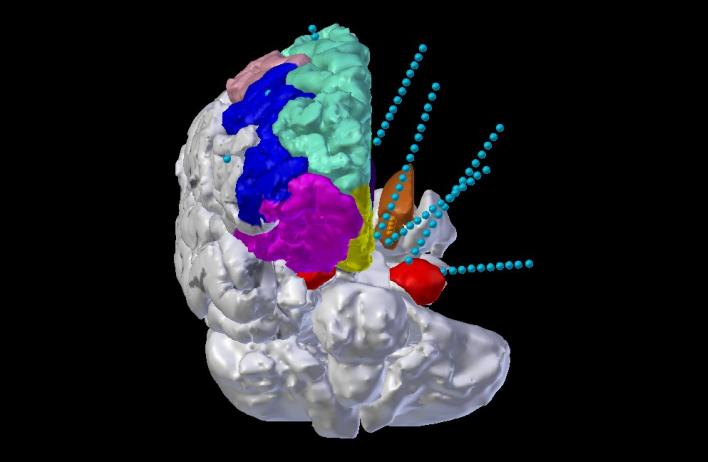
Developing novel targets for neural stimulation therapies: We apply a variety of stimulation-based research paradigms in patients with epilepsy and depression undergoing intracranial monitoring, with the goals of mapping network dynamics underlying emotional phenomena and modulating them in a targeted way using electrical neurostimulation. Of particular interest for stimulation, we study the cingulum bundle, the cingulate cortex, the amygdala, and the insula, among other emotionally-active structures. 
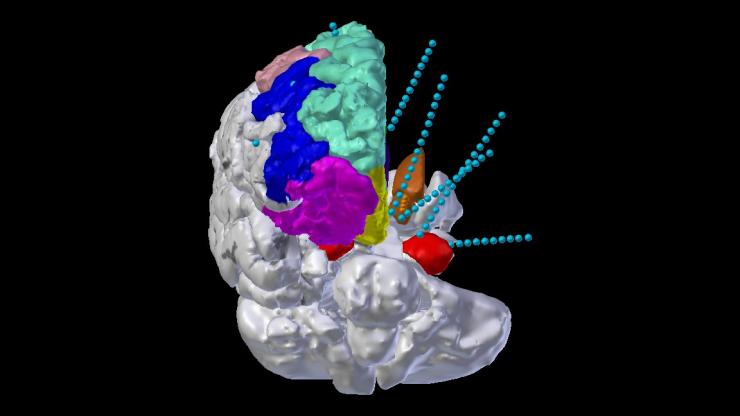
Advanced surgical neuroimaging

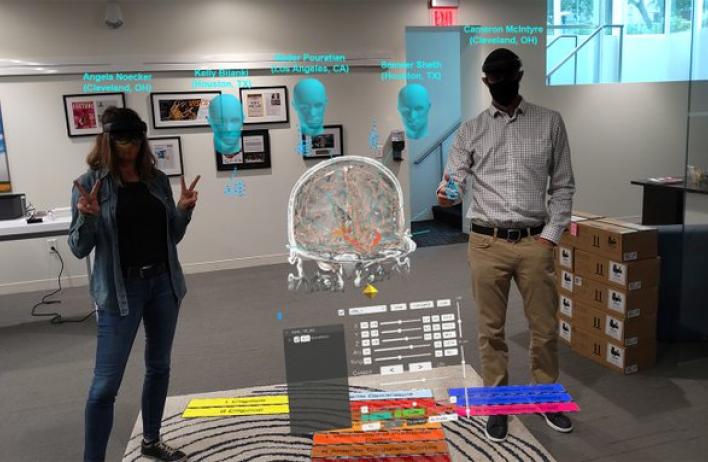
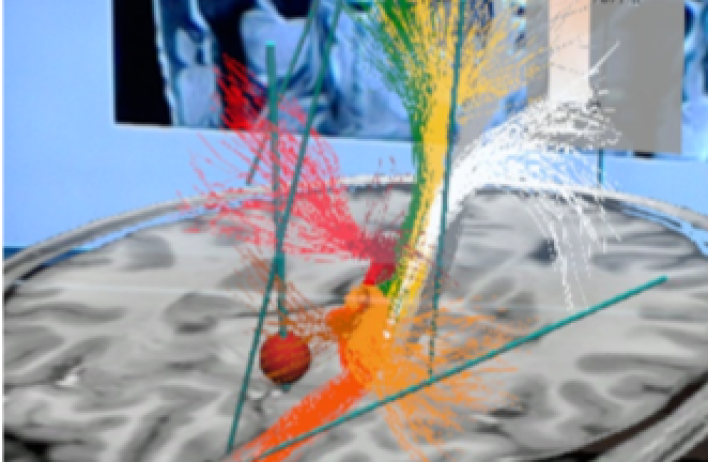
Advanced surgical neuroimaging: We use cutting-edge neuroimaging techniques to visualize and quantify the neural networks involved in affect in our human participants, and to integrate this spatial information with electrophysiological signatures activated during particular processes or by stimulation. We use advanced magnetic resonance imaging techniques to resolve in particular the white matter fibers connecting affective network regions, and use this information to inform neurosurgical targeting, and to further explore the constructs of structural, functional, and effective neural connectivity.
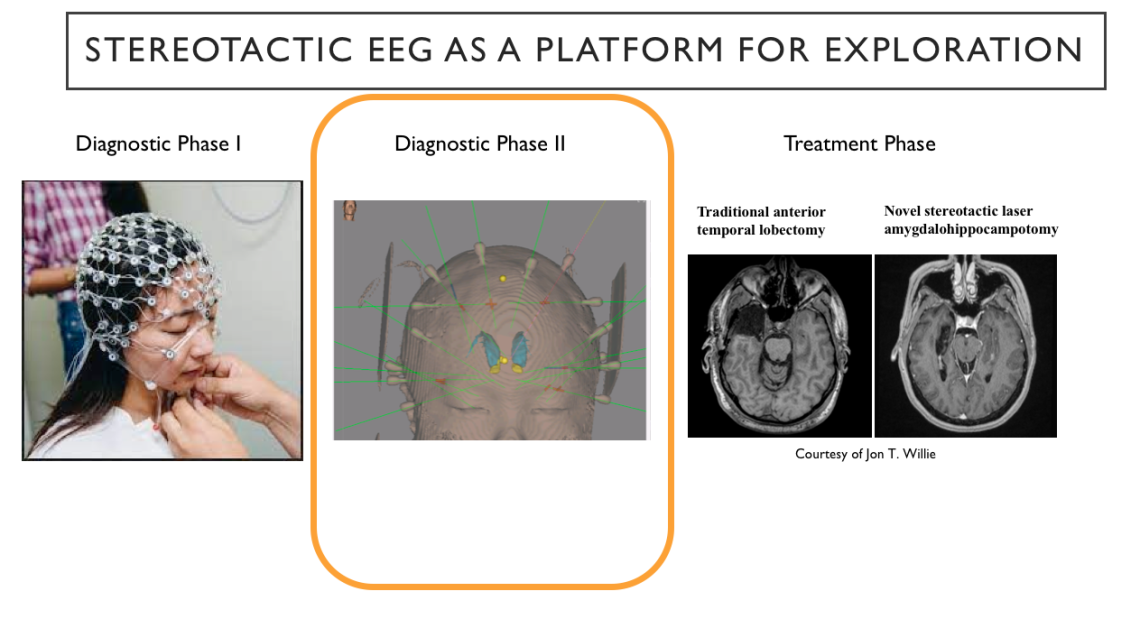
Affective electrophysiology

Affective electrophysiology: We are examining the electrophysiological basis of mood (otherwise known as affect), using the platform of intracranial neural recordings. We are developing novel methods of identifying electrophysiological features of interest, exploring both the time and frequency domains of neural transmission.

Affective bias: We have developed a novel task to examine the property of affective bias. Affective bias refers to an innate human phenomenon in which one’s own emotional state tends to color the interpretation of external stimuli. This effect is especially pronounced in the evaluation of emotional faces; we use affective bias as a cognitive proxy of emotional state, allowing rapid insights into stimulation-induced changes in mood that don’t depend on a patient’s self-report. 

Pulse-Evoked Potentials (PEP): We leverage sensitive research-grade neuroimaging to characterize the structural connectivity between neural network regions, using technology called diffusion-weighted neuroimaging, and the analytical processes of probabilistic and deterministic tractography. These data can be analyzed in tandem with electrophysiological indices of effective connectivity – namely, measuring evoked potentials in putatively-connected brain regions following the application of single pulses of electrical stimulation at a hub or connector region to characterize the latency and magnitude of transmission between regions. This experiment is currently underway in patients with treatment-resistant depression and those with epilepsy.

Autonomic Surveillance: We further characterize the function of mood-relevant brain regions by monitoring the activity of the autonomic nervous system. The extent to which a person’s heart rate increases or their palms sweat is measurably related to their current mood state; we rigorously quantify these variables during emotional neuroscience tasks, as well as during different types of neurostimulation.

Facial Motor Analysis: Through collaboration with our close colleagues at the University of Pittsburgh and Carnegie-Mellon University, we use the facial affect coding system and its computer-vision application “AFAR” to track and quantify changes in facial action units underlying emotional expressions. These data provide an entry point to examine the relationship between facial expressions and applied stimulation paradigms, as well as possibilities of dissociation between facial expression and internal mood, and changes in gestural mimicry and empathy.

Translating electrophysiology to stimulation: We are working in a unique patient population (UH3-NS103549), which allows us to explore analytical methods to translate between electrophysiological components of neural responses to stimulation, and layer these responses together to ideally reflect the neural signature of euthymic or non-depressed mood. 

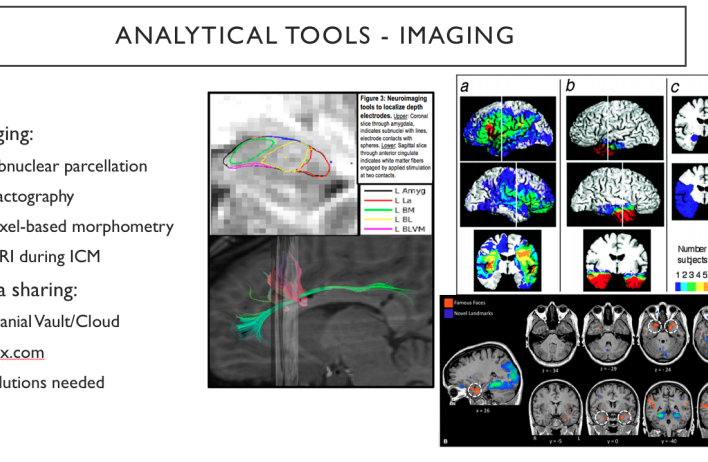
Translating electrophysiology to stimulation Imaging Tools Translating electrophysiology to stimulation Imaging Tools Translating electrophysiology to stimulation Imaging Tools Translating electrophysiology to stimulation Imaging Tools
Tools used when translating electrophysiology to stimulation

Auditory Oddball: The oddball paradigm is classically utilized to examine salience processing, or the ability to identify and orient towards important environmental stimuli. The task itself consists of the repeated presentation of the same ‘standard’ stimulus, randomly interleaved with a different ‘oddball’ stimulus, where the oddball stimulus is known to elicit distinct physiological responses in both the central and peripheral nervous system. Using simple auditory sounds combined with neural recordings, pupillometry, and peripheral nervous system tracking, we are able to elicit salience responses to examine how this essential sensory processing mechanism might be altered in mood disorders such as depression. 
 

  • Lab Members
  • Projects
  • Publications
  • News

Contact

Kelly R Bijanki bijanki@bcm.edu
Phone 713–798–1353
S101 Smith Biomedical Research Building One Baylor Plaza Houston , TX 77030

Follow Us facebook twitter youtube linkedin instagram rss 

Footer Menu Healthcare

  • Healthcare
    • Specialties
    • MyChart Login
    • For Patients & Visitors
    • For Health Professionals
    • Clinical Trials
    • Find a Physician

Footer Menu Education

  • Education
    • Programs & Admissions
    • Student & Trainee Resources
    • Faculty Resources
    • School of Medicine
    • Graduate School of Biomedical Sciences
    • National School of Tropical Medicine
    • School of Health Professions
    • Tuition & Fees
    • Financial Aid

Footer Menu Research

  • Research
    • Our Research
    • Core Labs
    • Faculty Labs
    • Research Centers
    • Research Offices

Footer Menu Community

  • Community
    • Healthcare Outreach
    • Education Outreach
    • Global Programs
    • Community Events

Footer Menu About

  • About
    • Our Campus
    • Departments
    • Academic Centers
    • Administrative Offices
    • Affiliates
    • Leadership
    • Giving
    • Alumni

Footer Menu Resource Links

  • Resource Links
    • Contact Us
    • Find a Person
    • Careers
    • BCM Team Shop
    • News
    • Title IX Office
    • Compliance
    • Covid Response Site

©1998-2026 Baylor College of Medicine® | 1 Baylor Plaza, Houston, Texas 77030 | 713-798-4951
Have an edit or suggestion for this page?

  • Compliance
  • Privacy
  • Intranet