
Program History
Beginning in the 1960's, Dr. Michael E. DeBakey developed the Michael E. DeBakey Summer Surgery Program to allow science fair winners the opportunity to continue their research and encourage them to apply their science aptitudes to medicine.
As the program became more popular, it expanded to include rotations on one of the clinical rotations. For the past 50 years, this program has been conducted to develop and maintain the interest of well-qualified students who are considering a medically oriented career.
From Dr. DeBakey’s efforts, this program has become highly competitive with over 200 applicants for about 15 coveted positions.
Program Overview
The Michael E. DeBakey Summer Surgery Program familiarizes the student with hospital and operating room environments as well as time management skills. Students selected for this eight-week program will integrate into a surgical rotation where they will work closely with residents and faculty at one of the following hospitals: Ben Taub Hospital, Baylor St. Luke's Medical Center or Texas Children's Hospital. The Participants in the DeBakey Summer Program will integrate into the following surgical rotations: general surgery, abdominal transplantation, thoracic transplantation, surgical oncology, trauma surgery, plastic surgery, pediatric surgery, vascular surgery, congenital heart surgery, thoracic surgery and cardiac surgery.
Students are introduced to the fundamentals of surgical practice and will have the opportunity to acquire skills used in the evaluation and treatment of surgical conditions. Perioperative evaluation, operative principles, and post-operative care are emphasized. Students work with faculty, residents, medical students, nurses, and administrative personnel. The student is expected to become an integral part of the team by participating in rounds, operative cases, patient care, and conferences.
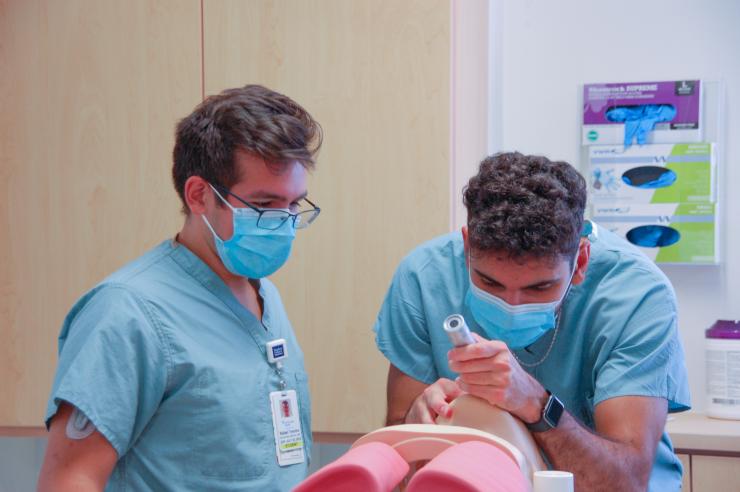
Students participating in the program can anticipate beginning their days at 6 a.m. and leaving the hospital around 6 p.m. While weekends are not expected, students are able to take a night shift at Ben Taub Hospital. Typically, each day begins with early morning rounds followed by operative cases or clinic. Students are also encouraged to attend educational conferences. All participants will observe surgery during the length of the program. Didactics are held throughout the eight-weeks on various topics which could include medical school admissions, information on surgical subspecialties, and surgical skills lab sessions.
Goals and Objectives
The students learn basic knowledge of surgical diseases, diagnosis, surgical treatment, and preoperative and postoperative care.
The students recognize the significance of other diagnostic rotations and understand the correlation and interaction of such rotations, for example, radiology and pathology.
The students observe decision-making under elective as well as emergency conditions.