
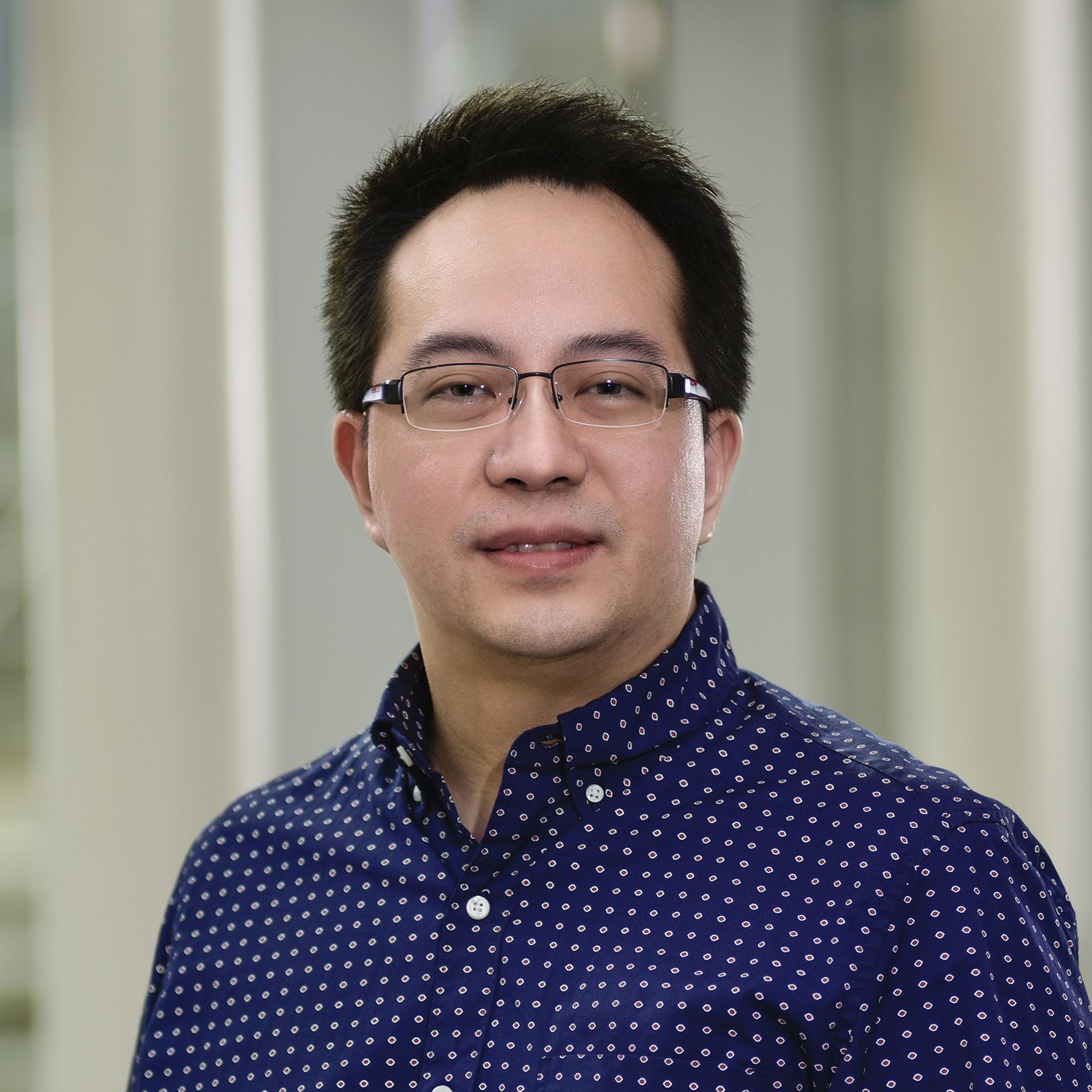
Jonathan Thomas Lei, Ph.D.
Instructor
Positions
- Instructor
-
Baylor College of Medicine
Houston, TX, US
- Member
-
Lester and Sue Smith Breast Center
- Member
-
Molecular and Cellular Biology
Addresses
- Office (Office)
-
Breast Center Office
Houston, TX, 77030
United States
Education
- BS from Baylor University
- Waco, Texas, United States
- Biology
- PhD from Baylor College of Medicine
- Houston, Texas, United States
- Translational Biology and Molecular Medicine
Honors & Awards
- AACR Scholar-in-Training Award
- San Antonio Breast Cancer Symposium (12/2024)
- Human Proteome Organization (HUPO) Congress Travel Award
- US HUPO (07/2023)
- Sanofi Scholar-in-Training Award
- American Association for Cancer Research (02/2023)
- Doreen J. Putrah Cancer Research Foundation Scholar-in-Training Award
- American Association for Cancer Research (03/2021)
- Director's Award for Best Scientific Paper
- Translational Biology & Molecular Medicine Retreat and Research Conference Annual Retreat
- Baylor College of Medicine (10/2018)
- SABCS Basic Science Scholar Award
- San Antonio Breast Cancer Symposium (08/2016)
- Excellence in Leadership Award for Educational Outreach
- Translational Biology & Molecular Medicine Program
- Baylor College of Medicine (05/2018)
Professional Interests
- Clinical Proteogenomics
- Endocrine Therapy Resistance
- Estrogen Receptor Alpha (ESR1) Chromosomal Rearrangements / ESR1 Fusions
- Computational Approaches and Synthetic Lethality in Cancer
Professional Statement
I have interests in proteogenomic identification of cancer therapeutic targets and functional networks.
Websites
Evaluating the clinical significance of PDX models in breast cancer research
Jonathan Lei, PhD, Baylor College of Medicine, Houston, TX, comments on the clinical relevance of patient-derived xenografts (PDXs) in breast cancer research. PDX models demonstrate an 80% concordance with patient responses to taxane therapies, making them valuable tools for studying treatment efficacy. Despite their advantages, the absence of an immune system in PDX models limits their utility in evaluating immune-related therapies. This interview took place at the 2024 San Antonio Breast Cancer Symposium (SABCS) congress in San Antonio, TX.
Biomarker-based chemotherapy optimization for TNBC with PDX models
Jonathan Lei, PhD, Baylor College of Medicine, Houston, TX, discusses a preclinical study using patient-derived xenograft (PDX) models to explore biomarkers and molecular mechanisms underlying response to single-agent and combination chemotherapy in triple-negative breast cancer (TNBC). Combination therapies rarely outperformed single agents, with distinct molecular profiles linked to treatment responses. Biomarker-based predictors also demonstrated potential for guiding platinum, taxane, and combination therapies. This interview took place at the 2024 San Antonio Breast Cancer Symposium (SABCS) congress in San Antonio, TX.
Exploring patient-derived xenografts for breast cancer research
Jonathan Lei, PhD, Baylor College of Medicine, Houston, TX, describes the utility of patient-derived xenografts (PDX) as a clinically relevant model for studying breast cancer. Researchers can evaluate responses to multiple chemotherapy agents and combinations, which is not feasible in clinical trials. PDX models enable comprehensive testing of treatment strategies and enhance our understanding of chemotherapy efficacy, offering valuable insights for developing tailored therapies in breast cancer care. This interview took place at the 2024 San Antonio Breast Cancer Symposium (SABCS) congress in San Antonio, TX.
Professional Development
- Patient-derived xenografts allow deconvolution and prediction of chemotherapy responses
- Conference (Presenter, 2024)
- Sponsor: San Antonio Breast Cancer Symposium
- Spotlight Poster Discussion
- Pan-cancer proteogenomics expands the landscape of therapeutic targets
- Conference (Presenter, 2023)
- Sponsor: Human Proteome Organization
- Cancer Proteomics Session
- Pan-cancer proteogenomics expands the landscape of therapeutic targets
- Conference (Presenter, 2023)
- Sponsor: American Association for Cancer Research
- Molecular Targets Minisymposium
- Estrogen receptor gene fusions drive endocrine therapy resistance in estrogen receptor positive breast cancer
- Conference (Presenter, 2017)
- Sponsor: American Association for Cancer Research Annual Meeting
- Oncogenes and Tumor Suppressors Minisymposium
- ESR1 gene fusions drive endocrine resistance and metastasis in breast cancer
- Conference (Presenter, 2017)
- Sponsor: San Antonio Breast Cancer Symposium
- Spotlight Poster Discussion
- Functionally diverse ESR1 gene fusions drive endocrine resistance is estrogen receptor positive breast cancer
- Conference (Presenter, 2016)
- Sponsor: San Antonio Breast Cancer Symposium
- Poster Discussion
Selected Publications
-
Mertins P, Mani DR, Ruggles KV, Gillette MA, Clauser KR, Wang P, Wang X, Qiao JW, Cao S, Petralia F, Kawaler E, Mundt F, Krug K, Tu Z, Lei JT...Ellis MJ, Carr SA & NCI CPTAC. " Proteogenomics connects somatic mutations to signalling in breast cancer " Nature. 2016 May 25; 534 (7605) : 55-62.
Pubmed PMID: 27251275. -
Haricharan S, Lei J, Ellis M. " Mammary Ductal Environment Is Necessary for Faithful Maintenance of Estrogen Signaling in ER(+) Breast Cancer " Cancer Cell. 2016 Mar 14; 29 (3) : 249-50.
Pubmed PMID: 26977876. -
Haricharan S, Punturi N, Singh P, Holloway KR, Anurag M, Schmelz J, Schmidt C, Lei JT, Suman V, Hunt K, Olson JA, Hoog J, Li S, Huang S, Edwards DP, Kavuri SM, Bainbridge MN, Ma CX, Ellis MJ. " Loss of MutL Disrupts Chk2-dependent Cell Cycle Control Through CDK4/6 to Promote Intrinsic Endocrine Therapy Resistance in Primary Breast Cancer " Cancer Discov. 2017 Oct ; 7 (10) : 1-16.
Pubmed PMID: 28801307. -
Lei JT, Shao J, Zhang J, Iglesia M, Chan DW, Cao J, Anurag M, Singh P, He X, Kosaka Y, Matsunuma R, Crowder R, Hoog J, Phommaly C, Goncalves R...Hoadley KA, Thompson EA, Chen X, Kavuri SM, Creighton CJ, Maher CA, Perou CM, Haricharan S, Ellis MJ. " Functional Annotation of ESR1 Gene Fusions in Estrogen Receptor-Positive Breast Cancer " Cell Rep. 2018 ;
Pubmed PMID: 30089255.
Memberships
- American Association for Cancer Research
- Active Member
- American Society for Mass Spectrometry
Log In to edit your profile