
Dr. Orengo serves as a co-investigator in the Undiagnosed Diseases Network (UDN) at Baylor College of Medicine. This NIH funded multi-site collaborative effort is designed to use high level sequencing, transcriptomics metabolomics and animal modeling resources to solve tough cases of undiagnosed individuals with rare diseases. Learn more about the UDN.
Currently we have three main research areas and multiple projects within each area that are open for intelligent and inquisitive trainees to take on. The main research areas can be divided based on model organism used.
Zebrafish Model Organism
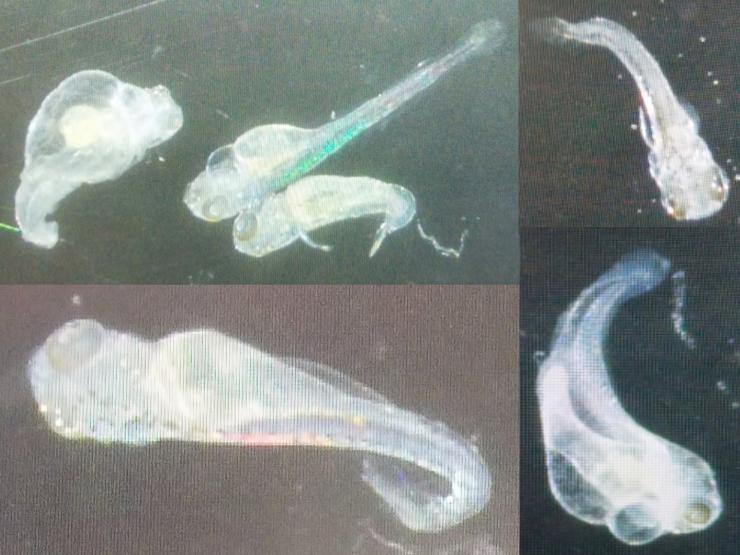
We have developed six transgenic zebrafish lines modeling SCA1. These lines contain different mutations in the toxic protein expressed either throughout the whole brain or only in motor neurons. The aim of this project is to determine if we can use zebrafish to study motor neuron biology and degeneration. Zebrafish afford many advantages over mice in terms of their amenability to live imaging, ease of setting up large drug and CRISPRi based screens and manipulation of gene expression both spatially and temporally.
Mouse Model Organism
The Orengo lab as generated a novel conditional mouse model for spinal cerebellar ataxia, type 1 (SCA1). In this mouse line we are able to turn on the toxic protein that drives disease in SCA1 in a specific cell type, with whatever Cre driver we can acquire. To date we have used Cre drivers to allow for expression of the toxic protein in only motor neurons, skeletal muscle and Purkinje neurons. Future, studies are focused on driving expression in glial cells supporting and interacting with motor neurons including astrocytes and microglia. In addition, we would like to do combination drivers, like motor neurons and skeletal muscle. In our motor neuron alone model we have transcriptomics data that is being mined to tease out molecular pathways involved in either causing or responding to the motor neuron degeneration.
Human iNeurons Models
This arm of the lab is in the earliest stages as we are testing and modifying published protocols on deriving motor neurons from human fibroblast samples. Dr. Orengo has access to a bounty of patients with rare genetic variants leading to or associated with motor neuron degeneration through his involvement in the BCM ALS clinic, his rare genetic variant Neuromuscular clinic and his role as a co investigator in the Undiagnosed Diseases Network.
Useful Links
All members of the Orengo lab are required to keep an electronic lab notebook via the Benchling interface. Learn more about Benchling.
An integral part of the Orengo lab is integrating a cross species approach towards understanding motor neuron biology and disease: Human, Mouse and Zebrafish. The following links are frequently used by lab members in their day-to-day research and serve as great resources.
Zebrafish International Resource Center
The Zebrafish Information Network (ZFIN) is the database of genetic and genomic data for the zebrafish (Danio rerio) as a model organism. ZFIN provides a wide array of expertly curated, organized and cross-referenced zebrafish research data.
Genome Aggregation Database
The Genome Aggregation Database (gnomAD) is a resource developed by an international coalition of investigators, with the goal of aggregating and harmonizing both exome and genome sequencing data from a wide variety of large-scale sequencing projects, and making summary data available for the wider scientific community.
Harmonizome
Search for genes or proteins and their functional terms extracted and organized from over a hundred publicly available resources.
Enrichr
A suite of gene list enrichment analysis tools.
Brain Map
The Allen Institute for Brain Science uses a unique approach to generate data, tools and knowledge for researchers to explore the biological complexity of the mammalian brain. This portal provides access to high quality data and web-based applications created for the benefit of the global research community.