
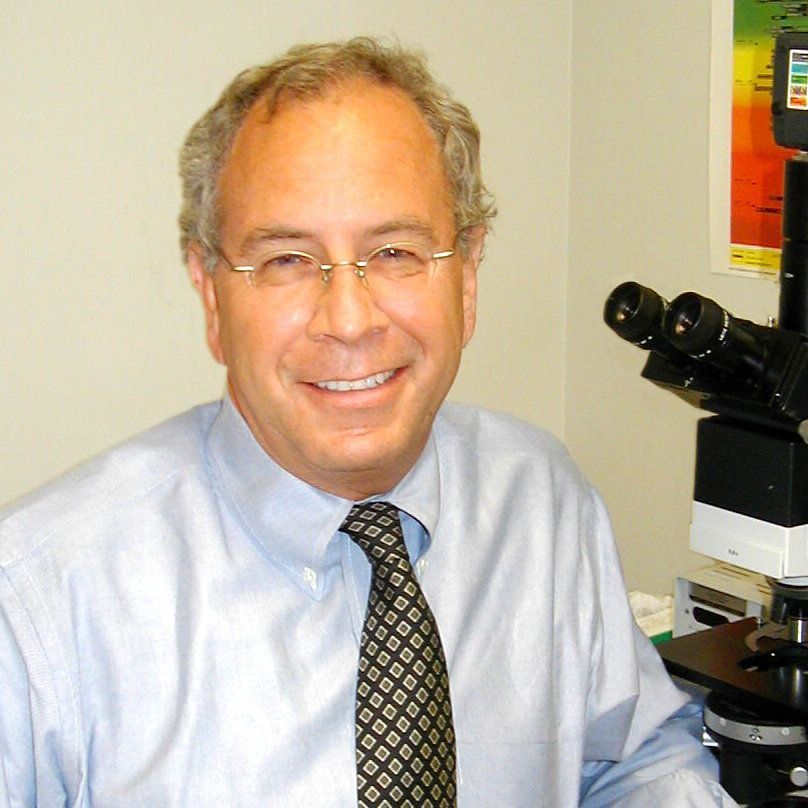
Jeffrey L Noebels, M.D., Ph.D.
Cullen Trust for Health Care Endowed Chair in Neurogenetics
(713) 798-5860Positions
- Cullen Trust for Health Care Endowed Chair in Neurogenetics
-
Professor Neurology, Neuroscience, and Molecular & Human Genetics
- Director
-
Blue Bird Circle Developmental Neurogenetics Laboratory
Baylor College of Medicine
- Graduate Program Faculty
-
Neuroscience
Translational Biology and Molecular Medicine
Baylor College of Medicine
- Professor
-
Program in Translational Biology & Molecular Medicine
Baylor College of Medicine
Addresses
- Department of Neurology (Clinic)
-
Baylor College of Medicine
One Baylor Plaza
Houston, TX, 77030
United States
Phone: (713) 798-5860
jnoebels@bcm.edu
Education
- Post-Doctoral Fellowship at Harvard University
- 01/1983 - Cambridge, Massachusetts, United States
- Residency at Massachusetts General Hospital
- Boston, Massachusetts, United States
- PhD from Stanford University
- 01/1977 - Stanford, CA, United States
- MD from Yale University School Of Medicine
- 01/1981 - New Haven, CT, United States
- BA from Reed College
- 01/1972 - Portland, OR, United States
Certifications
- Neurology
- American Board of Psychiatry and Neurology
Professional Interests
- Gene control of neuronal excitability within the developing mammalian CNS
- Inherited neurological diseases
- Epilepsy
Professional Statement
The principal research strategy in the Developmental Neurogenetics Laboratory is to apply mutational analysis to learn how genes regulate neuronal excitability and network synchronization within the mammalian central nervous system. Spontaneous and transgenic mutations that express neurological phenotypes in the mouse provide a valuable opportunity to identify excitability genes and examine their role in synaptic plasticity in the developing brain.
Brain wave (EEG) phenotypes emerge from altered neuronal signaling properties, and are of special interest. Six mouse mutants causing spike-wave synchronization of the neocortex have been discovered in our laboratory (tottering, lethargic, ducky, and stargazer, slow wave, and mocha) and are linked to mutations of voltage-gated calcium ion channels, AMPA receptor trafficking TARP subunits, a sodium hydrogen exchanger, and vesicular zinc trafficking. Study of these mice have led to the identification of novel members of the TARP gene family, and a new understanding of how related molecules rescue function and determine selective vulnerability within thalamocortical pathways. Other new mouse models for human epilepsy syndromes involving mutant ion channel, receptor, synaptic vesicle proteins, and transcription factors for interneuron migration are being analyzed to pinpoint the neural network and specific electrophysiological abnormalities characteristic of the human disorder. We are also exploring activity-induced changes of downstream gene expression and conditional gene silencing in epileptic brain to identify regulatory pathways that are critical mechanisms of disease progression. Some of these genes, such as those for glutamate and GABA transporters and apoptotic pathways suggest distinct mechanisms for seizure-induced excitotoxicity and cell death.
Our laboratory recently discovered that mouse models of Alzheimer’s Disease show non-convulsive cortical hyperexcitability, heralding a paradigm change in understanding the basis for cognitive disorders in familial AD. We have also identified MAPT1, the gene for tau protein, as a critical modifier of AD-linked cognitive decline and epilepsy. Other models of Long QT interval genes link arrhythmias of heart and brain, and sudden unexpected death.
At present, mutant mouse models of inherited disorders in neuronal excitability are under investigation using the molecular anatomical techniques of in situ hybridization and immunohistochemistry, quantitative analysis of seizure-activated mRNAs, in vivo and in vitro cell physiology, 2 photon imaging, and optical fluorescence measurements of ion channel activity in presynaptic terminals of mouse brain slices. These studies form the basis for development of strategies to selectively correct the tissue expression of neuronal gene errors early in development.
In collaboration with the Baylor Human Genome Sequencing Center and a $4.5 million NIH grant, our laboratory performed the first large-scale translational genomic research study examining variants in human ion channel genes. The Human Channelopathy Project revealed extensive complexity of disease-linked genes, and we are currently evaluating the contribution of SNP patterns and copy number variation in several hundred ion channel subunit genes to the complex inheritance of neurological excitability disorders such as epilepsy. A second and related large collaborative NIH funded Center project focusing on risk prediction of variants in ion channel genes linked to neurocardiac phenotypes is underway.
Brain wave (EEG) phenotypes emerge from altered neuronal signaling properties, and are of special interest. Six mouse mutants causing spike-wave synchronization of the neocortex have been discovered in our laboratory (tottering, lethargic, ducky, and stargazer, slow wave, and mocha) and are linked to mutations of voltage-gated calcium ion channels, AMPA receptor trafficking TARP subunits, a sodium hydrogen exchanger, and vesicular zinc trafficking. Study of these mice have led to the identification of novel members of the TARP gene family, and a new understanding of how related molecules rescue function and determine selective vulnerability within thalamocortical pathways. Other new mouse models for human epilepsy syndromes involving mutant ion channel, receptor, synaptic vesicle proteins, and transcription factors for interneuron migration are being analyzed to pinpoint the neural network and specific electrophysiological abnormalities characteristic of the human disorder. We are also exploring activity-induced changes of downstream gene expression and conditional gene silencing in epileptic brain to identify regulatory pathways that are critical mechanisms of disease progression. Some of these genes, such as those for glutamate and GABA transporters and apoptotic pathways suggest distinct mechanisms for seizure-induced excitotoxicity and cell death.
Our laboratory recently discovered that mouse models of Alzheimer’s Disease show non-convulsive cortical hyperexcitability, heralding a paradigm change in understanding the basis for cognitive disorders in familial AD. We have also identified MAPT1, the gene for tau protein, as a critical modifier of AD-linked cognitive decline and epilepsy. Other models of Long QT interval genes link arrhythmias of heart and brain, and sudden unexpected death.
At present, mutant mouse models of inherited disorders in neuronal excitability are under investigation using the molecular anatomical techniques of in situ hybridization and immunohistochemistry, quantitative analysis of seizure-activated mRNAs, in vivo and in vitro cell physiology, 2 photon imaging, and optical fluorescence measurements of ion channel activity in presynaptic terminals of mouse brain slices. These studies form the basis for development of strategies to selectively correct the tissue expression of neuronal gene errors early in development.
In collaboration with the Baylor Human Genome Sequencing Center and a $4.5 million NIH grant, our laboratory performed the first large-scale translational genomic research study examining variants in human ion channel genes. The Human Channelopathy Project revealed extensive complexity of disease-linked genes, and we are currently evaluating the contribution of SNP patterns and copy number variation in several hundred ion channel subunit genes to the complex inheritance of neurological excitability disorders such as epilepsy. A second and related large collaborative NIH funded Center project focusing on risk prediction of variants in ion channel genes linked to neurocardiac phenotypes is underway.
Websites
Dr. Noebels' Research
VIICTR Research Database
Selected Publications
-
Soeung V, Puchalski RB, Noebels JL. " The complex molecular epileptogenesis landscape of glioblastoma " Cell Rep Med. 2024 Aug ; 5 : 101691.
Pubmed PMID: 39168100. -
Meyer J, Yu K, Luna-Figueroa E, Deneen B, Noebels JL. " Glioblastoma disrupts cortical network activity at multiple spatial and temporal scales " Nat Commun. 2024 May ; 15 : 4503.
Pubmed PMID: 38802334. -
Aiba I, Ning Y, Noebels JL. " Persistent Na+ current couples spreading depolarization to seizures in Scn8a gain-of-function mice " Brain. 2025 Apr ; 148 : 3325-3339.
Pubmed PMID: 40177888. -
Klassen T, Davis C, Goldman A, Burgess D, Chen T, Wheeler D, McPherson J, Bourquin T, Lewis L, Villasana D, Morgan M, Muzny D, Gibbs R, Noebels J. " Exome sequencing of ion channel genes reveals complex profiles confounding personal risk assessment in epilepsy. " Cell. 2011 Jun 24; 145 (7) : 1036-48.
Pubmed PMID: 21703448.
Log In to edit your profile