
Rotavirus Vaccine Research Program
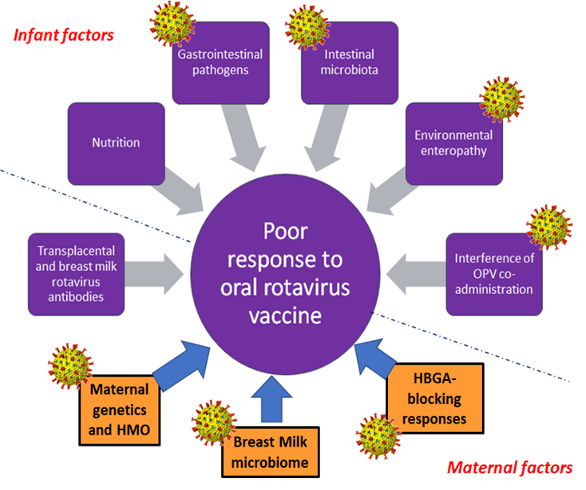
The primary area of research in the Ramani Lab focuses on the underperformance of live, attenuated rotavirus vaccines in low- and middle-income regions. Projects in the rotavirus research program range from discovery (identifying correlates of protection from infection and vaccination) and mechanisms (what mediates vaccine failure) to translational studies (facilitating the development of next generation rotavirus vaccines and identifying interventions to improve response to existing vaccine). These projects are funded by NIH R01 grants and several grants from the Gates Foundation.
NIH funded projects
- Intestinal Microbiota-mediated Rotavirus Vaccine Failure
- Enterovirus Interference with Rotavirus Vaccine Replication and Immunity
Gates Foundation funded projects
- Establishment of a Gut Enteroid System to Improve Rotavirus Vaccines
- Rotavirus Laboratory Support for Next Generation Rotavirus Vaccines
- Characterization of Potential Rotavirus Challenge Strains in Human Intestinal Enteroids
Norovirus Research Program
HuNoVs are a leading cause of gastrointestinal disease worldwide and are genetically diverse, with new strains emerging every 2-3 years through antigenic drift and recombination. Their frequent emergence of new variants through recombination and antigenic drift remains poorly understood, particularly in how certain strains spread more effectively. Studies on human norovirus in our lab range from efforts to understand the mechanisms of norovirus-induced gastroenteritis using human intestinal organoids to understanding virus evolution using genomic tools. Our approach integrates full-length viral sequencing, microbiome and virome analysis, and functional validation in organoids derived from diverse populations. This translational effort will help define key mechanisms of norovirus evolution and disease, with implications for future intervention strategies. The norovirus studies are in collaboration with Dr. Robert Atmar.
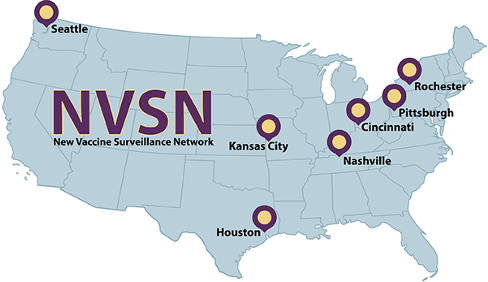
Additionally, the Atmar and Ramani Labs together provide laboratory support for public health surveillance for rotavirus and norovirus in the US Pediatric Population as part of a CDC-funded U01 awarded to investigators at Texas Children's Hospital.
NIH funded projects
- Integrated Genomics of Mucosal Infections
- Surveillance for Vaccine Preventable Disease in Children
- Molecular Dissection of Norovirus Replication and Pathogenesis to Develop Therapeutics
Advancing Infant Organoid Models for Gastrointestinal Diseases and Vaccines
Key to our research program is the use of state-of-the-art human intestinal organoid cultures. Our lab played a lead role in the establishment and characterization of infant intestinal organoids that are being used extensively by investigators within and outside the Texas Medical Center to study gastrointestinal infectious and non-infectious diseases. Several projects in the lab utilize infant human intestinal enteroids and we collaborate with our faculty in the department to advance these models.
NIH funded projects
- Human Biomimetics for Mucosal Infections