
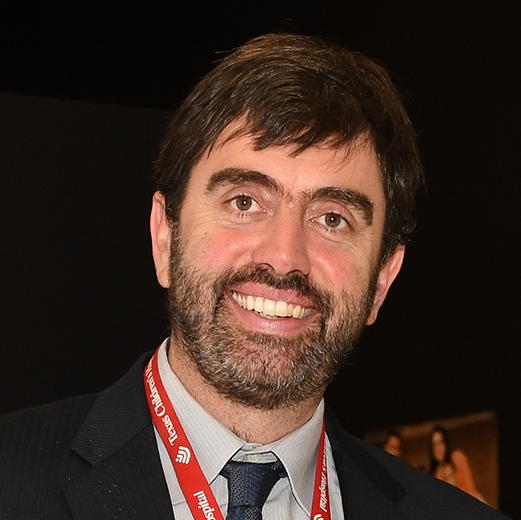
Positions
- Associate Professor
-
Molecular and Human Genetics
Baylor College of Medicine
Houston, TX, US
- Faculty Member
-
Graduate Programs in Development, Disease Models & Therapeutics and Genetics & Genomics
Baylor College of Medicine
Addresses
- Texas Children's Genetics Clinic (Clinic)
-
Texas Children's Clinical Care Center
6701 Fannin St., 16th Floor
Houston, TX, 77030
United States
Phone: (832) 822-4280
Texas Children's Genetics Clinic
- Duncan Neurological Research Institute (Lab)
-
Room: DNRI-1050
Houston, TX, 77030
United States
Phone: (832) 822-1240
michael.wangler@bcm.edu
Education
- MD from Baylor College Of Medicine
- Houston, TX, United States
- Internship at Baylor College Of Medicine Affiliate Hospitals
- Houston, TX, United States
- Pediatrics
- Residency at Baylor College Of Medicine Affiliate Hospitals
- Houston, TX
- Pediatrics
- Residency at Baylor College Of Medicine Affiliate Hospitals
- Houston, TX
- Clinical Genetics
Professional Interests
- Pediatric genetics
- Peroxisomal disorders
Professional Statement
Molecular and Developmental Mechanisms of Mendelian Disorders
Our lab studies rare human disease phenotypes in order to gain insight into general principles of human health. Methods include clinical studies in rare disease, genomics and model organism genetics particularly Drosophila melanogaster. We are currently using Drosophila to study Mendelian disorders and their underlying genetic and developmental mechanisms in two major efforts:
1) Model Organisms and the Molecular Pathogenesis of Mendelian Disorders: We use Drosophila models for diagnostic paradigms. We are part of the Model Organisms Screening Center (MOSC) for the Undiagnosed Diseases Network (UDN). We have also started a similar effort in underserved populations called Community TEXOME.
2) Mendelian Disorders of the Peroxisome and Organelle Dynamics: Peroxisomes are fundamental sub-cellular organelles present in all eukaryotic cells. We use clinical and Drosophila studies in the elucidation of mechanisms of Peroxisomal Biogenesis Disorders- Zellweger Spectrum disorders (PBD-ZSD). These diseases are expanding from autosomal recessive disorders to a broad range of human diseases related to peroxisomes.
Our lab studies rare human disease phenotypes in order to gain insight into general principles of human health. Methods include clinical studies in rare disease, genomics and model organism genetics particularly Drosophila melanogaster. We are currently using Drosophila to study Mendelian disorders and their underlying genetic and developmental mechanisms in two major efforts:
1) Model Organisms and the Molecular Pathogenesis of Mendelian Disorders: We use Drosophila models for diagnostic paradigms. We are part of the Model Organisms Screening Center (MOSC) for the Undiagnosed Diseases Network (UDN). We have also started a similar effort in underserved populations called Community TEXOME.
2) Mendelian Disorders of the Peroxisome and Organelle Dynamics: Peroxisomes are fundamental sub-cellular organelles present in all eukaryotic cells. We use clinical and Drosophila studies in the elucidation of mechanisms of Peroxisomal Biogenesis Disorders- Zellweger Spectrum disorders (PBD-ZSD). These diseases are expanding from autosomal recessive disorders to a broad range of human diseases related to peroxisomes.
Selected Publications
-
Jangam S, Briere L, Jay K, Andrews J, Walker M, High F, Yamamoto S, Sweetser D, Wangler MF*. " A de novo missense variant in EZH1 associated with developmental delay exhibits functional deficits in Drosophila melanogaster " Submitted. Available on MedRxiv. 2023 ;
-
Andrews JC, Mok JW, Kanca O, Jangam S, Tifft C, Macnamara EF, Russell BE, Wang LK; Undiagnosed Diseases Network; Nelson SF, Bellen HJ, Yamamoto S, Malicdan MCV, Wangler MF*.. " De Novo Variants in MRTFB have gain of function activity in Drosophila and are associated with a novel neurodevelopmental phenotype with dysmorphic features " Genet Med.. 2023 Mar 31; (100833)
Pubmed PMID: 37013900. -
Lyons-Warren AM, Wangler MF, Wan YW. " Cluster Analysis of Short Sensory Profile Data Reveals Sensory-Based Subgroups in Autism Spectrum Disorder " Int J Mol Sci.. 2023 ; 23 (21) : 13030.
Pubmed PMID: 36361815. -
Huang Y, Lemire G, Briere LC, Liu F, Wessels MW, Wang X, Osmond M, Kanca O, Lu S, High FA, Walker MA, Rodan LH; Undiagnosed Diseases Network; Care4Rare Canada Consortium, Wangler MF, Yamamoto S, Kernohan KD, Sweetser DA, Boycott KM, Bellen HJ. " The recurrent de novo c.2011C>T missense variant in MTSS2 causes syndromic intellectual disability " Am J Hum Genet.. 2022 ; 109 (11) : 2092.
Pubmed PMID: 36332614.
Log In to edit your profile