
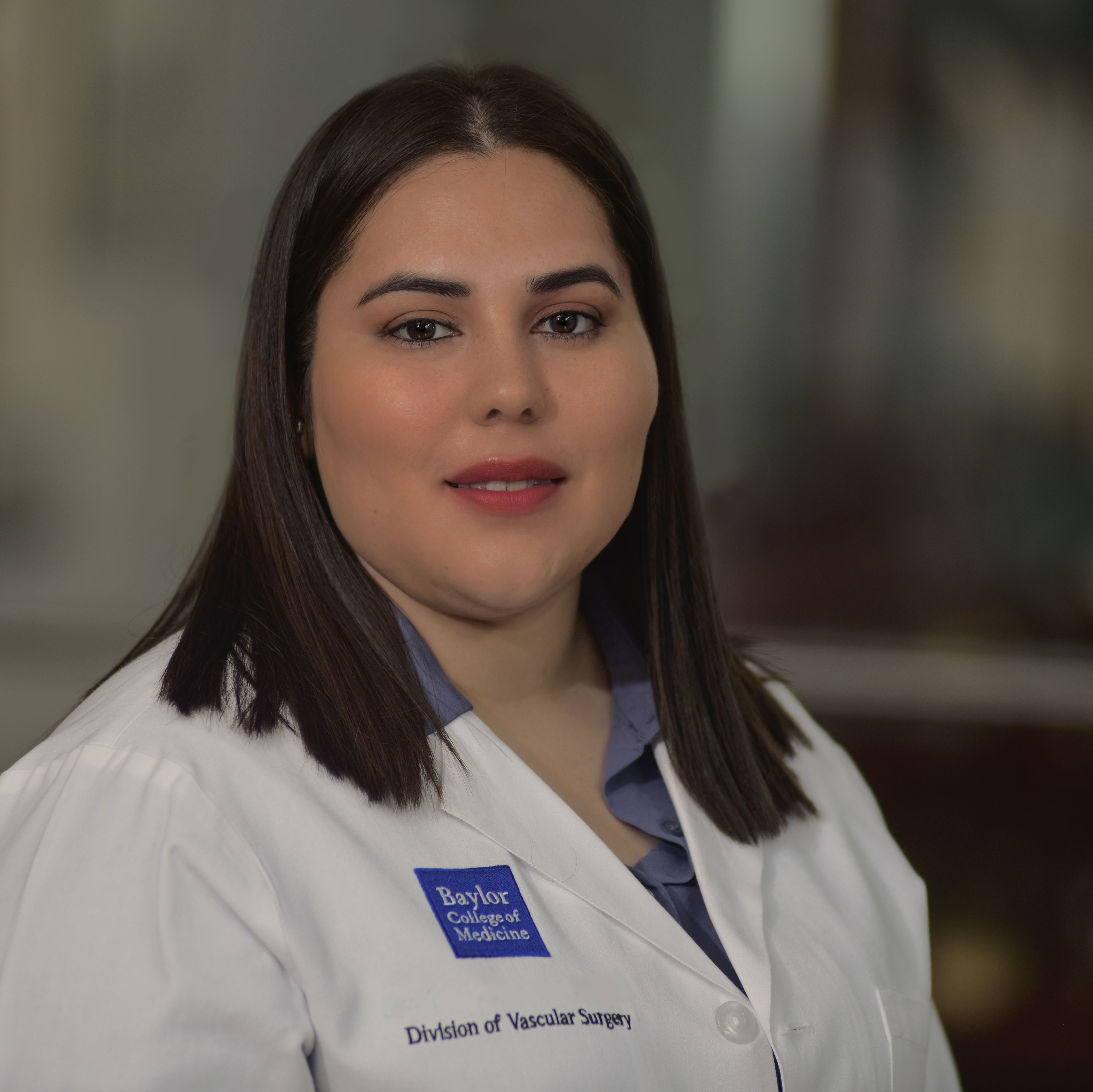
Positions
- Lead Coordinator, Clinical Research
-
Medicine
Geriatrics and Palliative Medicine
Baylor College of Medicine
Houston, TX, US
Education
- BS from Maryville University
- 06/2025 - St. Louis, Missouri, United States
- Business Administration
- MBA from University Of Texas
- 05/2027 - Tyler, Texas, United States
Selected Publications
-
Alejandro Zulbaran-Rojas, Ramkinker Mishra, Naima Rodriguez, Rasha O Bara, Myeounggon Lee, Amir Behzad Bagheri, James P Herlihy, Muhammad Siddique, Bijan Najafi. " Safety and efficacy of electrical stimulation for lower-extremity muscle weakness in intensive care unit 2019 Novel Coronavirus patients: A phase I double-blinded randomized controlled trial " 2022 Dec 6; 9
-
Gozde Cay, Yvonne H Sada, Mohammad Dehghan Rouzi, Md Moin Uddin Atique, Naima Rodriguez, Mehrnaz Azarian, MG Finco, Sarvari Yellapragada, Bijan Najafi. " Harnessing physical activity monitoring and digital biomarkers of frailty from pendant based wearables to predict chemotherapy resilience in veterans with cancer " 2024 Jan 31; 14 (1)
-
Abdullah Hamad, Myeounggon Lee, Rania Ibrahim, Heba Ateya, Mincy Mathew, Talal Talal, Naima Rodriguez, Bijan Najafi, Fadwa Al-Ali. " xploring the impact of sensory-feedback in foot on physical activity in frail hemodialysis patients: a randomized controlled trial " 2024 May 23; 39 (4)
-
Bijan Najafi Myeounggon Lee, Abdullah Hamad, Mehrnaz Azarian, Jaewon Beom, Abderrahman Ouattas, Mohammad Dehghan Rouzi, Naima Rodriguez, Nhi Quach, Rania Ibrahim, Mincy Mathew, Talal Talal, Fadwa Al-Ali. " Efficacy and Feasibility of Intradialytic Plantar Electrical Stimulation in Patients With Diabetes: A Randomized Double-Blind Controlled Trial " ;
Pubmed PMID: 39316389.
Projects
- POSTCARE-O: SURVIVORSHIP CARE FOR WOMEN LIVING WITH OVARIAN CANCER
- Baylor College of Medicine (01/2022 - 01/2028)
- Houston, Tx
- POSTCare-O (Survivorship Care for Women Living with Ovarian Cancer) is a CPRIT-funded randomized controlled trial designed to improve the quality of life of ovarian cancer survivors. The study compares usual oncology follow-up with an enhanced survivorship care program that provides personalized planning, supportive resources, and proactive monitoring. Its goal is to reduce symptom burden, address emotional and psychosocial needs, and strengthen survivorship care for women living with ovarian cancer.
- THRIVE-LC PILOT: FEASIBILITY AND ACCEPTABILITY OF PSYCHOSOCIAL INTERVENTION FOR LUNG CANCER SURVIVORS
- Baylor College of Medicine (10/2024 - 12/2028)
- Houston, Tx
- pilot study focused on improving survivorship outcomes for individuals living with lung cancer. The trial evaluates the feasibility and acceptability of delivering a structured psychosocial intervention designed to address emotional distress, symptom burden, and quality-of-life concerns common among lung cancer survivors. By testing patient engagement, satisfaction, and preliminary clinical outcomes, the study aims to inform larger trials and guide the development of supportive care models tailored specifically to this population.
- PROMOTING PREVENTION IN SURVIVORSHIP CARE IN RURAL TEXAS
- Baylor College of Medicine (05/2022 - 08/2027)
- Houston, Tx
- Promoting Prevention in Survivorship Care in Rural Texas is a CPRIT-funded initiative that integrates evidence-based prevention strategies—such as smoking cessation, healthy lifestyle promotion, and routine screenings—into survivorship care for rural cancer survivors. By leveraging telehealth and community partnerships, the program reduces disparities in access, supports healthier behaviors, and builds sustainable models to improve long-term outcomes in underserved regions.
- FRAILTY EVALUATION BY PHYSICAL ACTIVITY MONITORS IN PATIENTS WITH CANCER
- Baylor College Of Medicine
- Micheal E. DeBakey VA
- Frailty is characterized by decreased physiologic reserve and increased vulnerability to stressors. Patients with metastatic cancer are at particularly high risk due to chronic illness and the cumulative burden of long-term chemotherapy. Treatment-related toxicities further increase the risk of hospital admissions, functional decline, or even death. We proposed a study to evaluate frailty in patients with metastatic cancer, focusing on its association with treatment tolerance, hospitalization rates, and survivorship outcomes. Our aim is to develop strategies to better identify frail patients early, integrate frailty assessment into routine oncology care, and design tailored interventions to minimize treatment-related complications. Ultimately, this work seeks to improve quality of life and clinical outcomes for patients with advanced cancer by aligning treatment decisions with patients’ physiologic resilience.
- VA VERSION OF "MANAGING CHEMOTHERAPY INDUCED NEUROPATHY IN CANCER PATIENTS USING EXERGAMING"
- Baylor College Of Medicine
- Micheal E, DeBakey VA
- Chemotherapy-induced peripheral neuropathy (CIPN) affects up to 40% of cancer patients, causing numbness, weakness, and balance problems that significantly increase fall risk. Our research focuses on early identification of CIPN-related gait and balance deficits, which are often overlooked in oncology practice. Building on pilot work, we developed a game-based exercise program (“exergaming”) that helps patients improve balance and walking ability. To expand access, we are also testing home-based electrical stimulation therapy as an adjunctive treatment for CIPN. These approaches aim to reduce falls, restore mobility, and enhance quality of life for cancer survivors, especially those in rural or underserved areas.
Languages
Spanish
Log In to edit your profile