Home
  • Healthcare
    • Specialties
      • Cardiovascular Care
      • Oncology
      • Neurosurgery
      • Primary Care
      • View All Specialties >
    • For Health Professionals
      • Refer a Patient
      • Clinical Trials
      • Professional Development
      • View All >
    • For Patients & Visitors
      • MyChart Login
      • Accepted Insurance
      • Pay My Bill
      • Patient Information
      • View All >
    • Clinical Trials
      • Autism
      • Cancer
      • Obesity
      • Substance Abuse
      • View All Clinical Trials >
    • Find a Doctor
    • Make an Appointment

    General Inquiries

    Call today to schedule an appointment or fill out an online request form. If requested before 2 p.m. you will receive a response today.

    CALL

    713-798-1000

    Monday – Friday 8 a.m. – 5 p.m.


    ONLINE

    Request Now

    Request non-urgent appointments

    Request an appointment, learn about your rights as a patient, read about what to expect from your appointment, and more.

    As Houston's premier academic medical practice, Baylor Medicine delivers compassionate, innovative, evidence-based care.
    Find a Doctor

  • Education
    • Degree Programs & Admissions
      • M.D. Program
      • Ph.D. Programs
      • DNP Program (Nurse Anesthesia)
      • Genetic Counseling Program
      • P.A. Program
      • Orthotics & Prosthetics Program
      • Baccalaureate/M.D. Programs
      • Dual Degree Programs
      • View All Programs >
    • Financing Your Education
      • Tuition & Fees
      • Financial Aid
      • CARES ACT
    • Schools
      • School of Medicine
      • Graduate School of Biomedical Sciences
      • National School of Tropical Medicine
      • School of Health Professions
    • Advanced Training Programs
      • Residency Programs
      • Clinical Fellowships
      • Postdoctoral Research Positions
      • Continuing Professional Development
      • Diploma in Tropical Medicine
      • View All >
    • Resources
      • Departments
      • Academic Centers
      • Academic Calendars
      • Education Cores
      • View All >
    • Information For...
      • Students
      • Postdoctoral Researchers
      • Faculty
      • Alumni
    get-to-know-houston

    America's fourth-largest city is a great place to live, work, and play. Find out why.
    Get to Know Houston

  • Research
    • Research Offices
      • Advanced Technology Cores
      • Clinical Research
      • Institute for Clinical & Translational Research
      • Office of Research Leadership
      • Research IT
      • Sponsored Programs
    • Research at Baylor
      • Academic Centers
      • Departments
      • Faculty Labs
      • From the Labs
      • News
      • Our Research
      • Research Centers
      • Strategic Research Center
    • Additional Research Services
      • BCM Innovation Institute
      • Service Labs
      • VIICTR
    get-to-know-houston

    America's fourth-largest city is a great place to live, work, and play. Find out why.
    Get to Know Houston

  • Community
    • Healthcare Outreach
      • Community Programs
      • More >
    • Global Outreach
      • Global Health
      • Global Programs >
    • Educational Outreach
      • SMART Program
      • BioEd Online
      • More >
    • General Resources
      • Community Events
      • News
      • Blogs
      • Baylor in the Community
    get-to-know-houston

    America's fourth-largest city is a great place to live, work, and play. Find out why.
    Get to Know Houston

  • About
    • About Us
      • Academic Centers
      • Alumni
      • Careers
      • Departments
      • Giving
      • Leadership
      • Mission, Vision, Values
      • News
      • Our Affiliates
      • Fast Facts
      • Accreditation
    • Offices
      • President's Office
      • Office of Research
      • Ombuds Office
      • BCM Innovation Institute
      • View All >
    • Our Campus
      • Compliance
      • Safety and Security
      • Resource Stewardship & Sustainability
      • Team Shop
      • Find a Person
    get-to-know-houston

    America's fourth-largest city is a great place to live, work, and play. Find out why.
    Get to Know Houston

  • GIVE
  • CAREERS
  • INTRANET
  • Careers
  • Contact Us
  • News
Healthcare: Ear, Nose and Throat (Otolaryngology)
  • Specialties
  • Find a Physician
  • For Patients
  • For Physicians
  • Clinical Trials
  • Request an Appointment
  • MyChart
  • News
  • Specialties
  • Find a Physician
  • For Patients
  • For Physicians
  • Clinical Trials
  • Request an Appointment
  • MyChart
  • News
  1. Baylor College of Medicine
  2. Healthcare
  3. Specialties
  4. Ear, Nose and Throat
  5. For Patients
  6. The Inner Ear Battery
  • Head and Neck Surgery
  • Center for Airway, Voice and Swallowing
    • Speech-Language Pathology
  • Hearing and Balance
    • Cochlear Implants
    • Audiology Services
    • Program for Lateral Skull Base Surgery
    • Balance Testing (Vestibular Diagnostics)
    • Balance Therapy (Vestibular Rehabilitation)
  • Nose and Sinus
  • For Patients
  • Meet Our Team

The Inner Ear Battery

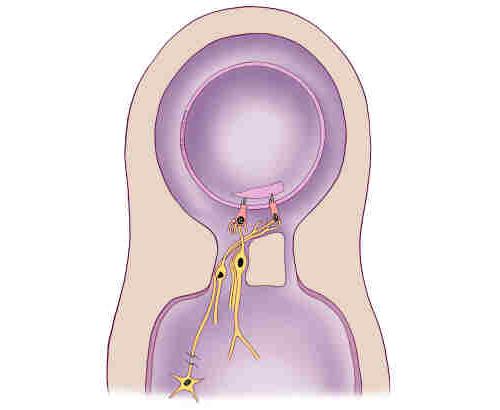
Figure 3. Simplified diagram showing the organization of inner ear organs of hearing and balance

The inner ear is divided into two fluid filled chambers - one inside the other. Figure 3 illustrates the basic organization of both the organs of hearing and balance. The fluid in the two chambers differs on the basis of the kind of salt that each contains. The fluid in the outer or bony chamber is filled with a sodium salt solution (called perilymph) that resembles the salt composition in the blood or the fluids found in the brain. The inner or membranous chamber is filled with a potassium salt solution (endolymph) that resembles the fluid that is normally found inside the cells of the body. The difference in concentration between the two chambers is maintained by specialized cells that line parts of the membranous chamber and "pump" potassium into the membranous chamber. The difference in the chemical composition of the these two fluids provides chemical energy (like a battery) that powers the activities of the sensory cells.

This division of labor is unique to the inner ear because the function of the principal cells relies on chemical energy provided by other cells. In virtually all other systems, whether it is heart muscles, the brain, or the retina of the eye, the principal cells must combine nutrients and oxygen to produce the energy they use to perform their functions. In the inner ear, metabolic processes are performed by an organ called the stria vascularis located a half a millimeter from the hearing organ. The stria vascularis is essentially a battery whose electrical current powers hearing. It is powerful enough that if its power could be harnessed it could used instead of batteries for hearing aids.

Figure 3 illustrates a simplified diagram showing the organization of inner ear organs of hearing and balance. The inner ear contains two fluid chambers, a membranous and a bony chamber. The membranous chamber is filled with endolymph while the bony chamber is filled with perilymph. The wall of the membranous chamber is made up of many cells that are so tightly joined together that they prevent the two fluids from mixing. The sensory epithelium makes up only a small portion of the wall of the membranous chamber and contains sensory receptor cells and surrounding supporting cells (supporting cells are not shown in the drawing). The sensory cells are called hair cells because of their appearance under the microscope. Each hair cell has a tuft of projections at one end that looks like a bad haircut. These tiny "hairs" are called stereocilia and are arranged in rows that increase in length towards one side of the cell. The hair cells are connected to neurons at the other end of the cell away from the stereocilia. Neurons have long projections that conduct electrical signals to the brain. When a hair cell is mechanically stimulated it releases a chemical that modulates the electrical activity of these neurons, thereby signaling the brain. In addition to sending information to the brain, some hair cells receive input from neurons that originate deep in the brain and send one of their long projections to the hair cells. These neurons appear to regulate the sensitivity of the hair cells, in a manner similar to changing the volume control on a radio.

Next chapter: Small Size Means Greater Mechanical Sensitivity

Return to the table of contents of How the Ear Works

  • Head and Neck Surgery
  • Center for Airway, Voice and Swallowing
    • Speech-Language Pathology
  • Hearing and Balance
    • Cochlear Implants
    • Audiology Services
    • Program for Lateral Skull Base Surgery
    • Balance Testing (Vestibular Diagnostics)
    • Balance Therapy (Vestibular Rehabilitation)
  • Nose and Sinus
  • For Patients
  • Meet Our Team

Make an Appointment

CALL 713–798–6336 Monday-Friday 7 a.m.-5 p.m.

ONLINE

Request Now

Request non-urgent appointments

Find a Physician
mychart

MyChart is a patient-accessible website that enables you to interact with your Baylor Medicine healthcare team.

Login

mobile-phone-image

Follow Us facebook twitter youtube linkedin instagram rss 

Footer Menu Healthcare

  • Healthcare
    • Specialties
    • MyChart Login
    • For Patients & Visitors
    • For Health Professionals
    • Clinical Trials
    • Find a Physician

Footer Menu Education

  • Education
    • Programs & Admissions
    • Student & Trainee Resources
    • Faculty Resources
    • School of Medicine
    • Graduate School of Biomedical Sciences
    • National School of Tropical Medicine
    • School of Health Professions
    • Tuition & Fees
    • Financial Aid

Footer Menu Research

  • Research
    • Our Research
    • Core Labs
    • Faculty Labs
    • Research Centers
    • Research Offices

Footer Menu Community

  • Community
    • Healthcare Outreach
    • Education Outreach
    • Global Programs
    • Community Events

Footer Menu About

  • About
    • Our Campus
    • Departments
    • Academic Centers
    • Administrative Offices
    • Affiliates
    • Leadership
    • Giving
    • Alumni

Footer Menu Resource Links

  • Resource Links
    • Contact Us
    • Find a Person
    • Careers
    • BCM Team Shop
    • News
    • Title IX Office
    • Compliance

©1998-2026 Baylor College of Medicine® | 1 Baylor Plaza, Houston, Texas 77030 | 713-798-4951
Have an edit or suggestion for this page?

  • Compliance
  • Privacy
  • Intranet