Home
  • Healthcare
    • Specialties
      • Cardiovascular Care
      • Oncology
      • Neurosurgery
      • Primary Care
      • View All Specialties >
    • For Health Professionals
      • Refer a Patient
      • Clinical Trials
      • Professional Development
      • View All >
    • For Patients & Visitors
      • MyChart Login
      • Accepted Insurance
      • Pay My Bill
      • Patient Information
      • View All >
    • Clinical Trials
      • Autism
      • Cancer
      • Obesity
      • Substance Abuse
      • View All Clinical Trials >
    • Find a Doctor
    • Make an Appointment

    General Inquiries

    Call today to schedule an appointment or fill out an online request form. If requested before 2 p.m. you will receive a response today.

    CALL

    713-798-1000

    Monday – Friday 8 a.m. – 5 p.m.


    ONLINE

    Request Now

    Request non-urgent appointments

    Request an appointment, learn about your rights as a patient, read about what to expect from your appointment, and more.

    As Houston's premier academic medical practice, Baylor Medicine delivers compassionate, innovative, evidence-based care.
    Find a Doctor

  • Education
    • Degree Programs & Admissions
      • M.D. Program
      • Ph.D. Programs
      • DNP Program (Nurse Anesthesia)
      • Genetic Counseling Program
      • P.A. Program
      • Orthotics & Prosthetics Program
      • Baccalaureate/M.D. Programs
      • Dual Degree Programs
      • View All Programs >
    • Financing Your Education
      • Tuition & Fees
      • Financial Aid
      • CARES ACT
    • Schools
      • School of Medicine
      • Graduate School of Biomedical Sciences
      • National School of Tropical Medicine
      • School of Health Professions
    • Advanced Training Programs
      • Residency Programs
      • Clinical Fellowships
      • Postdoctoral Research Positions
      • Continuing Professional Development
      • Diploma in Tropical Medicine
      • View All >
    • Resources
      • Departments
      • Academic Centers
      • Academic Calendars
      • Education Cores
      • View All >
    • Information For...
      • Students
      • Postdoctoral Researchers
      • Faculty
      • Alumni
    get-to-know-houston

    America's fourth-largest city is a great place to live, work, and play. Find out why.
    Get to Know Houston

  • Research
    • Research Offices
      • Advanced Technology Cores
      • Clinical Research
      • Institute for Clinical & Translational Research
      • Office of Research Leadership
      • Research IT
      • Sponsored Programs
    • Research at Baylor
      • Academic Centers
      • Departments
      • Faculty Labs
      • From the Labs
      • News
      • Our Research
      • Research Centers
      • Strategic Research Center
    • Additional Research Services
      • BCM Innovation Institute
      • Service Labs
      • VIICTR
    get-to-know-houston

    America's fourth-largest city is a great place to live, work, and play. Find out why.
    Get to Know Houston

  • Community
    • Healthcare Outreach
      • Community Programs
      • More >
    • Global Outreach
      • Global Health
      • Global Programs >
    • Educational Outreach
      • SMART Program
      • BioEd Online
      • More >
    • General Resources
      • Community Events
      • News
      • Blogs
      • Baylor in the Community
    get-to-know-houston

    America's fourth-largest city is a great place to live, work, and play. Find out why.
    Get to Know Houston

  • About
    • About Us
      • Academic Centers
      • Alumni
      • Careers
      • Departments
      • Giving
      • Leadership
      • Mission, Vision, Values
      • News
      • Our Affiliates
      • Fast Facts
      • Accreditation
    • Offices
      • President's Office
      • Office of Research
      • Ombuds Office
      • BCM Innovation Institute
      • View All >
    • Our Campus
      • Compliance
      • Safety and Security
      • Resource Stewardship & Sustainability
      • Team Shop
      • Find a Person
    get-to-know-houston

    America's fourth-largest city is a great place to live, work, and play. Find out why.
    Get to Know Houston

  • GIVE
  • CAREERS
  • INTRANET
  • Careers
  • Contact Us
  • News
Healthcare: Ear, Nose and Throat (Otolaryngology)
  • Specialties
  • Find a Physician
  • For Patients
  • For Physicians
  • Clinical Trials
  • Request an Appointment
  • MyChart
  • News
  • Specialties
  • Find a Physician
  • For Patients
  • For Physicians
  • Clinical Trials
  • Request an Appointment
  • MyChart
  • News
  1. Baylor College of Medicine
  2. Healthcare
  3. Specialties
  4. Ear, Nose and Throat
  5. For Patients
  6. Active Hearing
  • Head and Neck Surgery
  • Center for Airway, Voice and Swallowing
    • Speech-Language Pathology
  • Hearing and Balance
    • Cochlear Implants
    • Audiology Services
    • Program for Lateral Skull Base Surgery
    • Balance Testing (Vestibular Diagnostics)
    • Balance Therapy (Vestibular Rehabilitation)
  • Nose and Sinus
  • For Patients
  • Meet Our Team

Active Hearing

Active Hearing Improves Frequency Selectivity
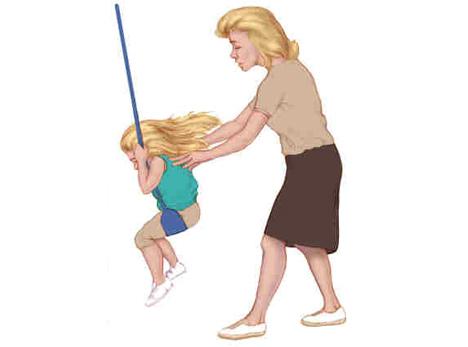
Figure 8. A playground swing is a simple example of mechanical frequency selectivity with a passive system.

The end result of having outer hair cell electromotility is that we are able to discriminate between sounds that are very close in frequency. The reason for this may be easily understood by considering a simple children's swing. A playground swing is a mechanically tuned system that we are all familiar with. This fact is known to any parent who has pushed a child on a swing. The frequency of the system is determined by the length of the rope. The tuning of the system is best appreciated when you attempt to push at a frequency other than that determined by the natural frequency of the swing. If you attempt to push at a different frequency you know that the system fights against you and you have to exert considerably more energy if you really want it to move at a different frequency. A child sitting passively on a swing is an example of a passive in contrast to an active system.

As shown in Figure 8, a playground swing is a simple example of mechanical frequency selectivity with a passive system. The swing moves back and forth at a frequency that is determined by the length of the rope. The parent can make the swing move at a different frequency by exerting considerably more effort than pushing at the natural frequency.

Active Tuning
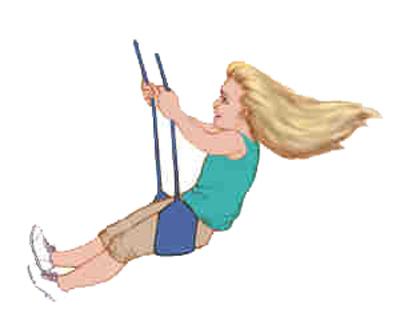
Figure 9. Active tuning is achieved when the child pumps energy into the system.

In order to understand what is meant by an active system you need only recall your own early experiences on a swing. After a short time you learned that you could make the swing to go higher and higher by pumping energy into the system through a combination of kicking your legs and tilting your upper body. Not only could you make the swing go very high but you probably experimented with kicking at a frequency other than the natural (passive) best frequency. When you did you found that you rapidly suppressed the magnitude of the swing. The new "active" system with you pumping had become effectively more narrowly tuned than the original system in which you just sat on the swing.

One way to imagine the cochlea is to envision a row of 3,000 swings that have progressively longer ropes and heavier children as you move to the right. Each swing has a preferred frequency that is lower than the swing to the left. The parents behind each child are equivalent to sound vibrations and if the children do not pump the entire set of swings is equivalent to a dead cochlea with relatively poor frequency selectivity. If the children pump the set of swings is now equivalent to a living or active cochlea with greatly improved frequency selectivity.

The role of the outer hair cells in hearing is both sensory and mechanical. When the organ of Corti begins to vibrate in response to the incoming sound, each hair cell will sense the vibration through the bending of its stereocilia. The bending results in a change in the outer hair cell's internal electrical potential which drives electromotility. If the resulting mechanical force is at the natural frequency of that portion of the cochlea then the magnitude of the vibration will increase. If the electomotile force is at a different frequency, the vibrations will decrease. The system now has greater sensitivity and frequency selectivity than when the outer hair cells are missing or damaged. The refined mechanical vibrations of the organ of Corti are transmitted to the inner hair cells which excite the 8th nerve fibers at their base and tell the central nervous system that there is energy at a specific frequency in the sound entering the ear. One consequence of having an active system is that oscillations can occur even when no energy is coming into the system from the outside. This happens in the cochlea and the resulting sound vibrations can be measured in the ear canal. These are called spontaneous otoacoustic emissions and are only observed in living ears. Measuring otoacoustic emissions has become an important diagnostic tool for determining if outer hair cells are working.

As shown in Figure 9 above, active tuning is achieved when the child pumps energy into the system. When the pumping is done at the natural frequency and at the correct time in the cycle the swing goes higher and tuning is improved. The improved tuning is best appreciated by attempting to pump at a frequency that is different than the natural frequency. In contrast with the parent pushing, no amount of pumping will make the swing move at the new frequency, in fact the magnitude of the swinging rapidly decreases. This ability to narrow the range of frequencies at which the swing will oscillate is equivalent to what the outer hair cell does in hearing.

Next chapter: Regeneration - The Problems of Reorganizing and Rewiring

Return to the table of contents of How the Ear Works

  • Head and Neck Surgery
  • Center for Airway, Voice and Swallowing
    • Speech-Language Pathology
  • Hearing and Balance
    • Cochlear Implants
    • Audiology Services
    • Program for Lateral Skull Base Surgery
    • Balance Testing (Vestibular Diagnostics)
    • Balance Therapy (Vestibular Rehabilitation)
  • Nose and Sinus
  • For Patients
  • Meet Our Team

Make an Appointment

CALL 713–798–6336 Monday-Friday 7 a.m.-5 p.m.

ONLINE

Request Now

Request non-urgent appointments

Find a Physician
mychart

MyChart is a patient-accessible website that enables you to interact with your Baylor Medicine healthcare team.

Login

mobile-phone-image

Follow Us facebook twitter youtube linkedin instagram rss 

Footer Menu Healthcare

  • Healthcare
    • Specialties
    • MyChart Login
    • For Patients & Visitors
    • For Health Professionals
    • Clinical Trials
    • Find a Physician

Footer Menu Education

  • Education
    • Programs & Admissions
    • Student & Trainee Resources
    • Faculty Resources
    • School of Medicine
    • Graduate School of Biomedical Sciences
    • National School of Tropical Medicine
    • School of Health Professions
    • Tuition & Fees
    • Financial Aid

Footer Menu Research

  • Research
    • Our Research
    • Core Labs
    • Faculty Labs
    • Research Centers
    • Research Offices

Footer Menu Community

  • Community
    • Healthcare Outreach
    • Education Outreach
    • Global Programs
    • Community Events

Footer Menu About

  • About
    • Our Campus
    • Departments
    • Academic Centers
    • Administrative Offices
    • Affiliates
    • Leadership
    • Giving
    • Alumni

Footer Menu Resource Links

  • Resource Links
    • Contact Us
    • Find a Person
    • Careers
    • BCM Team Shop
    • News
    • Title IX Office
    • Compliance
    • Covid Response Site

©1998-2026 Baylor College of Medicine® | 1 Baylor Plaza, Houston, Texas 77030 | 713-798-4951
Have an edit or suggestion for this page?

  • Compliance
  • Privacy
  • Intranet