
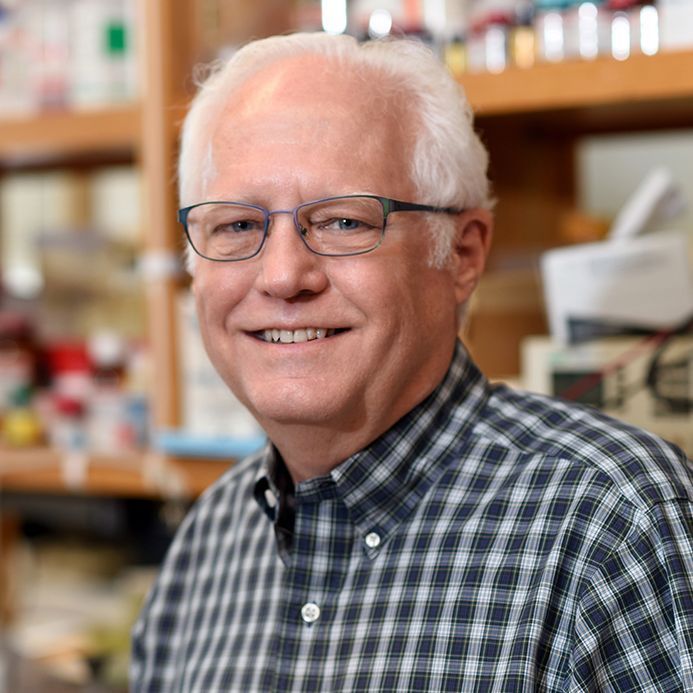
Positions
- Professor Emeritus
-
Department of Neuroscience
Baylor College of Medicine
Houston, TX, US
Education
- Post-Doctoral Fellowship at Harvard Medical School
- 01/1983 - Boston, Massachusetts, United States
- PhD from University Of Texas Medical School At Galveston
- 01/1980 - Galveston, Texas, United States
- MA from University Of Texas At Austin
- 01/1975 - Austin, Texas, United States
- BA from University Of Texas At Austin
- 01/1973 - Austin, Texas, United States
- BA from Texas Tech University
- 09/1972 - Lubbock, Texas, United States
Professional Interests
- Gene therapy of the nervous system
- Spinal Cord Injury
- Neuroimmunology of neural trauma
Professional Statement
The research interests of our laboratory focus on the molecular and cellular bases of disease and trauma of the nervous system with a translational emphasis. Our primary research emphasis is the study of the role of neurotrophic factors in CNS degeneration and regeneration as a consequence of trauma or neurodegenerative disease and their possible therapeutic use. Using viral vectors carrying genes for neurotrophic factors we have shown in animal models of CNS injury we can spare neurons from axotomy-induced neuronal death and support axonal sprouting after neural injury. Recently, we learned that neuroinflammation is required for regenerative effects of the neurotrophic factors and are now studying this phenomenon to determine its mechanism.
Techniques used in the laboratory span from gene cloning, through small animal neurosurgery, light and confocal microscopy, neuroimmunology, to animal behavior.
Techniques used in the laboratory span from gene cloning, through small animal neurosurgery, light and confocal microscopy, neuroimmunology, to animal behavior.
Websites
Selected Publications
-
Chen, Q and Shine, HD. " Neuroimmune processes associated with Wallerian degeneration support neurotrophin-3-induced axonal sprouting in the injured spinal cord.. " J Neurosci Res. 2013 ; 91 : 1280-1291.
-
Chen Q, Smith GM, Shine HD. " Immune activation is required for NT-3-induced axonal plasticity in chronic spinal cord injury. " Exp. Neurol.. 2008 Feb ; 209 (2) : 497-509.
Pubmed PMID: 18191837. -
Chen Q, Zhou L, Shine HD. " Expression of neurotrophin-3 promotes axonal plasticity in the acute but not chronic injured spinal cord. " J. Neurotrauma. 2006 Aug ; 23 (8) : 1254-60.
Pubmed PMID: 16928183. -
Zhou L, Shine HD. " Neurotrophic factors expressed in both cortex and spinal cord induce axonal plasticity after spinal cord injury. " J. Neurosci. Res.. 2003 Oct 15; 74 (2) : 221-6.
Pubmed PMID: 14515351.
Funding
-
Identification of T cell subtypes necessary for NT-3 induced neuroplasticity using a novel human-to-rat graft strategy
- Mission Connect
-
Inflammation-associated factors that support neuroplasticity in chronic spinal cord injury
- Christopher and Dana Reeve Foundation
Log In to edit your profile