
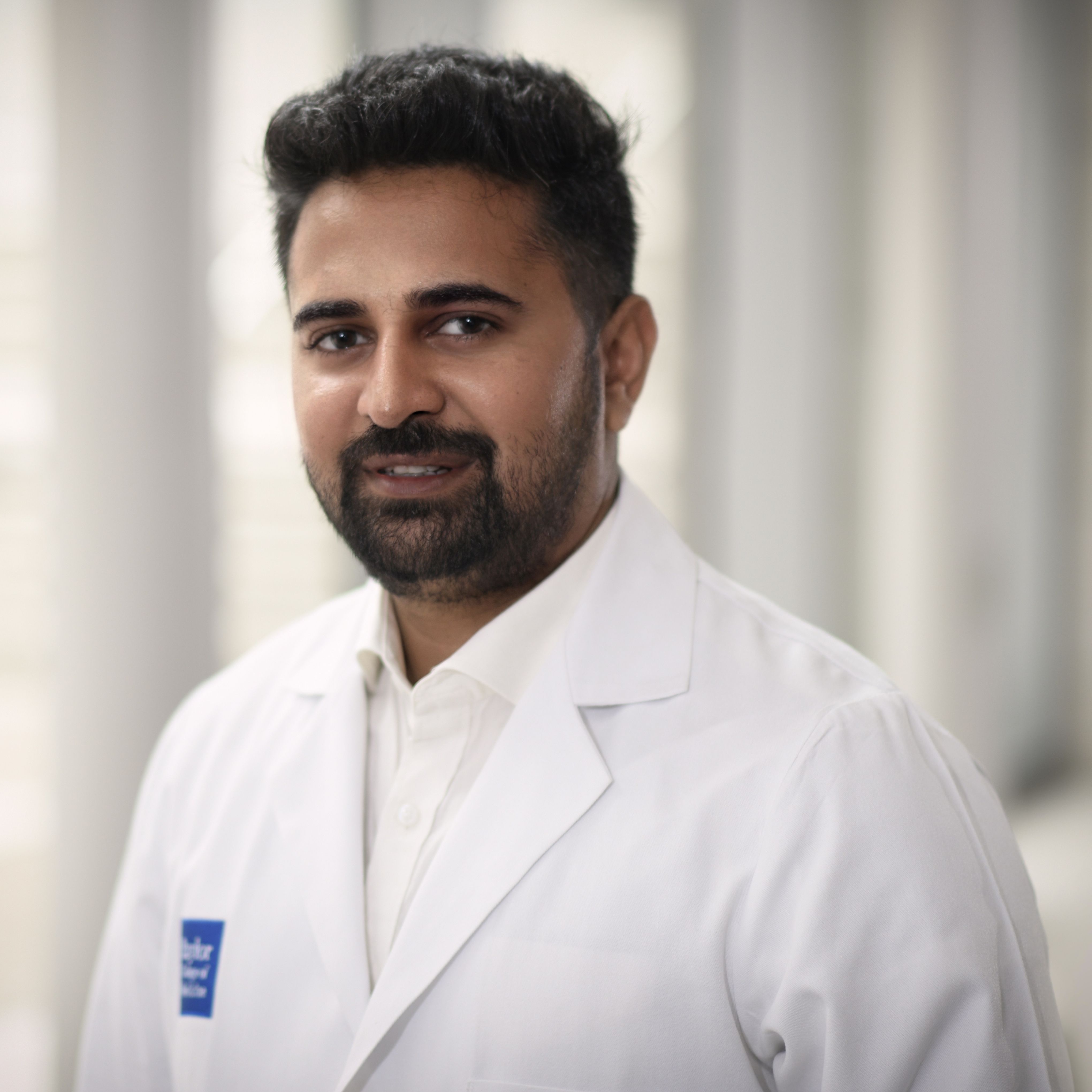
Deepak Kumar
Postdoctoral Associate
Positions
- Postdoctoral Associate
-
Medicine - Infectious Disease
Baylor College of Medicine
Education
- PhD from Indian Institute of Technology Mandi
- 06/2020 - Mandi, Himachal Pradesh, India
- Biophysics & Molecular Biology
Professional Interests
- Intrinsically disordered proteins
- Viral pathogenesis
- Autophagy
- Phase separation
Professional Statement
My goal is to become a faculty member and independently funded researcher at a major institution in the US or India. My research program will blend my interests in cell signaling (which I aim to learn in Dr. Indira Mysorekar' s lab) with my previous expertise in protein structure/function, viral proteomics, Zika virus, intrinsically disordered proteins, and drug screening.
My graduate research was focused on understanding the unique biophysical properties of intrinsically disordered proteins (IDPs) in zika virus proteome. The viruses encodes limited set of proteins, however the viral proteins are capable of efficiently hijackings the host cell signaling pathways for their replication and survival. The intrinsically disordered regions have been reported to provide several advantages in terms of binding affinity, greater capture radii and binding promiscuities. Viral proteins take advantage of these intrinsically disordered regions to interact with multiple host proteins and ultimately survive in cellular harsh conditions.
The ssRNA viruses have been known to exploit endosomal vesicular trafficking's pathways associated with autophagy signaling. The non-structural proteins are the key players to interfere with these pathways. Also, these non-structural proteins of viruses have higher abundance of intrinsically disordered regions. Thus, based upon my previous understanding on viral non-structural proteins, I would like to extend my expertise on understanding the crosstalk between SARS CoV-2 non-structural proteins and host autophagy pathways. More specifically, in context to pregnancy, the pathogensis of SARS CoV-2 is not yet completely elucidated. Therefore, I propose to test the hypothesis that SARS-CoV-2 manipulates autophagy to gain access to the placenta and influence fetal development.
My graduate research was focused on understanding the unique biophysical properties of intrinsically disordered proteins (IDPs) in zika virus proteome. The viruses encodes limited set of proteins, however the viral proteins are capable of efficiently hijackings the host cell signaling pathways for their replication and survival. The intrinsically disordered regions have been reported to provide several advantages in terms of binding affinity, greater capture radii and binding promiscuities. Viral proteins take advantage of these intrinsically disordered regions to interact with multiple host proteins and ultimately survive in cellular harsh conditions.
The ssRNA viruses have been known to exploit endosomal vesicular trafficking's pathways associated with autophagy signaling. The non-structural proteins are the key players to interfere with these pathways. Also, these non-structural proteins of viruses have higher abundance of intrinsically disordered regions. Thus, based upon my previous understanding on viral non-structural proteins, I would like to extend my expertise on understanding the crosstalk between SARS CoV-2 non-structural proteins and host autophagy pathways. More specifically, in context to pregnancy, the pathogensis of SARS CoV-2 is not yet completely elucidated. Therefore, I propose to test the hypothesis that SARS-CoV-2 manipulates autophagy to gain access to the placenta and influence fetal development.
Selected Publications
Log In to edit your profile