Home
  • Healthcare
    • Specialties
      • Cardiovascular Care
      • Oncology
      • Neurosurgery
      • Primary Care
      • View All Specialties >
    • For Health Professionals
      • Refer a Patient
      • Clinical Trials
      • Professional Development
      • View All >
    • For Patients & Visitors
      • MyChart Login
      • Accepted Insurance
      • Pay My Bill
      • Patient Information
      • View All >
    • Clinical Trials
      • Autism
      • Cancer
      • Obesity
      • Substance Abuse
      • View All Clinical Trials >
    • Find a Doctor
    • Make an Appointment

    General Inquiries

    Call today to schedule an appointment or fill out an online request form. If requested before 2 p.m. you will receive a response today.

    CALL

    713-798-1000

    Monday – Friday 8 a.m. – 5 p.m.


    ONLINE

    Request Now

    Request non-urgent appointments

    Request an appointment, learn about your rights as a patient, read about what to expect from your appointment, and more.

    As Houston's premier academic medical practice, Baylor Medicine delivers compassionate, innovative, evidence-based care.
    Find a Doctor

  • Education
    • Degree Programs & Admissions
      • M.D. Program
      • Ph.D. Programs
      • DNP Program (Nurse Anesthesia)
      • Genetic Counseling Program
      • P.A. Program
      • Orthotics & Prosthetics Program
      • Baccalaureate/M.D. Programs
      • Dual Degree Programs
      • View All Programs >
    • Financing Your Education
      • Tuition & Fees
      • Financial Aid
      • CARES ACT
    • Schools
      • School of Medicine
      • Graduate School of Biomedical Sciences
      • National School of Tropical Medicine
      • School of Health Professions
    • Advanced Training Programs
      • Residency Programs
      • Clinical Fellowships
      • Postdoctoral Research Positions
      • Continuing Professional Development
      • Diploma in Tropical Medicine
      • View All >
    • Resources
      • Departments
      • Academic Centers
      • Academic Calendars
      • Education Cores
      • View All >
    • Information For...
      • Students
      • Postdoctoral Researchers
      • Faculty
      • Alumni
    get-to-know-houston

    America's fourth-largest city is a great place to live, work, and play. Find out why.
    Get to Know Houston

  • Research
    • Research Offices
      • Advanced Technology Cores
      • Clinical Research
      • Institute for Clinical & Translational Research
      • Office of Research Leadership
      • Research IT
      • Sponsored Programs
    • Research at Baylor
      • Academic Centers
      • Departments
      • Faculty Labs
      • From the Labs
      • News
      • Our Research
      • Research Centers
      • Strategic Research Center
    • Additional Research Services
      • BCM Innovation Institute
      • Service Labs
      • VIICTR
    get-to-know-houston

    America's fourth-largest city is a great place to live, work, and play. Find out why.
    Get to Know Houston

  • Community
    • Healthcare Outreach
      • Community Programs
      • More >
    • Global Outreach
      • Global Health
      • Global Programs >
    • Educational Outreach
      • SMART Program
      • BioEd Online
      • More >
    • General Resources
      • Community Events
      • News
      • Blogs
      • Baylor in the Community
    get-to-know-houston

    America's fourth-largest city is a great place to live, work, and play. Find out why.
    Get to Know Houston

  • About
    • About Us
      • Academic Centers
      • Alumni
      • Careers
      • Departments
      • Giving
      • Leadership
      • Mission, Vision, Values
      • News
      • Our Affiliates
      • Fast Facts
      • Accreditation
    • Offices
      • President's Office
      • Office of Research
      • Ombuds Office
      • BCM Innovation Institute
      • View All >
    • Our Campus
      • Compliance
      • Safety and Security
      • Resource Stewardship & Sustainability
      • Team Shop
      • Find a Person
    get-to-know-houston

    America's fourth-largest city is a great place to live, work, and play. Find out why.
    Get to Know Houston

  • GIVE
  • CAREERS
  • INTRANET
  • Careers
  • Contact Us
  • News
Healthcare: Transplant Procedures
  • Specialties
  • Find a Physician
  • For Patients
  • For Physicians
  • Clinical Trials
  • Request an Appointment
  • MyChart
  • News
  • Specialties
  • Find a Physician
  • For Patients
  • For Physicians
  • Clinical Trials
  • Request an Appointment
  • MyChart
  • News
  1. Baylor College of Medicine
  2. Healthcare
  3. Specialties
  4. Transplant
  5. Abdominal Transplant
  6. Kidney Transplant
  • Heart Transplant
    • Aortic Valve Repair
    • Coronary Artery Bypass
    • Ventricular Assist Device
    • Ventricular Septal Defect (VSD) Repair
    • Meet Our Team
  • Abdominal Transplant
    • Kidney Transplant
    • Liver Transplantation
    • Nephrectomy
    • Uterine Transplantation
    • Meet Our Team
  • For Patients

Kidney Transplant

What is a kidney (renal) transplant?
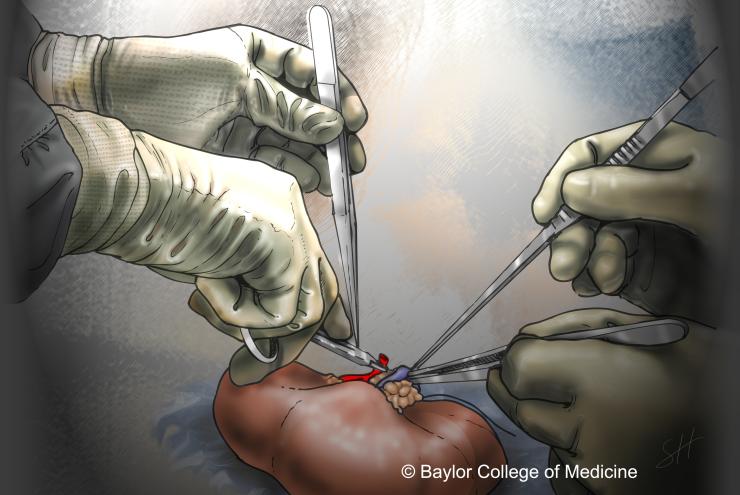
Bench or back-table operation of donor kidney.

A kidney transplant gives you a healthy kidney from another person. You may need a transplant if your kidneys work poorly because of diabetes, high blood pressure, or another illness.

You need only one kidney to live. The new kidney can do the work that your own kidneys cannot. It will remove waste from your blood. It will keep your body’s fluids and chemicals in balance. A new kidney can improve the quality of your life. You are likely to feel better and have more energy.

The new kidney may come from someone you know, a stranger, or a person who has died. Getting a new kidney can sometimes take a long time. You have to meet certain rules to be able to get a kidney. For example, your overall health (other than kidney problems) has to be good. If a relative or another living person has a kidney that is a good match, you may not have to wait long. If you need a kidney from a person who has died, your name will be put on a waiting list.

Why is a kidney transplant done?

Kidney transplant surgery is done so that a healthy kidney (donor kidney) can do what your diseased kidney can no longer do. Kidney transplant is used when you have severe chronic kidney disease (renal failure) that cannot be reversed by another treatment method. You will not be able to have this surgery if you have an active infection, another life-threatening disease such as cancer, or severe heart or lung disease.
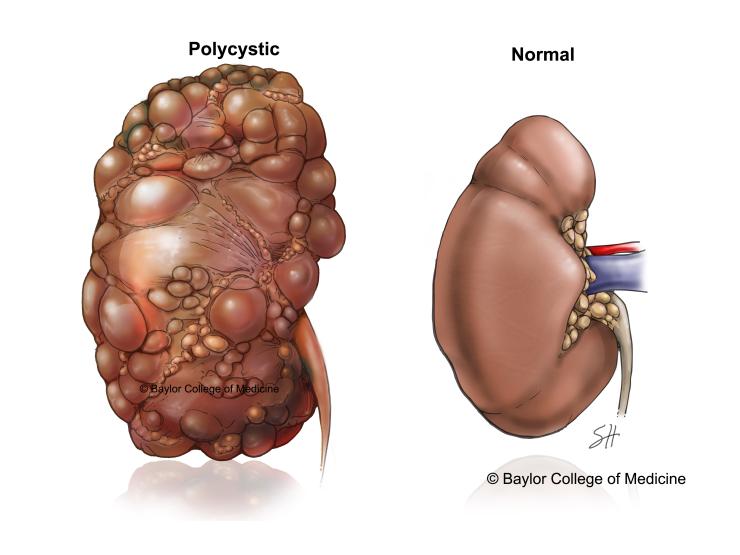
Polycystic compared to normal kidney.

Your doctor will put the new kidney in your body and leave your own kidneys where they are, unless there is a reason to take them out. Your doctor will connect the blood vessels of the new kidney to your blood vessels, and the ureter of the new kidney to your bladder. A ureter is the tube that carries urine from the kidney to the bladder. The new kidney may make urine right away. But in some cases it may take a while to work. If the new kidney does not work right away, you will have dialysis until it starts to work.

The transplant usually takes from 3 to 6 hours. You may stay in the hospital 5 to 10 days. After you leave the hospital, you will have follow-up visits to make sure the kidney is working well. The living person who gives a kidney to you will likely stay in the hospital for about a week.

Living donor kidney transplant

For a living-donor kidney transplant, the recipient's diseased or damaged kidneys usually are left in place. The donor's kidney is placed in the recipient's lower abdomen and connected to blood vessels and the bladder. The recipient's and donor's surgeries are carried out at the same time in different operating rooms.

iSwap Program 
In the iSWAP program, candidates with a living donor who is medically able, but not a compatible match to their intended recipient are able to be paired with another recipient in return for a kidney that is compatible with their intended recipient

Preparing for a kidney transplant

Surgery can be stressful. This information will help you understand what you can expect. And it will help you safely prepare for surgery.

Understand exactly what surgery is planned, along with the risks, benefits, and other options.

Tell your doctors ALL the medicines, vitamins, supplements, and herbal remedies you take. Some of these can increase the risk of bleeding or interact with anesthesia.

If you take blood thinners, such as warfarin (Coumadin), clopidogrel (Plavix), or aspirin, be sure to talk to your doctor. He or she will tell you if you should stop taking these medicines before your surgery. Make sure that you understand exactly what your doctor wants you to do.Your doctor will tell you which medicines to take or stop before your surgery. You may need to stop taking certain medicines a week or more before surgery. So talk to your doctor as soon as you can.

If you have an advance directive, let your doctor know. It may include a living will and a durable power of attorney for health care. Bring a copy to the hospital. If you don’t have one, you may want to prepare one. It lets your doctor and loved ones know your health care wishes. Doctors advise that everyone prepare these papers before any type of surgery or procedure.

What can you expect after a kidney transplant?

Within a few days, you may begin to feel much better than you did before. But you may have some pain or soreness in your belly or side. This can last for several weeks.

Most people go home from the hospital 5 to 10 days after surgery. It will probably take about 4 weeks before you can get back to your job or usual activities.

After surgery, the new kidney will start to do the work that your own kidneys cannot. It will remove waste from your blood and balance your body’s fluids and chemicals. Your new kidney may start working very soon after surgery. Or it may take a few weeks. If your kidney does not start to work right away, you will need to have dialysis until the new kidney can take over.

After the transplant, you will have to take medicines every day for the rest of your life. The medicines will help keep your body from rejecting the new kidney. These medicines will also make your immune system weaker. This means you will be more likely to get an infection or become sick. To reduce your risk of infection, wash your hands often. Stay away from crowds of people, and avoid contact with people who have a cold or the flu.

If your body starts to reject the kidney, your doctor may be able to stop the rejection. But if not, you will need to have dialysis again. It is possible that you can have another transplant.

You may have many different emotions after your kidney transplant. You may feel grateful and happy. But you also may feel guilty or depressed. These feelings are common. It may help to talk about your feelings with your doctor and family.

© 2016-2019 Healthwise, Incorporated. 

  • Heart Transplant
    • Aortic Valve Repair
    • Coronary Artery Bypass
    • Ventricular Assist Device
    • Ventricular Septal Defect (VSD) Repair
    • Meet Our Team
  • Abdominal Transplant
    • Kidney Transplant
    • Liver Transplantation
    • Nephrectomy
    • Uterine Transplantation
    • Meet Our Team
  • For Patients

Make an Appointment

For kidney 832–355–4100 Monday-Friday 7 a.m.-5 p.m.
For Liver 832–355–1471 Monday-Friday 7 a.m.-5 p.m.

ONLINE

Request Now

Request non-urgent appointments

Find a Physician

Surgeons Who Perform Kidney Transplants

  • Ronald Cotton, M.D. FACS
  • Nhu Thao Galvan, M.D., M.P.H., FACS
  • Chun-Sing Huang, M.D.
  • Richard Link, M.D., Ph.D.
  • Wesley Mayer, M.D.
  • Christine O'Mahony, M.D.
  • Abbas Rana, M.D.
mychart

MyChart is a patient-accessible website that enables you to interact with your Baylor Medicine healthcare team.

Login

mobile-phone-image

Follow Us facebook twitter youtube linkedin instagram rss 

Footer Menu Healthcare

  • Healthcare
    • Specialties
    • MyChart Login
    • For Patients & Visitors
    • For Health Professionals
    • Clinical Trials
    • Find a Physician

Footer Menu Education

  • Education
    • Programs & Admissions
    • Student & Trainee Resources
    • Faculty Resources
    • School of Medicine
    • Graduate School of Biomedical Sciences
    • National School of Tropical Medicine
    • School of Health Professions
    • Tuition & Fees
    • Financial Aid

Footer Menu Research

  • Research
    • Our Research
    • Core Labs
    • Faculty Labs
    • Research Centers
    • Research Offices

Footer Menu Community

  • Community
    • Healthcare Outreach
    • Education Outreach
    • Global Programs
    • Community Events

Footer Menu About

  • About
    • Our Campus
    • Departments
    • Academic Centers
    • Administrative Offices
    • Affiliates
    • Leadership
    • Giving
    • Alumni

Footer Menu Resource Links

  • Resource Links
    • Contact Us
    • Find a Person
    • Careers
    • BCM Team Shop
    • News
    • Title IX Office
    • Compliance
    • Covid Response Site

©1998-2026 Baylor College of Medicine® | 1 Baylor Plaza, Houston, Texas 77030 | 713-798-4951
Have an edit or suggestion for this page?

  • Compliance
  • Privacy
  • Intranet