
About the Consortium
Hepatocellular cancer is the most common (>95 percent) of primary liver cancers. HCC is also the fastest rising cause of cancer-related deaths in the United States, and Texas has the highest death rate from HCC in the nation. The five-year HCC survival remains low (10-15 percent) and most patients get diagnosed at late stages. Texas residents notably Hispanics and African Americans are greatly affected with established HCC risk factors including hepatitis C virus, hepatitis B virus and alcoholic liver disease. Furthermore, emerging HCC risk factors, specifically the metabolic syndrome and non-alcoholic fatty liver disease (NAFLD), are exceptionally common in Texans.
The Texas Hepatocellular Carcinoma Consortium was established in 2015 to reduce the burden and mortality of hepatocellular cancer (HCC) in Texas. Building on the Quality in the Continuum of Cancer Care framework, our proposed THCCC targets key areas of uncertainty in the prevention and early detection of HCC. The THCCC includes researchers, clinicians, and staff from Baylor College of Medicine, Veterans Affairs, MD Anderson Cancer Center, UT Southwestern Medical Center, Parkland Health Hospital System in Dallas, and UT San Antonio. Our cohort has become the largest ongoing prospective cohort of patients with cirrhosis in the nation.

The THCCC is made possible by grant RP150587 from the Cancer Prevention and Research Institute of Texas, PI: Hashem B. El-Serag; P01 CA263025 from the National Cancer Institutes, PI: Hashem B. El-Serag; and RP220119 from the Cancer Prevention and Research Institute of Texas, PI Hashem B. El-Serag. It is also supported by U01 CA230997-01, PI: Fasiha Kanwal.

THCCC Cores & Projects
- Core 1 - The Cohorts and Samples Core
- Core 2 - The Statistical Coordinating Core
- Project 1 - Risk Factors of HCC in NAFLD
- Project 2 - Metabolic Syndrome and Risk Prediction
- Project 3 - Circadian Disruption and Bile Acids
- Project 4 - Novel Biomarkers for HCC
- Project 5 - Randomized Controlled Trial
News
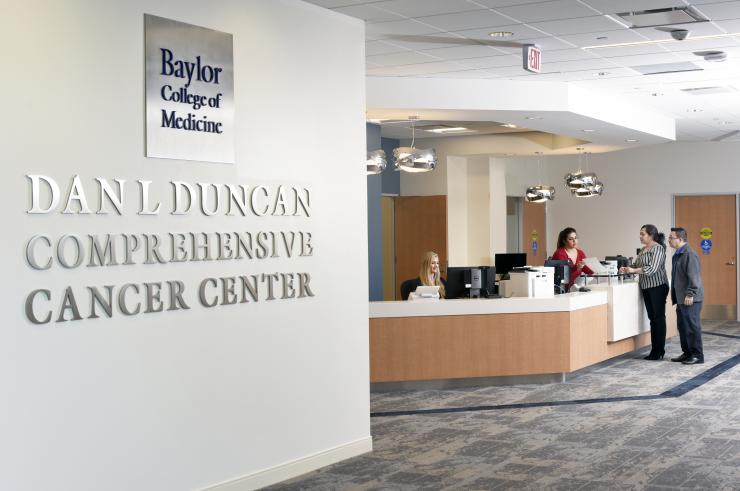
Baylor receives NCI grant to study liver cancer risk and prevention
Aug. 4, 2022: Researchers at Baylor College of Medicine received a five-year, $5.5 million-plus grant from the National Cancer Institute for research on liver cancer risk factors and prevention, with the goal of reducing the burden of liver cancer in patients with metabolic dysfunction.
Baylor receives more than $15.6 million in CPRIT funding
Feb. 17, 2022: Researchers with the Dan L Duncan Comprehensive Cancer Center at Baylor College of Medicine have been awarded more than $15.6 million in grants by the Cancer Prevention & Research Institute of Texas (CPRIT) to support innovative cancer research, treatment and prevention measures for underserved populations.
Texas Hepatocellular Carcinoma Consortium Goals and Objectives
Introduction
Primary prevention and early detection of Hepatocellular Carcinoma (HCC) needs the identification to target high-risk individuals. For example, most cases of HCC (90 percent) arise in the background of cirrhosis, which is the main predisposing condition for HCC. However, only 2-5 percent of persons with cirrhosis develop HCC annually. Thus, there is a pressing need to better risk-stratify cirrhosis patients for HCC. Yet, no such tools exist because most prospective studies of patients with cirrhosis fail to examine the full range of demographic, clinical, epidemiological, biochemical, and genetic factors that predict HCC.
Goals and Objectives
Our goal is to reduce the death and suffering related to liver cancer in Texas and the world by conducting cutting edge collaborative research in our proposed Texas Hepatocellular Carcinoma Consortium.
Effective prevention and early detection measures are urgently needed to reverse the epidemic of HCC but has been hampered by several factors.
- Most cases of HCC (90 percent) arise in the background of cirrhosis (a damaged and scarred liver). Cirrhosis is a common problem that affects at least one million adults in the United States. However, only 2-5 percent of persons with cirrhosis develop HCC every year. Thus, there is a pressing need to better identify which cirrhosis patients progress to HCC so they get targeted for prevention and surveillance.
- The United States in general and Texas in particular are in the midst of an epidemic of metabolic syndrome (obesity, diabetes, hypertension, high triglycerides, and low HDL cholesterol). Although linked to increased risk of liver disease including HCC, the effect of metabolic syndrome on HCC risk among patients with cirrhosis is not known.
- Metabolic syndrome is a strong risk factor for non-alcoholic fatty liver disease (NAFLD (fatty liver), which has been linked to the development of cirrhosis and possibly HCC but high-quality studies on the effect of NAFLD on association are non-existent.
- Circadian rhythm disruption (resulting from sleep disturbances) has been associated with the development of metabolic syndrome and NAFLD in our preliminary animal data. However, the relevance of these findings to humans is unknown.
- Early detection of HCC in patients with cirrhosis remains suboptimal, and the implementation of HCC surveillance (by ultrasound) in practice is very low.
We have assembled an outstanding group of investigators with complementary expertise in molecular biology, HCC biomarkers, epidemiology and biostatistics.
Publications
Kanwal, F., Khaderi, S., Singal, A. G., Marrero, J. A., Loo, N., Asrani, S. K., Amos, C. I., Thrift, A. P., Gu, X., Luster, M., Al-Sarraj, A., Ning, J., & El-Serag, H. B. (2023). Risk factors for HCC in contemporary cohorts of patients with cirrhosis. Hepatology (Baltimore, Md.), 77(3), 997–1005. https://doi.org/10.1002/hep.32434
Pubmed PMID: 35229329; PubMed Central ID: 9433461; Publication Status: Published
Thrift, A. P., Kanwal, F., Liu, Y., Khaderi, S., Singal, A. G., Marrero, J. A., Loo, N., Asrani, S. K., Luster, M., Al-Sarraj, A., Ning, J., Tsavachidis, S., Gu, X., Amos, C. I., & El-Serag, H. B. (2023). Risk stratification for hepatocellular cancer among patients with cirrhosis using a hepatic fat polygenic risk score. PloS one, 18(2), e0282309. https://doi.org/10.1371/journal.pone.0282309
Pubmed PMID: 36854015; PubMed Central ID: 9974109; Publication Status: Published
Kanwal, F., Khaderi, S., Singal, A. G., Marrero, J. A., Asrani, S. K., Amos, C. I., Thrift, A. P., Kramer, J. R., Yu, X., Cao, Y., Luster, M., Al-Sarraj, A., Ning, J., & El-Serag, H. B. (2023). Risk Stratification Model for Hepatocellular Cancer in Patients With Cirrhosis. Clinical gastroenterology and hepatology : the official clinical practice journal of the American Gastroenterological Association, 21(13), 3296–3304.e3. https://doi.org/10.1016/j.cgh.2023.04.019
Pubmed PMID: 37390101; PubMed Central ID: 10661677; Publication Status: Published
El-Serag, H. B., Akhdar, G., Thrift, A. P., Luster, M., Khaderi, S., Alsarraj, A., Duong, H., & Kanwal, F. (2023). Bioimpedance analysis predicts the etiology of cirrhosis in a prospective cohort study. Hepatology communications, 7(10), e0253. https://doi.org/10.1097/HC9.0000000000000253
Pubmed PMID: 37695087; PubMed Central ID: 10497244; Publication Status: Published
El-Serag, H., Kanwal, F., Ning, J., Powell, H., Khaderi, S., Singal, A. G., Asrani, S., Marrero, J. A., Amos, C. I., Thrift, A. P., Luster, M., Alsarraj, A., Olivares, L., Skapura, D., Deng, J., Salem, E., Najjar, O., Yu, X., Duong, H., Scheurer, M. E., … Kaochar, S. (2024). Serum biomarker signature is predictive of the risk of hepatocellular cancer in patients with cirrhosis. Gut, gutjnl-2024-332034. Advance online publication. https://doi.org/10.1136/gutjnl-2024-332034
Pubmed PMID: 38365278; PubMed Central ID: 11327383; Publication Status: Published
Thrift, A. P., Kanwal, F., Lim, H., Duong, H., Liu, Y., Singal, A. G., Khaderi, S., Asrani, S. K., Amos, C. I., & El-Serag, H. B. (2024). PNPLA3, Obesity, and Heavy Alcohol Use in Cirrhosis Patients May Exert a Synergistic Increase Hepatocellular Carcinoma Risk. Clinical gastroenterology and hepatology : the official clinical practice journal of the American Gastroenterological Association, 22(9), 1858–1866.e4. https://doi.org/10.1016/j.cgh.2024.04.006
Pubmed PMID: 38729396; PubMed Central ID: Not available; Publication Status: Published
El-Serag, H. B., Jin, Q., Tayob, N., Salem, E., Luster, M., Alsarraj, A., Khaderi, S., Singal, A. G., Marrero, J. A., Asrani, S. K., & Kanwal, F. (2024). HES V2.0 outperforms GALAD for detection of HCC: A phase 3 biomarker study in the United States. Hepatology (Baltimore, Md.), 10.1097/HEP.0000000000000953. Advance online publication. https://doi.org/10.1097/HEP.0000000000000953
Pubmed PMID: 38899967; PubMed Central ID: Not available; Publication Status: Published
Feng Z, Marrero JA, Khaderi S, Singal AG, Kanwal F, Loo N, Beretta L, Ning J, El-Serag HB. Design of the Texas Hepatocellular Carcinoma Consortium Cohort Study. Am J Gastroenterol. 2019 Mar;114(3):530-532. doi: 10.14309/ajg.0000000000000068.
PubMed PMID: 30699099; Publication Status: Published
El-Serag HB, Kanwal F, Feng Z, Marrero JA, Khaderi S, Singal AG; Texas Hepatocellular Carcinoma Consortium. Risk Factors for Cirrhosis in Contemporary Hepatology Practices-Findings From the Texas Hepatocellular Carcinoma Consortium Cohort. Gastroenterology. 2020 Jul;159(1):376-377. doi: 10.1053/j.gastro.2020.03.049. Epub 2020 Mar 29.
PubMed PMID: 32234536; PubMed Central ID: PMC8375364; Publication Status: Published
Kanwal F, Khaderi S, Singal AG, Marrero JA, Loo N, Asrani SK, Amos CI, Thrift AP, Gu X, Luster M, Al-Sarraj A, Ning J, El-Serag HB. Risk factors for HCC in contemporary cohorts of patients with cirrhosis. Hepatology. 2022 Mar 1:10.1002/hep.32434. doi: 10.1002/hep.32434. Epub ahead of print.
PubMed PMID: 35229329; PubMed Central ID: PMC9433461; Publication Status: Published
AG Singal, El-Serag H, Hepatocellular Carcinoma From Epidemiology to Prevention: Translating Knowledge into Practice. Clinical gastroenterology and hepatology: the official clinical practice journal of the American Gastroenterological Association. 2015 Nov. 13. 12. 2140-51.
PubMed PMID: 26284591; PubMed Central ID: PMC4618036; Publication Status: Published
Coarfa C, Fu L, Lee C, Sreekumar A, Putluri N, Moore DD, Voicu H, Kettner NM, Katchy CA, Finegold MJ, Circadian Homeostasis of Liver Metabolism Suppresses Hepatocarcinogenesis.. Cancer cell. 2016 Dec 12. 30. 6. 909-924.
PubMed PMID: 27889186; PubMed Central ID: PMC5695235; Publication Status: Published
N Tayob, Z Feng, K Do, F Stingo, A Lok, A Bayesian screening approach for hepatocellular carcinoma using multiple longitudinal biomarkers.. Biometrics. 2017 May 8.
PubMed PMID: 28482112; PubMed Central ID: PMC5677596; Publication Status: Published
Borowiak M, Hu J, Parsons DW, Bissig-Choisat B, Muzny D, Yang D, Vasudevan SA, Hampton OA, Legras XD, Thompson PA, Chen LL, Finegold M, Zorman B, Sumazin P, López-Terrada D, Gaber MW, Huang YH, Pautler RG, Kettlun-Leyton C, Bissig KD, Goss JA, Shi Y, Doddapaneni HV, Barzi M, Prakash MM, Hicks MJ, Lu Y, Mills GB, Amin MD, Novel patient-derived xenograft and cell line models for therapeutic testing of pediatric liver cancer.. Journal of hepatology. 2016 Aug. 65. 2. 325-33.
PubMed PMID: 27117591; PubMed Central ID: PMC5668139; Publication Status: Published
Singal AG, Rich NE, Parikh ND, Marrero JA, Tzartzeva K, Yopp A, Waljee AK, Obi J, Surveillance Imaging and Alpha Fetoprotein for Early Detection of Hepatocellular Carcinoma in Patients With Cirrhosis: A Meta-analysis.. Gastroenterology. 2018 May. 154. 6. 1706-1718.e1.
PubMed PMID: 29425931; PubMed Central ID: PMC5927818; Publication Status: Published
Lok AS, Feng Z, Shen W, Ning J, Yuan Y, Model-free scoring system for risk prediction with application to hepatocellular carcinoma study.. Biometrics. 2018 Mar. 74. 1. 239-248.
PubMed PMID: 28742219; PubMed Central ID: PMC5785588; Publication Status: Published
Lok AS, Tayob N, Feng Z, Do KA, Improved Detection of Hepatocellular Carcinoma by Using a Longitudinal Alpha-Fetoprotein Screening Algorithm. Clinical gastroenterology and hepatology : the official clinical practice journal of the American Gastroenterological Association. 2016 Mar. 14. 3. 469-475.e2.
PubMed PMID: 26260109; PubMed Central ID: PMC4744807; Publication Status: Published
Desiderio R, Thrift AP, Asch SM, Kramer JR, Mapakshi S, Chu J, Chayanupatkul M, El-Serag HB, Kanwal F, Li L, Richardson PA, Natarajan Y, Risk of Hepatocellular Cancer in Patients With Non-Alcoholic Fatty Liver Disease.. Gastroenterology. 2018 Dec. 155. 6. 1828-1837.e2.
PubMed PMID: 30144434; PubMed Central ID: PMC6279617; Publication Status: Published
Pankowicz FP, Moore DD, Elsea SH, Wooton-Kee CR, Marini JC, Kim KH, Bissig-Choisat B, Lagor WR, Legras X, Barzi M, Martins CS, Bissig KD, Rapid Disruption of Genes Specifically in Livers of Mice Using Multiplex CRISPR/Cas9 Editing. Gastroenterology. 2018 Dec. 155. 6. 1967-1970.e6.
PubMed PMID: 30170115; PubMed Central ID: PMC6420307; Publication Status: Published
Ohsfeldt RL, Kum HC, Choi DT, Singal AG, Park S, Shen Y, Parikh ND, Hepatocellular Carcinoma Screening Is Associated With Increased Survival of Patients With Cirrhosis. Clinical gastroenterology and hepatology : the official clinical practice journal of the American Gastroenterological Association. 2019 Apr. 17. 5. 976-987.e4.
PubMed PMID: 30616961; PubMed Central ID: PMC6431264; Publication Status: Published
Halm EA, Singal AG, Mejias C, Santini NO, Tiro JA, Waljee AK, Pechero W, Murphy CC, Marrero JA, Fullington H, McCallister K, Mailed Outreach Invitations Significantly Improve HCC Surveillance Rates in Patients With Cirrhosis: A Randomized Clinical Trial.. Hepatology (Baltimore, Md.). 2019 Jan. 69. 1. 121-130.
PubMed PMID: 30070379; PubMed Central ID: PMC6324997; Publication Status: Published
Loo N, Feng Z, Ning J, Marrero JA, Khaderi S, El-Serag HB, Beretta L, Singal AG, Kanwal F, Design of the Texas Hepatocellular Carcinoma Consortium Cohort Study.. The American journal of gastroenterology. 2019 Mar. 114. 3. 530-532.
PubMed PMID: 30699099; PubMed Central ID: Publication Status: Published
El-Serag HB, Kramer JR, Dai J, Asch SM, Li L, Yu X, Natarajan Y, Kanwal F, Effect of Metabolic Traits on the Risk of Cirrhosis and Hepatocellular Cancer in Nonalcoholic Fatty Liver Disease.. Hepatology (Baltimore, Md.). 2020 Mar. 71. 3. 808-819.
PubMed PMID: 31675427; PubMed Central ID: Publication Status: Published
Marrero JA, Texas Consortium., Feng Z, Kanwal F, El-Serag HB, Singal AG, Khaderi S, Risk Factors for Cirrhosis in Contemporary Hepatology Practices-Findings From the Texas Hepatocellular Carcinoma Consortium Cohort.. Gastroenterology. 2020 Mar 29.
PubMed PMID: 32234536; PubMed Central ID: Publication Status: Published
Ning J, Feng Z, Li R, Li W, Semiparametric isotonic regression analysis for risk assessment under nested case-control and case-cohort designs. Statistical methods in medical research. 2019 Dec 22. 962280219893389.
PubMed PMID: 31868119; PubMed Central ID: Publication Status: In Press
Circulating Osteopontin and Prediction of Hepatocellular Carcinoma Development in a Large European Population. Cancer Prevention Research. 2016 Jun 23.
PubMed PMID: 27339170; PubMed Central ID: PMC5010922; Publication Status: Published