
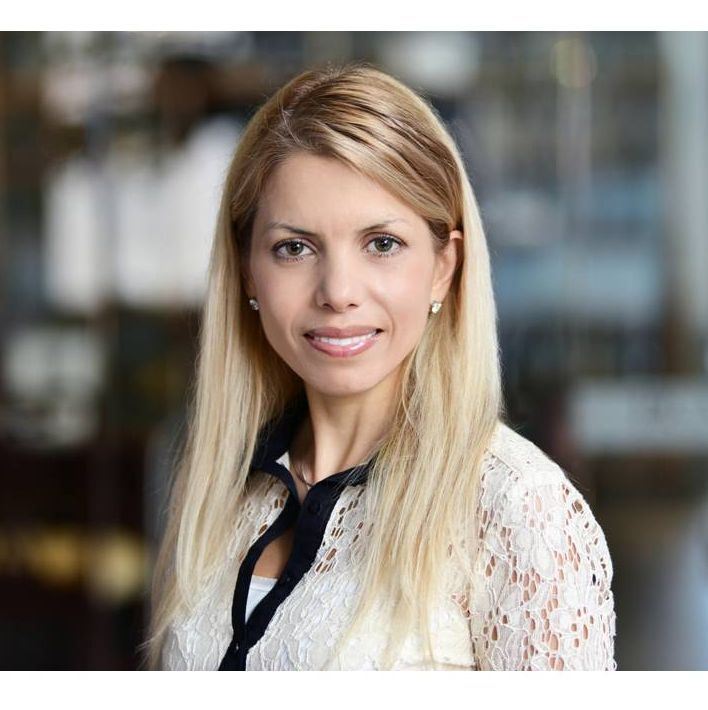
T. Dorina Papageorgiou, Ph.D., M.H.Sc., FAAN
Assistant Professor
Positions
- Assistant Professor
-
Psychiatry & Behavioral Sciences
Baylor College of Medicine
- Assistant Professor
-
Physical Medicine & Rehabilitation
Baylor College of Medicine
- Assistant Professor
-
Graduate School of Biomedical Sciences
Quantitative & Computational Biosciences
Baylor College of Medicine
- Assistant Professor
-
Translational Biology & Molecular Medicine
Baylor College of Medicine
- Assistant Professor
-
Neuroscience
Baylor College of Medicine
Houston, Texas
https://www.bcm.edu/departments/neuroscience/faculty-staff/joint-neuroscience-faculty
- Assistant Professor
-
Graduate School of Biomedical Sciences
Development, Models, Disease, Therapeutics
Baylor College of Medicine
Houston, Texas
https://www.bcm.edu/education/graduate-school-of-biomedical-sciences/programs/development-disease-models-therapeutics-graduate-program/research/faculty-research-by-disease/diseases-of-the-sensory-systems-blindness-vision-disorders-deafness-pain
- Principal Investigator
-
Investigational Targeted Brain Neurotherapeutics Laboratory
Baylor College of Medicine
About the Lab - see also https://www.bcm.edu/research/labs-and-centers/faculty-labs/t-dorina-papageorgiou-lab: The T. Dorina Papageorgiou - Investigational Targeted Brain Neurotherapeutics Lab has developed a novel, targeted and individualized MRI-compatible brain computer interface (BCI) based on associative learning principles that can induce neuromodulation in patients with neurological sequelae following stroke (commonly a result of a posterior cerebral artery infarct, or a middle cerebral artery infarct), traumatic brain injury, or tumor resection. We call our MRI-BCI, individualized real-time functional MRI neurofeedback (iRTfMRI nFb), which is based on promoting the reorganization of networks by bypassing lesioned pathways and capitalizing on redundant, intact but functionally associated pathways to the injured ones. This is achieved by modulating the magnitude and spatial extent of Blood-Oxygen-Level-Dependent (BOLD) signal with the goal to recover the brain function, as a result of a neurological insult. We apply this investigational treatment to patients with impairments of the following cortical systems: 1. Retrochiasmal lesions downstream of the optic radiation, which result in cortical blindness. 2. Supra- or infra-nuclear injury to the hypoglossal or glossopharyngeal nucleus, which result in upper motor neuron disease (lesions upstream of the medulla oblongata that can impact somatomotor, and somatosensory areas) or lower motor neuron disease (lesions downstream of the medulla oblongata). 3. Pain matrix network areas, which result in impaired somatosensory and somatomotor pain matrix network activity as a result of CNS- or PNS-associated pain. Reorganization is possible by neuromodulating the spatial extent and intensity of the Blood-Oxygen-Level-Dependent (BOLD) signal to a patient's intact cortical area, which takes over in performing the function, as it has been impaired in the primary cortical areas following neurological injury. This investigational treatment engages associative learning mechanisms that modulate the activity of intact cortical areas with the goal to improve performance in patient populations with neurological sequelae as a result of stroke or, traumatic brain injury or, tumor resection. Papageorgiou Lab Focus Areas: Our goal is to understand how the brain learns specifically under induced learning conditions. The overall aims of our lab are to study the mechanisms of adaptive plasticity/reorganization of cortical functions using neuroimaging modalities and techniques: 1. To examine the learning mechanisms of functional reorganization, such as somatosensory, motor, visual networks in health (adaptive plasticity, the goal of which is to increase performance) and disease (maladaptive plasticity the goal of which is to induce recovery of the lesioned brain function by bypassing injured pathways and capitalizing on intact but functionally associated to those that have sustained injury). 2. To induce recovery of function via reorganization of pathways using MRI-brain-computer-interface methods, such as our individualized real-time fMRI neurofeedback (iRTfMRI nFb). 3. To combine complementary methods that offer increased temporal resolution, such as MR-compatible electroencephalogram (EEG). 4. To use advanced computational methods, such as machine learning (linear and non-linear support vector machines, multilayer perceptrons), deep learning (3d temporal convolutional networks) and dynamic causal modeling (Hidden Markov Models) to decipher the spatiotemporal relationship induced by iRTfMRI nFb and thus, characterize the type of associative learning in a healthy versus a brain characterized by lesioned tissue.
- Assistant Professor
-
Electrical & Computer Engineering
Neuroengineering and Applied Physics
Rice University
https://neuroengineering.rice.edu/faculty
- Assistant Professor
-
Applied Physics; Smalley-Curl Institute
Neuroengineering and biotechnology
Rice University
https://appliedphysics.rice.edu/neuroengineering-and-biotechnology
Addresses
- Center for Advanced MR Imaging (Lab)
-
Baylor College of Medicine
One Baylor Plaza, Suite T115H
Houston, TX, 77030
United States
- Department of Neurology (Office)
-
Baylor College of Medicine Medical Center
McNair Campus
Houston, TX, 77030
United States
Education
- PhD from University of Texas, MD Anderson Cancer Center
- Houston, Texas, United States
- MHSc from Johns Hopkins University, Bloomberg School of Public Health
- Baltimore, Maryland, United States
- BA from University of Georgia
- Athens, Georgia, United States
- Internship at University of Maryland
- Baltimore, Maryland, United States
- Attention Deficit Hyperactivity Disorder
- Internship at Baylor College of Medicine
- Houston, Texas, United States
- Neuropsychology of Neurodegenerative Diseases
- Postdoctoral Fellowship at University of Texas MD Anderson Cancer Center
- Houston, Texas, United States
- Functional Imaging of Pain and Opioid Administration
- Post-Doctoral Fellowship at Baylor College of Medicine
- Houston, Texas, United States
- Real-time Functional MRI Neurofeedback of Speech
- Post-Doctoral Fellowship at Baylor College of Medicine
- Houston, Texas, United States
- Real-time Functional MRI Neurofeedback & Rehabilitation of Cortical Blindness
Professional Interests
- Human Brain Neuroimaging
- Real-time Functional MRI Neurofeedback
- Plasticity and Neuro-rehabilitation of Cortical Blindness
- Neuro-rehabilitation of Speech Impairment
- Neuro-rehabilitation of Chronic Pain
Professional Statement
Overall Mission of the Investigational Targeted Brain Neurotherapeutics (ITBN) Laboratory:
The Papageorgiou-ITBN Laboratory aims to elucidate mechanisms of adaptive and maladaptive cortical plasticity using advanced neuroimaging and individualized neuromodulation (iNM), translating these insights to induce CNS and PNS recovery across cognitive, sensory, motor, and affective disorders, while integrating complementary high–temporal resolution methods, such as low intensity focused ultrasound.
Foundational Neuromodulation Framework:
The Papageorgiou Lab has developed a targeted, individualized neuromodulation approach that capitalizes on the brain’s functional redundancy to bypass lesioned pathways and enhance behavioral recovery beyond standard rehabilitation methods through individualized neuromodulation (iNM). AI-guided individualized neuromodulation (iNM) platform maps each patient’s unique brain architecture and applies millimeter-precision modulation within the MRI environment to dynamically enhance or suppress activity across motor, sensory, cognitive, visual, reward, and pain-related networks.
We elucidate brain mechanisms induced by individualized neuromodulation in healthy individuals to establish feasibility and safety, then translate disorder-specific, neural-signature–guided interventions to patients with central and peripheral nervous system injuries.
Features of Individualized Neuromodulation
Time-Resolved Signal Extraction: We implement adaptive, real-time individualized neuromodulation by reinforcing or attenuating individualized neural baselines across sessions to selectively strengthen functional networks or suppress maladaptive circuits.
AI-Guided Modeling: iNM integrates machine learning algorithms to enhance network sensitivity, classification accuracy, and dynamic physiological tracking.
Dynamic Causal Modeling: We apply supervised and unsupervised non-linear autoregressive models to capture directional, biologically interpretable interactions among neural and physiological networks under individualized neuromodulation.
Precision Metrics and Quantification: We quantify individualized neuromodulation–induced oxygenated signal changes using sensitivity indices, area-under-the-curve, and spatiotemporal mapping to establish reproducible and clinically translatable outcomes.
Target Populations and Applications: We apply individualized neuromodulation across healthy individuals and patients with cranial neuropathy, early neurodegenerative disease, cortical blindness, cancer-related neuropathic pain, and preclinical cognitive impairment to restore or enhance motor, sensory, cognitive, and visual function through targeted engagement of neural pathways.
Future Goals
Systems-Level Mechanisms and Biomarkers Induced by iNM: The Papageorgiou Lab aims to investigate whether iNM-induced modulation of regulatory brain networks influences systemic inflammation, fibrosis, and neuropathic pain, examining associations between network-level changes and circulating pro-inflammatory markers (IL-1β, IL-6, TNF-α, IFN-γ) as well as growth-factor signaling such as BDNF.
Neural–Genomic Coupling: We also aim to link iNM-driven network plasticity to genome-scale regulatory mechanisms using blood-based biomarkers, evaluating genetic variants (e.g., BDNF polymorphisms, dopaminergic variants, ApoE alleles) as moderators of responsiveness and longitudinal microRNA profiles as dynamic indicators of intervention-related change to enable multi-scale modeling of vulnerability and resilience.
Circuit-Level Response Profiling and Precision Stratification: We aim to establish iNM as a functional precision biomarker platform by generating circuit-level response profiles after individualized network mapping and stratifying patients based on network recruitment patterns and plasticity strength to enable responder enrichment and pathway-aligned therapeutic selection.
Decoupling iNM from High-Resource Imaging Environments: While MRI-based iNM enables highly precise individualized cortical and subcortical network targeting, the Papageorgiou Lab aims to translate MRI-defined targets into deployable engineering platforms that combine hybrid imaging MRI and low intensity focused ultrasound environments.
Preliminary Enabling Work for Wearable Sensor Development: The Papageorgiou Lab has developed an MRI-compatible intra-oral fiber-optic tongue sensing platform (patent 19 753 851.5) that captures multi-directional tongue kinematics and force during neuromodulation, linking individualized brain network modulation to objective motor performance and establishing a foundation for future wearable, non-MRI-based rehabilitation systems.
The Papageorgiou/ITBN Lab is founded and primarily supported by the McNair Medical Institute.
The Papageorgiou/ITBN Lab has available graduate student and postdoctoral positions.
The Papageorgiou-ITBN Laboratory aims to elucidate mechanisms of adaptive and maladaptive cortical plasticity using advanced neuroimaging and individualized neuromodulation (iNM), translating these insights to induce CNS and PNS recovery across cognitive, sensory, motor, and affective disorders, while integrating complementary high–temporal resolution methods, such as low intensity focused ultrasound.
Foundational Neuromodulation Framework:
The Papageorgiou Lab has developed a targeted, individualized neuromodulation approach that capitalizes on the brain’s functional redundancy to bypass lesioned pathways and enhance behavioral recovery beyond standard rehabilitation methods through individualized neuromodulation (iNM). AI-guided individualized neuromodulation (iNM) platform maps each patient’s unique brain architecture and applies millimeter-precision modulation within the MRI environment to dynamically enhance or suppress activity across motor, sensory, cognitive, visual, reward, and pain-related networks.
We elucidate brain mechanisms induced by individualized neuromodulation in healthy individuals to establish feasibility and safety, then translate disorder-specific, neural-signature–guided interventions to patients with central and peripheral nervous system injuries.
Features of Individualized Neuromodulation
Time-Resolved Signal Extraction: We implement adaptive, real-time individualized neuromodulation by reinforcing or attenuating individualized neural baselines across sessions to selectively strengthen functional networks or suppress maladaptive circuits.
AI-Guided Modeling: iNM integrates machine learning algorithms to enhance network sensitivity, classification accuracy, and dynamic physiological tracking.
Dynamic Causal Modeling: We apply supervised and unsupervised non-linear autoregressive models to capture directional, biologically interpretable interactions among neural and physiological networks under individualized neuromodulation.
Precision Metrics and Quantification: We quantify individualized neuromodulation–induced oxygenated signal changes using sensitivity indices, area-under-the-curve, and spatiotemporal mapping to establish reproducible and clinically translatable outcomes.
Target Populations and Applications: We apply individualized neuromodulation across healthy individuals and patients with cranial neuropathy, early neurodegenerative disease, cortical blindness, cancer-related neuropathic pain, and preclinical cognitive impairment to restore or enhance motor, sensory, cognitive, and visual function through targeted engagement of neural pathways.
Future Goals
Systems-Level Mechanisms and Biomarkers Induced by iNM: The Papageorgiou Lab aims to investigate whether iNM-induced modulation of regulatory brain networks influences systemic inflammation, fibrosis, and neuropathic pain, examining associations between network-level changes and circulating pro-inflammatory markers (IL-1β, IL-6, TNF-α, IFN-γ) as well as growth-factor signaling such as BDNF.
Neural–Genomic Coupling: We also aim to link iNM-driven network plasticity to genome-scale regulatory mechanisms using blood-based biomarkers, evaluating genetic variants (e.g., BDNF polymorphisms, dopaminergic variants, ApoE alleles) as moderators of responsiveness and longitudinal microRNA profiles as dynamic indicators of intervention-related change to enable multi-scale modeling of vulnerability and resilience.
Circuit-Level Response Profiling and Precision Stratification: We aim to establish iNM as a functional precision biomarker platform by generating circuit-level response profiles after individualized network mapping and stratifying patients based on network recruitment patterns and plasticity strength to enable responder enrichment and pathway-aligned therapeutic selection.
Decoupling iNM from High-Resource Imaging Environments: While MRI-based iNM enables highly precise individualized cortical and subcortical network targeting, the Papageorgiou Lab aims to translate MRI-defined targets into deployable engineering platforms that combine hybrid imaging MRI and low intensity focused ultrasound environments.
Preliminary Enabling Work for Wearable Sensor Development: The Papageorgiou Lab has developed an MRI-compatible intra-oral fiber-optic tongue sensing platform (patent 19 753 851.5) that captures multi-directional tongue kinematics and force during neuromodulation, linking individualized brain network modulation to objective motor performance and establishing a foundation for future wearable, non-MRI-based rehabilitation systems.
The Papageorgiou/ITBN Lab is founded and primarily supported by the McNair Medical Institute.
The Papageorgiou/ITBN Lab has available graduate student and postdoctoral positions.
Websites
Dr. Papageorgiou's Bibliography
Comprehensive list of publications and presentations
Dr. Papageorgiou's Research
VIICTR Research Database
https://www.intechopen.com/profiles/92641/dorina-papageorgiou
The brain is the most complex computational device we know, consisting of highly interacting and redundant networks of areas, supporting specific brain functions. The rules by which these areas organize themselves to perform specific computations have only now started to be uncovered. Advances in non-invasive neuroimaging technologies have revolutionized our understanding of the functional anatomy of cortical circuits in health and disease states, which is the focus of this book. The first section of this book focuses on methodological issues, such as combining functional MRI technology with other brain imaging modalities. The second section examines the application of brain neuroimaging to understand cognitive, visual, auditory, motor and decision-making networks, as well as neurological diseases. The use of non-invasive neuroimaging technologies will continue to stimulate an exponential growth in understanding basic brain processes, largely as a result of sustained advances in neuroimaging methods and applications.
Papageorgiou Lab - Investigational Targeted Brain Neurotherapeutics
About the Lab and Focus Areas
Interviewed on JAMA Neuroimaging study
"The new study, published in the Journal of the American Medical Association (JAMA), used brain scans to look at three different aspects of brain function in 40 people who were clinically evaluated after reported exposure to the as-yet undetermined phenomenon. It looked at the overall volume of various regions in their brains; at the fine structure of brain tissue in the cerebellum, which regulates movement and controls balance; and at the connectivity of brain networks involved in hearing, vision, and high-level cognitive skills like memory." from Popular Science
Selected Publications
-
Hotez PJ, Papageorgiou TD. " A new European neglected diseases center for Greece? " PLoS Negl Trop Dis. 2013 Feb ; 7 (2) : e1757.
Pubmed PMID: 23469292. -
Papageorgiou TD, Curtis WA, McHenry M, LaConte SM. " Neurofeedback of two motor functions using supervised learning-based real-time functional magnetic resonance imaging. " Conf Proc IEEE Eng Med Biol Soc. 2009 ; 2009 : 5377-80.
Pubmed PMID: 19964387. -
Papanikolaou A, Keliris GA, Papageorgiou TD, Shao Y, Krapp E, Papageorgiou E, et al. " Population receptive field analysis of the primary visual cortex complements perimetry in patients with homonymous visual field defects " Proc Natl Acad Sci U S A. 2014 ; (111) : E1656-65.
Pubmed PMID: 24706881. -
Papageorgiou TD, Lisinski JM, McHenry MA, White JP, Laconte SM. " Brain-computer interfaces increase whole-brain signal to noise " Proc Natl Acad Sci U S A. 2013 Aug 13; 110 (33) : 13630-5.
Pubmed PMID: 23901117.
Log In to edit your profile